<?xml version="1.0" encoding="utf-8"?>
<feed xmlns="http://www.w3.org/2005/Atom">
    <id>https://pandev-metrics.com/docs/blog</id>
    <title>PanDev Metrics Blog</title>
    <updated>2026-04-16T00:00:00.000Z</updated>
    <generator>https://github.com/jpmonette/feed</generator>
    <link rel="alternate" href="https://pandev-metrics.com/docs/blog"/>
    <subtitle>Engineering Intelligence insights and developer productivity research</subtitle>
    <icon>https://pandev-metrics.com/docs/img/favicon.ico</icon>
    <rights>© 2026 PanDev Metrics</rights>
    <entry>
        <title type="html"><![CDATA[How Much Do Developers Actually Code Per Day? Research-Backed Data]]></title>
        <id>https://pandev-metrics.com/docs/blog/how-much-developers-actually-code</id>
        <link href="https://pandev-metrics.com/docs/blog/how-much-developers-actually-code"/>
        <updated>2026-04-16T00:00:00.000Z</updated>
        <summary type="html"><![CDATA[IDE heartbeat data confirms what research suspected: the median developer codes about 1 hour 18 minutes per day. Here's why that's normal.]]></summary>
        <content type="html"><![CDATA[<p>Every engineering leader asks the same question: <strong>how much time do developers actually spend writing code?</strong></p>
<p>Microsoft Research found that developers spend only 30-40% of their time writing code. A 2019 study by Haystack Analytics suggested closer to 2 hours. Our own IDE heartbeat data across B2B engineering teams confirms a <strong>median of 78 minutes per day</strong>.</p>
<p>Here's what the data actually shows and why it matters.</p>
<!-- -->
<h2 class="anchor anchorTargetStickyNavbar_Vzrq" id="why-this-question-is-hard-to-answer">Why This Question Is Hard to Answer<a href="https://pandev-metrics.com/docs/blog/how-much-developers-actually-code#why-this-question-is-hard-to-answer" class="hash-link" aria-label="Direct link to Why This Question Is Hard to Answer" title="Direct link to Why This Question Is Hard to Answer" translate="no">​</a></h2>
<p>Most "developer productivity" numbers online are self-reported. The problem? Research published in the Journal of Biomedical Informatics found that self-reported work hours are inflated by 10-20% compared to observed hours. Developers are no exception: context switching, debugging, and "thinking time" feel like coding.</p>
<p>IDE heartbeat data solves this. Every few minutes, the editor sends a signal confirming the developer is actively writing or editing code. No self-reporting. No guesswork. Just timestamps.</p>
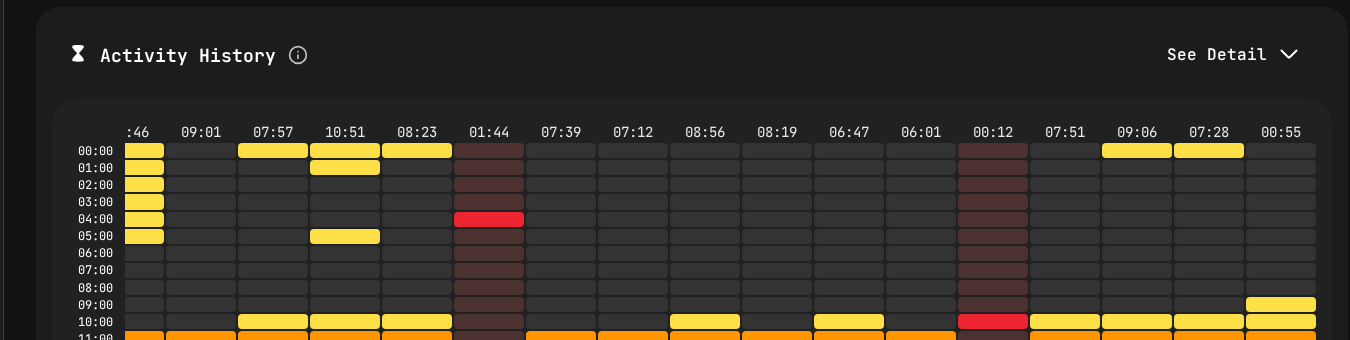
<p>Here's what real coding activity looks like when measured through IDE heartbeats — an activity heatmap from PanDev Metrics showing coding sessions across two weeks, broken down by hour:</p>
<p><img decoding="async" loading="lazy" alt="Activity heatmap showing developer coding sessions by hour and day — yellow blocks indicate active coding, gaps show meetings or non-coding work" src="https://pandev-metrics.com/docs/assets/images/activity-heatmap-5d0bca1db24fdea91fb4a83019972277.png" width="1350" height="340" class="img_ev3q"></p>
<p>Each colored block represents an active coding session. The pattern is immediately visible: most coding happens between 9 AM and 6 PM, with noticeable gaps during lunch and meeting-heavy hours. Some late-night sessions appear, but they're rare.</p>
<h2 class="anchor anchorTargetStickyNavbar_Vzrq" id="what-the-data-shows">What the Data Shows<a href="https://pandev-metrics.com/docs/blog/how-much-developers-actually-code#what-the-data-shows" class="hash-link" aria-label="Direct link to What the Data Shows" title="Direct link to What the Data Shows" translate="no">​</a></h2>
<h3 class="anchor anchorTargetStickyNavbar_Vzrq" id="median-78-minutes-per-day">Median: 78 minutes per day<a href="https://pandev-metrics.com/docs/blog/how-much-developers-actually-code#median-78-minutes-per-day" class="hash-link" aria-label="Direct link to Median: 78 minutes per day" title="Direct link to Median: 78 minutes per day" translate="no">​</a></h3>
<table><thead><tr><th>Metric</th><th>Value</th></tr></thead><tbody><tr><td><strong>Median coding time per day</strong></td><td><strong>78 min (1h 18m)</strong></td></tr><tr><td><strong>Mean coding time per day</strong></td><td><strong>111 min (1h 51m)</strong></td></tr><tr><td>Minimum (among regular coders)</td><td>~10 min</td></tr><tr><td>Maximum</td><td>~280 min (4h 40m)</td></tr></tbody></table>
<p>The median is <strong>30% lower</strong> than the mean, a classic sign of right-skewed distribution. A few power coders pull the average up. For benchmarking, <strong>always use the median</strong>.</p>
<p>This aligns closely with external research. A 2022 paper by Xia et al. in IEEE Transactions on Software Engineering found that developers spend an average of 52 minutes per day in active coding sessions, with significant variation based on role and project phase.</p>
<h3 class="anchor anchorTargetStickyNavbar_Vzrq" id="distribution-the-1-2-hour-sweet-spot">Distribution: the 1-2 hour sweet spot<a href="https://pandev-metrics.com/docs/blog/how-much-developers-actually-code#distribution-the-1-2-hour-sweet-spot" class="hash-link" aria-label="Direct link to Distribution: the 1-2 hour sweet spot" title="Direct link to Distribution: the 1-2 hour sweet spot" translate="no">​</a></h3>
<table><thead><tr><th>Daily coding time</th><th style="text-align:center">Share</th></tr></thead><tbody><tr><td>Under 30 min</td><td style="text-align:center">~12%</td></tr><tr><td>30-60 min</td><td style="text-align:center">~21%</td></tr><tr><td><strong>1-2 hours</strong></td><td style="text-align:center"><strong>~32%</strong></td></tr><tr><td>2-3 hours</td><td style="text-align:center">~9%</td></tr><tr><td>3-4 hours</td><td style="text-align:center">~21%</td></tr><tr><td>4+ hours</td><td style="text-align:center">~6%</td></tr></tbody></table>
<p>The largest group codes <strong>1-2 hours per day</strong>. Over half fall between 30 minutes and 2 hours. The "mythical 8-hour coder" doesn't exist in any dataset we've seen, academic or commercial.</p>
<p>This distribution matches findings from the SPACE framework paper (Forsgren et al., 2021) which argues that developer productivity cannot be reduced to a single dimension like coding time.</p>
<h3 class="anchor anchorTargetStickyNavbar_Vzrq" id="tuesday-is-the-most-productive-day">Tuesday is the most productive day<a href="https://pandev-metrics.com/docs/blog/how-much-developers-actually-code#tuesday-is-the-most-productive-day" class="hash-link" aria-label="Direct link to Tuesday is the most productive day" title="Direct link to Tuesday is the most productive day" translate="no">​</a></h3>
<table><thead><tr><th>Day</th><th style="text-align:center">Activity level</th></tr></thead><tbody><tr><td>Monday</td><td style="text-align:center">High</td></tr><tr><td><strong>Tuesday</strong></td><td style="text-align:center"><strong>Peak</strong></td></tr><tr><td>Wednesday</td><td style="text-align:center">High</td></tr><tr><td>Thursday</td><td style="text-align:center">Medium-High</td></tr><tr><td>Friday</td><td style="text-align:center">Medium</td></tr><tr><td>Saturday</td><td style="text-align:center">Low</td></tr><tr><td>Sunday</td><td style="text-align:center">Minimal</td></tr></tbody></table>
<p>Tuesday consistently leads in aggregate coding activity across companies of different sizes and industries. Friday shows a noticeable dip, and weekend coding runs at roughly 3-4x lower volume than weekdays.</p>
<p>Similar patterns appear in GitHub's analysis of commit timestamps across millions of repositories: Tuesday and Wednesday dominate global commit activity.</p>
<h3 class="anchor anchorTargetStickyNavbar_Vzrq" id="vs-code-leads-cursor-is-the-fastest-growing">VS Code leads, Cursor is the fastest-growing<a href="https://pandev-metrics.com/docs/blog/how-much-developers-actually-code#vs-code-leads-cursor-is-the-fastest-growing" class="hash-link" aria-label="Direct link to VS Code leads, Cursor is the fastest-growing" title="Direct link to VS Code leads, Cursor is the fastest-growing" translate="no">​</a></h3>
<table><thead><tr><th>IDE</th><th style="text-align:center">Market position</th></tr></thead><tbody><tr><td><strong>VS Code</strong></td><td style="text-align:center">Dominant</td></tr><tr><td><strong>Cursor</strong></td><td style="text-align:center">Fastest-growing (AI-first)</td></tr><tr><td><strong>JetBrains</strong> (IntelliJ, PhpStorm, WebStorm)</td><td style="text-align:center">Strong in Java/PHP ecosystems</td></tr><tr><td>Visual Studio</td><td style="text-align:center">Enterprise / .NET</td></tr></tbody></table>
<p>The 2024 Stack Overflow Developer Survey confirmed VS Code as the most popular IDE at 73.6%. Our data shows a similar pattern, with <strong>Cursor emerging as a significant new player</strong>, reflecting the rapid adoption of AI-assisted development tools.</p>
<h3 class="anchor anchorTargetStickyNavbar_Vzrq" id="java-and-typescript-dominate-actual-coding-time">Java and TypeScript dominate actual coding time<a href="https://pandev-metrics.com/docs/blog/how-much-developers-actually-code#java-and-typescript-dominate-actual-coding-time" class="hash-link" aria-label="Direct link to Java and TypeScript dominate actual coding time" title="Direct link to Java and TypeScript dominate actual coding time" translate="no">​</a></h3>
<table><thead><tr><th>Language</th><th style="text-align:center">Position</th></tr></thead><tbody><tr><td>Java</td><td style="text-align:center">Leading</td></tr><tr><td>TypeScript (including TSX)</td><td style="text-align:center">Close second</td></tr><tr><td>Python</td><td style="text-align:center">Third</td></tr><tr><td>PHP</td><td style="text-align:center">Significant</td></tr><tr><td>Kotlin, Dart, C#</td><td style="text-align:center">Notable presence</td></tr><tr><td>YAML</td><td style="text-align:center">Top 10</td></tr></tbody></table>
<p>The presence of <strong>YAML in the top 10</strong> reflects modern development reality. Infrastructure-as-code, CI/CD configs, and Kubernetes manifests consume meaningful engineering time. The 2023 CNCF Survey found that 84% of organizations use or evaluate Kubernetes, which explains the YAML investment.</p>
<h2 class="anchor anchorTargetStickyNavbar_Vzrq" id="what-this-means-for-engineering-leaders">What This Means for Engineering Leaders<a href="https://pandev-metrics.com/docs/blog/how-much-developers-actually-code#what-this-means-for-engineering-leaders" class="hash-link" aria-label="Direct link to What This Means for Engineering Leaders" title="Direct link to What This Means for Engineering Leaders" translate="no">​</a></h2>
<h3 class="anchor anchorTargetStickyNavbar_Vzrq" id="1-stop-expecting-6-8-hours-of-coding">1. Stop expecting 6-8 hours of coding<a href="https://pandev-metrics.com/docs/blog/how-much-developers-actually-code#1-stop-expecting-6-8-hours-of-coding" class="hash-link" aria-label="Direct link to 1. Stop expecting 6-8 hours of coding" title="Direct link to 1. Stop expecting 6-8 hours of coding" translate="no">​</a></h3>
<p>Pure coding time of 1-2 hours per day is <strong>normal and healthy</strong>. The remaining time goes to code reviews, architecture discussions, debugging, documentation, and context switching.</p>
<p>As Cal Newport argues in <em>Deep Work</em>, the capacity for focused creative work is limited to roughly 4 hours per day, and that's the upper bound. Most knowledge workers operate well below that.</p>
<h3 class="anchor anchorTargetStickyNavbar_Vzrq" id="2-protect-focus-time-over-total-hours">2. Protect Focus Time over total hours<a href="https://pandev-metrics.com/docs/blog/how-much-developers-actually-code#2-protect-focus-time-over-total-hours" class="hash-link" aria-label="Direct link to 2. Protect Focus Time over total hours" title="Direct link to 2. Protect Focus Time over total hours" translate="no">​</a></h3>
<p>Developers who code 3-4 hours daily likely have <strong>fewer interruptions</strong>, not more talent. Research by Gloria Mark at UC Irvine found that it takes an average of 23 minutes to refocus after an interruption. A developer with three meetings scattered throughout the day may have zero effective focus blocks.</p>
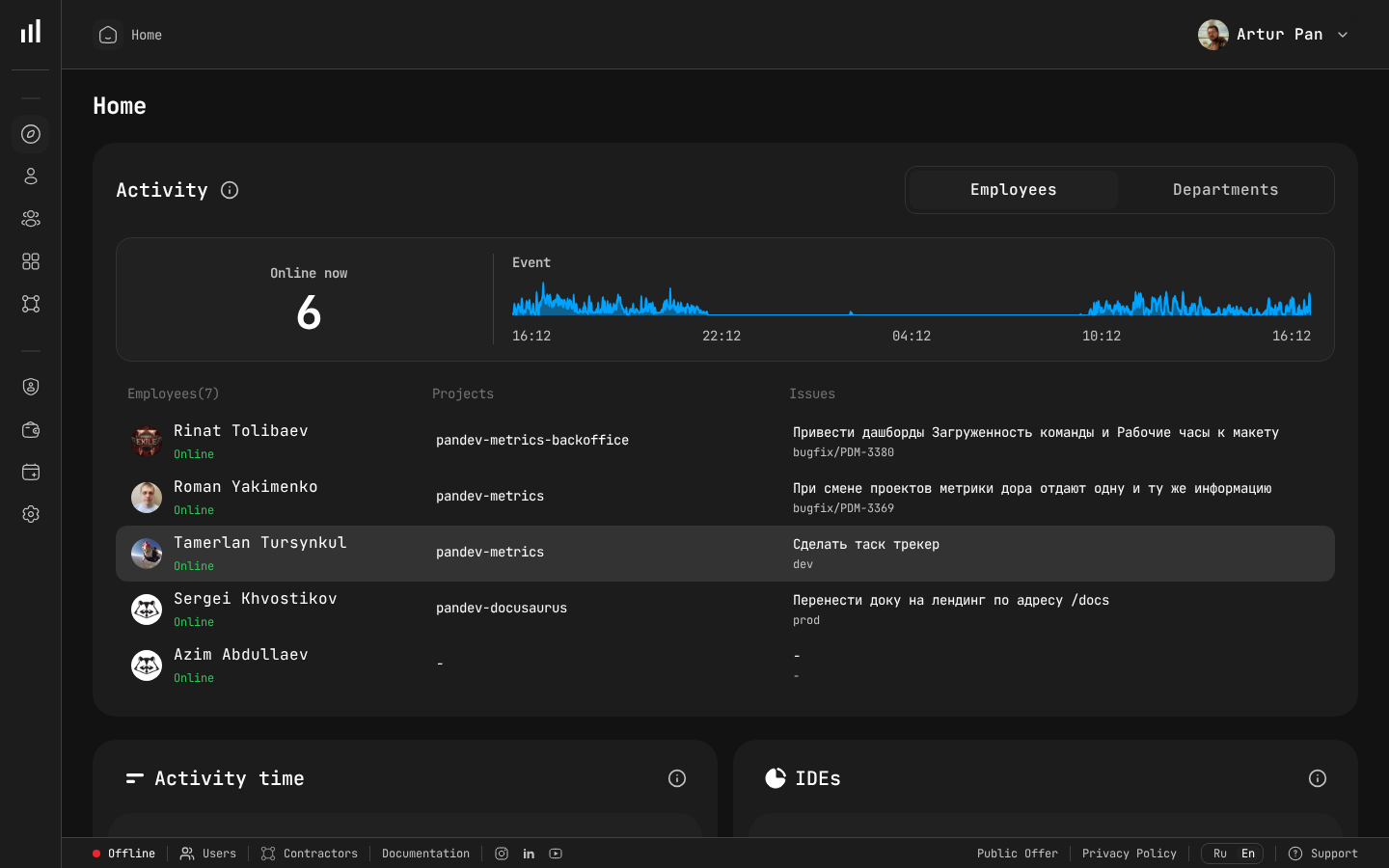
<p>PanDev Metrics tracks Focus Time as a percentage of total activity — the higher the percentage, the fewer interruptions a developer experienced. In the dashboard below, you can see real-time activity across the entire team:</p>
<p><img decoding="async" loading="lazy" alt="PanDev dashboard showing real-time team activity, online status, projects, and event timeline" src="https://pandev-metrics.com/docs/assets/images/dashboard-clean-073abbdda4655766ee74a155d5088c26.png" width="1440" height="900" class="img_ev3q"></p>
<p><strong>Actionable</strong>: Reduce meetings on Tuesdays and Wednesdays when coding momentum peaks. Establish "focus hours" with no meetings.</p>
<h3 class="anchor anchorTargetStickyNavbar_Vzrq" id="3-use-median-for-team-benchmarking">3. Use median for team benchmarking<a href="https://pandev-metrics.com/docs/blog/how-much-developers-actually-code#3-use-median-for-team-benchmarking" class="hash-link" aria-label="Direct link to 3. Use median for team benchmarking" title="Direct link to 3. Use median for team benchmarking" translate="no">​</a></h3>
<p>The mean (111 min) is misleading because outliers skew it. <strong>Median (78 min) is your honest benchmark.</strong> If your team is in this range, they're performing normally. If significantly lower, investigate meeting culture before questioning motivation.</p>
<h3 class="anchor anchorTargetStickyNavbar_Vzrq" id="4-measure-dont-guess">4. Measure, don't guess<a href="https://pandev-metrics.com/docs/blog/how-much-developers-actually-code#4-measure-dont-guess" class="hash-link" aria-label="Direct link to 4. Measure, don't guess" title="Direct link to 4. Measure, don't guess" translate="no">​</a></h3>
<p>Self-reported time tracking is consistently inaccurate. IDE heartbeat data captures actual editor focus, providing ground truth instead of perception. This matters especially for remote teams where visibility is lower.</p>
<blockquote>
<p>"As a CTO and for our tech leads, it's important to see not individual employees but the state of the development process: where it's efficient and where it breaks down. The product allows natively collecting metrics right from the IDE, without feeling controlled or surveilled. Implementation was very simple."
— Maksim Popov, CTO ABR Tech (<a href="https://forbes.kz/" target="_blank" rel="noopener noreferrer" class="">Forbes Kazakhstan, April 2026</a>)</p>
</blockquote>
<h2 class="anchor anchorTargetStickyNavbar_Vzrq" id="methodology">Methodology<a href="https://pandev-metrics.com/docs/blog/how-much-developers-actually-code#methodology" class="hash-link" aria-label="Direct link to Methodology" title="Direct link to Methodology" translate="no">​</a></h2>
<p>This analysis uses anonymized, aggregated IDE heartbeat data from PanDev Metrics. We filtered for B2B engineering teams with consistent activity over a 90-day window. All data represents pure coding activity (editor focus), excluding idle time, browser activity, and meetings. No individual or company-identifying data was exposed.</p>
<p>Our findings are consistent with published academic research on developer work patterns, including studies from Microsoft Research, IEEE, and the SPACE framework.</p>
<hr>
<p><strong>Want to understand your team's real coding patterns?</strong> <a href="https://pandev-metrics.com/" target="_blank" rel="noopener noreferrer" class="">PanDev Metrics</a> tracks IDE activity with second-level precision across VS Code, JetBrains, and 8 more editors. Free to start.</p>]]></content>
        <author>
            <name>Artur Pan</name>
            <uri>https://www.linkedin.com/in/apan98/</uri>
        </author>
        <category label="research" term="research"/>
        <category label="developer-productivity" term="developer-productivity"/>
        <category label="engineering-metrics" term="engineering-metrics"/>
        <category label="data" term="data"/>
    </entry>
    <entry>
        <title type="html"><![CDATA[As Featured in Forbes Kazakhstan: How PanDev Metrics Helps CTOs See What Actually Happens in Development]]></title>
        <id>https://pandev-metrics.com/docs/blog/forbes-kazakhstan-pandev-metrics-2026</id>
        <link href="https://pandev-metrics.com/docs/blog/forbes-kazakhstan-pandev-metrics-2026"/>
        <updated>2026-04-14T00:00:00.000Z</updated>
        <summary type="html"><![CDATA[Forbes Kazakhstan (April 2026) featured PanDev Metrics in their article 'Trust the Big Brother.' Here are the key takeaways, real client quotes, and results from ~40 companies piloting the platform.]]></summary>
        <content type="html"><![CDATA[<p>Forbes Kazakhstan dedicated pages 104–107 of their April 2026 issue to engineering intelligence — and to PanDev Metrics specifically. The article, titled <strong>"Доверься «большому брату»"</strong> ("Trust the Big Brother"), explored how data-driven development management is gaining traction across Central Asia and beyond.</p>
<p>Rather than republishing the piece, we want to highlight the parts that matter most: what our clients actually said, what the numbers show, and where the industry is heading.</p>
<!-- -->
<h2 class="anchor anchorTargetStickyNavbar_Vzrq" id="what-ctos-are-saying">What CTOs Are Saying<a href="https://pandev-metrics.com/docs/blog/forbes-kazakhstan-pandev-metrics-2026#what-ctos-are-saying" class="hash-link" aria-label="Direct link to What CTOs Are Saying" title="Direct link to What CTOs Are Saying" translate="no">​</a></h2>
<p>The Forbes article featured interviews with two CTOs currently using PanDev Metrics. Their feedback captures what we hear most often — the platform works because it measures <strong>processes</strong>, not people.</p>
<blockquote>
<p>"As a CTO and for our tech leads, it's important to see not individual employees but the state of the development process: where it's efficient and where it breaks down. For this you need transparent metrics and convenient tools. The product allows natively collecting metrics right from the IDE, without feeling controlled or surveilled. Implementation was very simple — the main challenge was correctly communicating the tool's value to the team."</p>
<p>— <strong>Maksim Popov</strong>, CTO, ABR Tech</p>
</blockquote>
<blockquote>
<p>"The main thing that stands out about the team is their responsiveness and client orientation. If questions or bugs arise, the team reacts quickly and promptly makes fixes. Our improvement requests are always heard and considered. The service continues to improve, there are growth areas in onboarding and metric collection."</p>
<p>— <strong>Rauan Bozabaev</strong>, CTO, Chocofood</p>
</blockquote>
<p>Two different companies, two different scales — but a consistent theme: transparency without surveillance, and a team that listens.</p>
<h2 class="anchor anchorTargetStickyNavbar_Vzrq" id="results-by-the-numbers">Results by the Numbers<a href="https://pandev-metrics.com/docs/blog/forbes-kazakhstan-pandev-metrics-2026#results-by-the-numbers" class="hash-link" aria-label="Direct link to Results by the Numbers" title="Direct link to Results by the Numbers" translate="no">​</a></h2>
<p>Forbes cited several data points from PanDev clients. Here's a summary:</p>
<table><thead><tr><th>Metric</th><th>Impact</th></tr></thead><tbody><tr><td>Developer productivity</td><td><strong>+30%</strong> increase</td></tr><tr><td>Release quality</td><td><strong>+25%</strong> improvement</td></tr><tr><td>Labor cost reduction (hourly pay model)</td><td><strong>25–30%</strong> savings</td></tr><tr><td>Overall development budget savings</td><td><strong>10–30%</strong></td></tr></tbody></table>
<p>These aren't projections. They come from real pilots across ~40 companies, including Biometric, Neo Code, Parqour, Zeely, ABR Tech, and Chocofood.</p>
<h2 class="anchor anchorTargetStickyNavbar_Vzrq" id="the-whoop-for-developers-analogy">The "Whoop for Developers" Analogy<a href="https://pandev-metrics.com/docs/blog/forbes-kazakhstan-pandev-metrics-2026#the-whoop-for-developers-analogy" class="hash-link" aria-label="Direct link to The &quot;Whoop for Developers&quot; Analogy" title="Direct link to The &quot;Whoop for Developers&quot; Analogy" translate="no">​</a></h2>
<p>One comparison from the article stuck with us. Forbes drew a parallel between PanDev and fitness trackers like <strong>Whoop</strong> and <strong>Garmin</strong> — devices that don't tell athletes what to do, but give them the data to make better decisions.</p>
<p>The same principle applies here: a developer can evaluate how productively they work, identify patterns, and improve on their own terms. Management gets process-level visibility. Nobody gets a surveillance camera pointed at their screen.</p>
<h2 class="anchor anchorTargetStickyNavbar_Vzrq" id="ai-transparency-a-real-problem-a-real-solution">AI Transparency: A Real Problem, A Real Solution<a href="https://pandev-metrics.com/docs/blog/forbes-kazakhstan-pandev-metrics-2026#ai-transparency-a-real-problem-a-real-solution" class="hash-link" aria-label="Direct link to AI Transparency: A Real Problem, A Real Solution" title="Direct link to AI Transparency: A Real Problem, A Real Solution" translate="no">​</a></h2>
<p>The article highlighted a telling data point: within the same team, one developer writes <strong>30% of their code with AI</strong>, while another writes <strong>70%</strong>. Without visibility into this, a CTO has no way to assess actual skill levels, code ownership risks, or where AI-generated code might need extra review.</p>
<p>PanDev also includes <strong>anti-fraud protection</strong> — the system detects when developers attempt to game their metrics. This isn't about catching people; it's about ensuring the data teams rely on for decisions is trustworthy.</p>
<h2 class="anchor anchorTargetStickyNavbar_Vzrq" id="company-snapshot">Company Snapshot<a href="https://pandev-metrics.com/docs/blog/forbes-kazakhstan-pandev-metrics-2026#company-snapshot" class="hash-link" aria-label="Direct link to Company Snapshot" title="Direct link to Company Snapshot" translate="no">​</a></h2>
<p>For those unfamiliar with PanDev, here's where things stand as of April 2026:</p>
<ul>
<li class=""><strong>Founders:</strong> Artur Pan (CTO, former early engineer at Kaspi Marketplace) and Madiyar Bakbergenov (CEO)</li>
<li class=""><strong>Investment:</strong> $400K at a $5M valuation from MA7 Ventures, MOST Accelerator Fund, and Axiom Capital</li>
<li class=""><strong>Next round:</strong> Planning $15–20M</li>
<li class=""><strong>Clients in pilot:</strong> ~40 companies</li>
<li class=""><strong>Revenue (YTD from start of 2026):</strong> $8,000</li>
</ul>
<h3 class="anchor anchorTargetStickyNavbar_Vzrq" id="pricing">Pricing<a href="https://pandev-metrics.com/docs/blog/forbes-kazakhstan-pandev-metrics-2026#pricing" class="hash-link" aria-label="Direct link to Pricing" title="Direct link to Pricing" translate="no">​</a></h3>
<table><thead><tr><th>Team Size</th><th>Monthly Price</th></tr></thead><tbody><tr><td>Up to 20 engineers</td><td>$300/mo</td></tr><tr><td>20–50 engineers</td><td>$700/mo</td></tr><tr><td>50–100 engineers</td><td>$1,500/mo</td></tr></tbody></table>
<h2 class="anchor anchorTargetStickyNavbar_Vzrq" id="what-this-means">What This Means<a href="https://pandev-metrics.com/docs/blog/forbes-kazakhstan-pandev-metrics-2026#what-this-means" class="hash-link" aria-label="Direct link to What This Means" title="Direct link to What This Means" translate="no">​</a></h2>
<p>Being featured in Forbes Kazakhstan is a milestone, but it's not the point. The point is that engineering leaders across the region are actively looking for better ways to understand their development processes — and the old methods (gut feeling, lines of code, story points) aren't cutting it anymore.</p>
<p>If you're a CTO or VP of Engineering dealing with the same questions Maksim and Rauan described — where does time go, where do processes break, how do you measure without micromanaging — <a href="https://pandev-metrics.com/" target="_blank" rel="noopener noreferrer" class="">we'd like to show you what we've built</a>.</p>]]></content>
        <author>
            <name>Madiyar Bakbergenov</name>
            <uri>https://www.linkedin.com/in/mbakbergenov/</uri>
        </author>
        <category label="press" term="press"/>
        <category label="case-study" term="case-study"/>
        <category label="forbes" term="forbes"/>
        <category label="client-stories" term="client-stories"/>
        <category label="engineering-metrics" term="engineering-metrics"/>
    </entry>
    <entry>
        <title type="html"><![CDATA[DORA Metrics: The Complete Guide for Engineering Leaders (2026)]]></title>
        <id>https://pandev-metrics.com/docs/blog/dora-metrics-complete-guide-2026</id>
        <link href="https://pandev-metrics.com/docs/blog/dora-metrics-complete-guide-2026"/>
        <updated>2026-04-13T00:00:00.000Z</updated>
        <summary type="html"><![CDATA[Everything you need to know about DORA metrics in 2026: Deployment Frequency, Lead Time, Change Failure Rate, and MTTR. With benchmarks, implementation guide, and common pitfalls.]]></summary>
        <content type="html"><![CDATA[<p>According to the 2023 McKinsey developer productivity report, developers spend only 25-30% of their time writing code. The rest disappears into meetings, waiting, and process overhead. DORA metrics exist to make that invisible waste visible — and fixable.</p>
<p>If you're a CTO, VP of Engineering, or Engineering Manager who hasn't adopted DORA yet, you're managing by intuition in an era that demands evidence. This guide covers what each metric measures, how to benchmark your team, how to implement tracking, and the mistakes that make DORA data useless.</p>
<!-- -->
<h2 class="anchor anchorTargetStickyNavbar_Vzrq" id="what-are-dora-metrics">What Are DORA Metrics?<a href="https://pandev-metrics.com/docs/blog/dora-metrics-complete-guide-2026#what-are-dora-metrics" class="hash-link" aria-label="Direct link to What Are DORA Metrics?" title="Direct link to What Are DORA Metrics?" translate="no">​</a></h2>
<p>DORA (DevOps Research and Assessment) metrics come from the research team behind Google's <em>Accelerate: State of DevOps</em> reports. After studying thousands of engineering organizations over 10 years, they identified <strong>four key metrics</strong> that predict software delivery performance and organizational success.</p>
<p>These aren't vanity metrics. The research, based on data from over 36,000 professionals across ten years of annual surveys, has demonstrated statistically significant links between DORA performance and organizational outcomes including profitability and market share. Teams that score "Elite" deliver <strong>973x more frequently</strong> than low performers, with <strong>6,570x faster lead times</strong> (Accelerate State of DevOps Report, 2023).</p>
<h2 class="anchor anchorTargetStickyNavbar_Vzrq" id="the-four-dora-metrics">The Four DORA Metrics<a href="https://pandev-metrics.com/docs/blog/dora-metrics-complete-guide-2026#the-four-dora-metrics" class="hash-link" aria-label="Direct link to The Four DORA Metrics" title="Direct link to The Four DORA Metrics" translate="no">​</a></h2>
<h3 class="anchor anchorTargetStickyNavbar_Vzrq" id="1-deployment-frequency">1. Deployment Frequency<a href="https://pandev-metrics.com/docs/blog/dora-metrics-complete-guide-2026#1-deployment-frequency" class="hash-link" aria-label="Direct link to 1. Deployment Frequency" title="Direct link to 1. Deployment Frequency" translate="no">​</a></h3>
<p><strong>What it measures:</strong> How often your team deploys code to production.</p>
<table><thead><tr><th>Performance level</th><th>Benchmark</th></tr></thead><tbody><tr><td>Elite</td><td>On-demand (multiple times per day)</td></tr><tr><td>High</td><td>Between once per day and once per week</td></tr><tr><td>Medium</td><td>Between once per week and once per month</td></tr><tr><td>Low</td><td>Less than once per month</td></tr></tbody></table>
<p><strong>Why it matters:</strong> High deployment frequency means smaller changesets, lower risk per deploy, and faster feedback loops. Teams that deploy daily catch bugs in hours, not weeks.</p>
<p><strong>Common mistake:</strong> Counting "merges to main" instead of actual production deployments. A merge is not a deploy.</p>
<h3 class="anchor anchorTargetStickyNavbar_Vzrq" id="2-lead-time-for-changes">2. Lead Time for Changes<a href="https://pandev-metrics.com/docs/blog/dora-metrics-complete-guide-2026#2-lead-time-for-changes" class="hash-link" aria-label="Direct link to 2. Lead Time for Changes" title="Direct link to 2. Lead Time for Changes" translate="no">​</a></h3>
<p><strong>What it measures:</strong> Time from first commit to code running in production.</p>
<table><thead><tr><th>Performance level</th><th>Benchmark</th></tr></thead><tbody><tr><td>Elite</td><td>Less than one hour</td></tr><tr><td>High</td><td>Between one day and one week</td></tr><tr><td>Medium</td><td>Between one week and one month</td></tr><tr><td>Low</td><td>More than one month</td></tr></tbody></table>
<p><strong>Why it matters:</strong> Long lead times mean slow feedback, large risky releases, and frustrated product teams waiting weeks for a "small fix."</p>
<h4 class="anchor anchorTargetStickyNavbar_Vzrq" id="the-4-stages-of-lead-time">The 4 Stages of Lead Time<a href="https://pandev-metrics.com/docs/blog/dora-metrics-complete-guide-2026#the-4-stages-of-lead-time" class="hash-link" aria-label="Direct link to The 4 Stages of Lead Time" title="Direct link to The 4 Stages of Lead Time" translate="no">​</a></h4>
<p>Most tools show Lead Time as a single number. That's like a doctor saying "you're sick" without telling you what's wrong. <strong>PanDev Metrics breaks Lead Time into 4 stages:</strong></p>
<table><thead><tr><th>Stage</th><th>What happens</th><th>Where time is lost</th></tr></thead><tbody><tr><td><strong>Coding</strong></td><td>First commit → Merge Request created</td><td>Developer working on the feature</td></tr><tr><td><strong>Pickup</strong></td><td>MR created → First review</td><td>Waiting for someone to start reviewing</td></tr><tr><td><strong>Review</strong></td><td>First review → MR merged</td><td>Review cycles, back-and-forth</td></tr><tr><td><strong>Deploy</strong></td><td>MR merged → Running in production</td><td>CI/CD pipeline, manual approvals</td></tr></tbody></table>
<p>This breakdown reveals <strong>where your bottleneck actually is</strong>:</p>
<ul>
<li class="">Long <strong>Coding</strong> stage? Tasks are too large — break them down.</li>
<li class="">Long <strong>Pickup</strong> stage? Your team has a review culture problem — PRs sit unreviewed.</li>
<li class="">Long <strong>Review</strong> stage? Too many review cycles — clarify standards upfront.</li>
<li class="">Long <strong>Deploy</strong> stage? Your CI/CD pipeline needs work — automate approvals.</li>
</ul>
<h3 class="anchor anchorTargetStickyNavbar_Vzrq" id="3-change-failure-rate">3. Change Failure Rate<a href="https://pandev-metrics.com/docs/blog/dora-metrics-complete-guide-2026#3-change-failure-rate" class="hash-link" aria-label="Direct link to 3. Change Failure Rate" title="Direct link to 3. Change Failure Rate" translate="no">​</a></h3>
<p><strong>What it measures:</strong> Percentage of deployments that cause a failure in production (requiring a hotfix, rollback, or patch).</p>
<table><thead><tr><th>Performance level</th><th>Benchmark</th></tr></thead><tbody><tr><td>Elite</td><td>0–5%</td></tr><tr><td>High</td><td>5–10%</td></tr><tr><td>Medium</td><td>10–15%</td></tr><tr><td>Low</td><td>More than 15%</td></tr></tbody></table>
<p><strong>Why it matters:</strong> Deploying frequently is only valuable if deploys don't break things. Change Failure Rate balances speed with stability.</p>
<p><strong>Common mistake:</strong> A 0% failure rate isn't good — it usually means you're not deploying enough, or you're not detecting failures. <strong>5% is healthy.</strong></p>
<h3 class="anchor anchorTargetStickyNavbar_Vzrq" id="4-mean-time-to-restore-mttr">4. Mean Time to Restore (MTTR)<a href="https://pandev-metrics.com/docs/blog/dora-metrics-complete-guide-2026#4-mean-time-to-restore-mttr" class="hash-link" aria-label="Direct link to 4. Mean Time to Restore (MTTR)" title="Direct link to 4. Mean Time to Restore (MTTR)" translate="no">​</a></h3>
<p><strong>What it measures:</strong> How long it takes to recover from a failure in production.</p>
<table><thead><tr><th>Performance level</th><th>Benchmark</th></tr></thead><tbody><tr><td>Elite</td><td>Less than one hour</td></tr><tr><td>High</td><td>Less than one day</td></tr><tr><td>Medium</td><td>Between one day and one week</td></tr><tr><td>Low</td><td>More than one week</td></tr></tbody></table>
<p><strong>Why it matters:</strong> Failures are inevitable. What separates elite teams is <strong>how fast they recover</strong>. An MTTR of 30 minutes means a production incident is a minor inconvenience. An MTTR of 3 days means it's a crisis.</p>
<h2 class="anchor anchorTargetStickyNavbar_Vzrq" id="how-dora-metrics-work-together">How DORA Metrics Work Together<a href="https://pandev-metrics.com/docs/blog/dora-metrics-complete-guide-2026#how-dora-metrics-work-together" class="hash-link" aria-label="Direct link to How DORA Metrics Work Together" title="Direct link to How DORA Metrics Work Together" translate="no">​</a></h2>
<p>The four metrics form two pairs:</p>
<p><strong>Speed pair:</strong></p>
<ul>
<li class="">Deployment Frequency (how often)</li>
<li class="">Lead Time (how fast)</li>
</ul>
<p><strong>Stability pair:</strong></p>
<ul>
<li class="">Change Failure Rate (how safe)</li>
<li class="">MTTR (how resilient)</li>
</ul>
<p>Elite teams score high on <strong>both</strong> speed and stability. This is the key insight from the DORA research, first articulated in <em>Accelerate</em> by Forsgren, Humble, and Kim (2018): <strong>speed and stability are not trade-offs</strong>. The best teams are both fast and safe. This finding has been replicated consistently across every subsequent State of DevOps Report.</p>
<blockquote>
<p>According to Forbes Kazakhstan, companies that adopted DORA-aligned engineering metrics saw "a 30% productivity increase, while release quality improved by 25%." — <a href="https://forbes.kz/" target="_blank" rel="noopener noreferrer" class="">Forbes Kazakhstan, April 2026</a></p>
</blockquote>
<p>If you optimize only for speed (high deploy frequency, low lead time) but ignore stability — you'll ship bugs constantly. If you optimize only for stability (low failure rate) but ignore speed — you'll deploy once a quarter and still have outages.</p>
<p><img decoding="async" loading="lazy" alt="Team dashboard with DORA metrics overview" src="https://pandev-metrics.com/docs/assets/images/dashboard-clean-073abbdda4655766ee74a155d5088c26.png" width="1440" height="900" class="img_ev3q">
<em>PanDev Metrics team dashboard — Activity, Online status, Event timeline, and team overview in one place.</em></p>
<h2 class="anchor anchorTargetStickyNavbar_Vzrq" id="implementing-dora-metrics-a-2-week-plan">Implementing DORA Metrics: A 2-Week Plan<a href="https://pandev-metrics.com/docs/blog/dora-metrics-complete-guide-2026#implementing-dora-metrics-a-2-week-plan" class="hash-link" aria-label="Direct link to Implementing DORA Metrics: A 2-Week Plan" title="Direct link to Implementing DORA Metrics: A 2-Week Plan" translate="no">​</a></h2>
<h3 class="anchor anchorTargetStickyNavbar_Vzrq" id="week-1-connect-your-data-sources">Week 1: Connect Your Data Sources<a href="https://pandev-metrics.com/docs/blog/dora-metrics-complete-guide-2026#week-1-connect-your-data-sources" class="hash-link" aria-label="Direct link to Week 1: Connect Your Data Sources" title="Direct link to Week 1: Connect Your Data Sources" translate="no">​</a></h3>
<table><thead><tr><th>Day</th><th>Action</th></tr></thead><tbody><tr><td>1</td><td>Connect your Git provider (GitLab, GitHub, Bitbucket, or Azure DevOps) via webhooks</td></tr><tr><td>2</td><td>Define your production branch(es) and deployment detection rules</td></tr><tr><td>3</td><td>Connect your task tracker (Jira, ClickUp) to link issues to deployments</td></tr><tr><td>4-5</td><td>Let data accumulate — you need at least a few deployments to see meaningful metrics</td></tr></tbody></table>
<h3 class="anchor anchorTargetStickyNavbar_Vzrq" id="week-2-establish-baselines-and-identify-bottlenecks">Week 2: Establish Baselines and Identify Bottlenecks<a href="https://pandev-metrics.com/docs/blog/dora-metrics-complete-guide-2026#week-2-establish-baselines-and-identify-bottlenecks" class="hash-link" aria-label="Direct link to Week 2: Establish Baselines and Identify Bottlenecks" title="Direct link to Week 2: Establish Baselines and Identify Bottlenecks" translate="no">​</a></h3>
<table><thead><tr><th>Day</th><th>Action</th></tr></thead><tbody><tr><td>6</td><td>Review your first DORA dashboard — identify which performance level you're at</td></tr><tr><td>7</td><td>Drill into Lead Time stages — find where time is being lost</td></tr><tr><td>8</td><td>Set initial targets (e.g., "reduce Pickup time from 18h to 8h")</td></tr><tr><td>9-10</td><td>Share dashboard with the team — make metrics visible, not hidden</td></tr></tbody></table>
<h2 class="anchor anchorTargetStickyNavbar_Vzrq" id="five-mistakes-that-make-dora-metrics-useless">Five Mistakes That Make DORA Metrics Useless<a href="https://pandev-metrics.com/docs/blog/dora-metrics-complete-guide-2026#five-mistakes-that-make-dora-metrics-useless" class="hash-link" aria-label="Direct link to Five Mistakes That Make DORA Metrics Useless" title="Direct link to Five Mistakes That Make DORA Metrics Useless" translate="no">​</a></h2>
<h3 class="anchor anchorTargetStickyNavbar_Vzrq" id="1-using-dora-for-individual-performance-reviews">1. Using DORA for individual performance reviews<a href="https://pandev-metrics.com/docs/blog/dora-metrics-complete-guide-2026#1-using-dora-for-individual-performance-reviews" class="hash-link" aria-label="Direct link to 1. Using DORA for individual performance reviews" title="Direct link to 1. Using DORA for individual performance reviews" translate="no">​</a></h3>
<p>DORA metrics measure <strong>team and system performance</strong>, not individual developer performance. The moment you use them in reviews, developers will game the metrics — splitting PRs artificially to boost frequency, or avoiding risky deploys to keep failure rate low.</p>
<h3 class="anchor anchorTargetStickyNavbar_Vzrq" id="2-measuring-without-acting">2. Measuring without acting<a href="https://pandev-metrics.com/docs/blog/dora-metrics-complete-guide-2026#2-measuring-without-acting" class="hash-link" aria-label="Direct link to 2. Measuring without acting" title="Direct link to 2. Measuring without acting" translate="no">​</a></h3>
<p>A dashboard nobody looks at is worthless. Assign an owner for each metric. Review trends weekly. Set specific improvement targets.</p>
<h3 class="anchor anchorTargetStickyNavbar_Vzrq" id="3-ignoring-context">3. Ignoring context<a href="https://pandev-metrics.com/docs/blog/dora-metrics-complete-guide-2026#3-ignoring-context" class="hash-link" aria-label="Direct link to 3. Ignoring context" title="Direct link to 3. Ignoring context" translate="no">​</a></h3>
<p>A team working on a legacy monolith will have different DORA numbers than a greenfield microservices team. Compare teams to their <strong>own history</strong>, not to each other.</p>
<h3 class="anchor anchorTargetStickyNavbar_Vzrq" id="4-treating-lead-time-as-one-number">4. Treating Lead Time as one number<a href="https://pandev-metrics.com/docs/blog/dora-metrics-complete-guide-2026#4-treating-lead-time-as-one-number" class="hash-link" aria-label="Direct link to 4. Treating Lead Time as one number" title="Direct link to 4. Treating Lead Time as one number" translate="no">​</a></h3>
<p>"Our Lead Time is 5 days" tells you nothing actionable. You need to know <strong>which stage</strong> takes 5 days. Is it coding? Review? Deployment? Each has a completely different fix.</p>
<h3 class="anchor anchorTargetStickyNavbar_Vzrq" id="5-optimizing-one-metric-at-the-expense-of-others">5. Optimizing one metric at the expense of others<a href="https://pandev-metrics.com/docs/blog/dora-metrics-complete-guide-2026#5-optimizing-one-metric-at-the-expense-of-others" class="hash-link" aria-label="Direct link to 5. Optimizing one metric at the expense of others" title="Direct link to 5. Optimizing one metric at the expense of others" translate="no">​</a></h3>
<p>Deploying 10 times a day means nothing if your Change Failure Rate is 40%. All four metrics must improve together.</p>
<h2 class="anchor anchorTargetStickyNavbar_Vzrq" id="dora-in-2026-whats-changed">DORA in 2026: What's Changed<a href="https://pandev-metrics.com/docs/blog/dora-metrics-complete-guide-2026#dora-in-2026-whats-changed" class="hash-link" aria-label="Direct link to DORA in 2026: What's Changed" title="Direct link to DORA in 2026: What's Changed" translate="no">​</a></h2>
<p>The original DORA framework was defined in 2014. Here's what's evolved:</p>
<ul>
<li class=""><strong>AI impact measurement</strong> — Teams now track how AI code assistants (Copilot, Cursor, Claude) affect Lead Time and Change Failure Rate. Early data suggests AI-assisted PRs have similar failure rates but shorter coding stages.</li>
<li class=""><strong>SPACE and DevEx frameworks</strong> — DORA is increasingly used alongside the SPACE framework (Forsgren, Storey, Maddila et al., 2021) and Developer Experience metrics for a fuller picture. As the SPACE authors argue, no single metric captures developer productivity — DORA measures the pipeline, SPACE measures the people.</li>
<li class=""><strong>Platform Engineering</strong> — Internal Developer Platforms (IDPs) are measured partly by their impact on DORA metrics.</li>
</ul>
<h2 class="anchor anchorTargetStickyNavbar_Vzrq" id="who-should-own-dora-metrics">Who Should Own DORA Metrics?<a href="https://pandev-metrics.com/docs/blog/dora-metrics-complete-guide-2026#who-should-own-dora-metrics" class="hash-link" aria-label="Direct link to Who Should Own DORA Metrics?" title="Direct link to Who Should Own DORA Metrics?" translate="no">​</a></h2>
<table><thead><tr><th>Role</th><th>Responsibility</th></tr></thead><tbody><tr><td><strong>CTO / VP Engineering</strong></td><td>Set organizational targets, ensure metrics are visible</td></tr><tr><td><strong>Engineering Manager</strong></td><td>Review weekly with team, identify improvement areas</td></tr><tr><td><strong>DevOps / SRE</strong></td><td>Own Deploy stage optimization, MTTR response</td></tr><tr><td><strong>Tech Lead</strong></td><td>Own Review stage, PR standards, code review culture</td></tr></tbody></table>
<hr>
<p><em>DORA benchmarks cited from the Accelerate State of DevOps Report (Google Cloud, 2023). SPACE framework: Forsgren et al., "The SPACE of Developer Productivity" (ACM Queue, 2021). McKinsey developer productivity report (2023). Implementation recommendations based on PanDev Metrics platform capabilities and data from B2B engineering organizations.</em></p>
<p><strong>Ready to measure your DORA metrics?</strong> <a href="https://pandev-metrics.com/" target="_blank" rel="noopener noreferrer" class="">PanDev Metrics</a> tracks all four DORA metrics with a <strong>4-stage Lead Time breakdown</strong> — connect your GitLab or GitHub in 15 minutes.</p>]]></content>
        <author>
            <name>Artur Pan</name>
            <uri>https://www.linkedin.com/in/apan98/</uri>
        </author>
        <category label="dora-metrics" term="dora-metrics"/>
        <category label="devops" term="devops"/>
        <category label="engineering-leadership" term="engineering-leadership"/>
        <category label="guide" term="guide"/>
    </entry>
    <entry>
        <title type="html"><![CDATA[10 Engineering Metrics Every Manager Should Track in 2026]]></title>
        <id>https://pandev-metrics.com/docs/blog/10-metrics-every-engineering-manager-should-track</id>
        <link href="https://pandev-metrics.com/docs/blog/10-metrics-every-engineering-manager-should-track"/>
        <updated>2026-04-10T00:00:00.000Z</updated>
        <summary type="html"><![CDATA[The 10 most impactful engineering metrics for managers — from coding time and Focus Time to DORA and financial analytics. With practical advice on how to use each one.]]></summary>
        <content type="html"><![CDATA[<p>McKinsey's 2023 developer productivity report found that engineers spend only 25-30% of their time writing code. The rest vanishes into meetings, context switching, and waiting. If you're an Engineering Manager relying on gut feeling, you're blind to where 70% of your team's capacity actually goes.</p>
<p>Here are 10 metrics that will sharpen your decisions. No fluff, no "track everything" advice — just the ones that separate informed management from guesswork.</p>
<!-- -->
<h2 class="anchor anchorTargetStickyNavbar_Vzrq" id="1-activity-time-actual-coding-hours">1. Activity Time (Actual Coding Hours)<a href="https://pandev-metrics.com/docs/blog/10-metrics-every-engineering-manager-should-track#1-activity-time-actual-coding-hours" class="hash-link" aria-label="Direct link to 1. Activity Time (Actual Coding Hours)" title="Direct link to 1. Activity Time (Actual Coding Hours)" translate="no">​</a></h2>
<p><strong>What it is:</strong> Real time spent actively coding in the IDE, measured through editor heartbeats — not self-reported, not calendar-based.</p>
<p><strong>Why it matters:</strong> Most managers have no idea how much their team actually codes. Our platform data across B2B engineering teams shows the <strong>median is 78 minutes per day</strong>. This aligns with McKinsey's finding that developers spend less than a third of their time on coding — the rest goes to meetings, communication, and process overhead.</p>
<p><strong>How to use it:</strong></p>
<ul>
<li class="">Don't use it to rank developers (a dev coding 30 min/day might be doing architecture work)</li>
<li class="">Use it to detect <strong>anomalies</strong> — if a usually active developer drops to 10 min/day for a week, something's wrong</li>
<li class="">Track the <strong>team average</strong> over time, not individual numbers</li>
</ul>
<p><strong>Benchmark:</strong> 1-2 hours/day of pure coding is normal for a developer who also does reviews, meetings, and planning.</p>
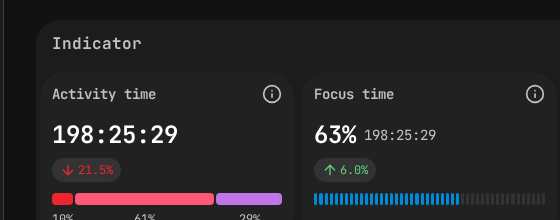
<p><img decoding="async" loading="lazy" alt="Activity Time and Focus Time metrics cards" src="https://pandev-metrics.com/docs/assets/images/employee-metrics-safe-58ea998e310608925688331c8112f731.png" width="560" height="220" class="img_ev3q">
<em>PanDev Metrics employee view — Activity Time (198h) and Focus Time (63%) at a glance.</em></p>
<h2 class="anchor anchorTargetStickyNavbar_Vzrq" id="2-focus-time">2. Focus Time<a href="https://pandev-metrics.com/docs/blog/10-metrics-every-engineering-manager-should-track#2-focus-time" class="hash-link" aria-label="Direct link to 2. Focus Time" title="Direct link to 2. Focus Time" translate="no">​</a></h2>
<p><strong>What it is:</strong> Uninterrupted blocks of coding time — continuous work sessions without context switches between projects or long gaps.</p>
<p><strong>Why it matters:</strong> Cal Newport's <em>Deep Work</em> research argues that most professionals can sustain at most 4 hours of deeply focused creative work per day. For developers, even that ceiling is hard to reach. Gloria Mark's research at UC Irvine found it takes an average of <strong>23 minutes</strong> to refocus after a single interruption. A developer with two 90-minute focus blocks is <strong>far more productive</strong> than one with six 30-minute fragments spread across meetings.</p>
<p><strong>How to use it:</strong></p>
<ul>
<li class="">Audit your team's meeting schedule — are you breaking their focus blocks?</li>
<li class="">Aim for at least <strong>one 2-hour uninterrupted block</strong> per developer per day</li>
<li class="">Compare Focus Time across days — if Wednesdays show zero focus blocks, check the meeting calendar</li>
</ul>
<p><strong>Benchmark:</strong> If your developers have less than 1 hour of uninterrupted focus per day, your meeting culture is the problem.</p>
<h2 class="anchor anchorTargetStickyNavbar_Vzrq" id="3-lead-time-for-changes-with-stage-breakdown">3. Lead Time for Changes (with Stage Breakdown)<a href="https://pandev-metrics.com/docs/blog/10-metrics-every-engineering-manager-should-track#3-lead-time-for-changes-with-stage-breakdown" class="hash-link" aria-label="Direct link to 3. Lead Time for Changes (with Stage Breakdown)" title="Direct link to 3. Lead Time for Changes (with Stage Breakdown)" translate="no">​</a></h2>
<p><strong>What it is:</strong> Time from first commit to production deployment, broken into stages: <strong>Coding → Pickup → Review → Deploy</strong>.</p>
<p><strong>Why it matters:</strong> This is the single most actionable DORA metric. But only if you break it into stages.</p>
<p><strong>How to use it:</strong></p>
<ul>
<li class=""><strong>Coding stage too long?</strong> Tasks are too big. Break them into smaller PRs.</li>
<li class=""><strong>Pickup stage too long?</strong> PRs sit unreviewed. Establish a "review within 4 hours" team norm.</li>
<li class=""><strong>Review stage too long?</strong> Too many review rounds. Create a PR checklist to reduce back-and-forth.</li>
<li class=""><strong>Deploy stage too long?</strong> CI/CD pipeline needs optimization. Talk to DevOps.</li>
</ul>
<p><strong>Benchmark (Elite teams):</strong> Total Lead Time under 1 day. Pickup time under 4 hours.</p>
<h2 class="anchor anchorTargetStickyNavbar_Vzrq" id="4-deployment-frequency">4. Deployment Frequency<a href="https://pandev-metrics.com/docs/blog/10-metrics-every-engineering-manager-should-track#4-deployment-frequency" class="hash-link" aria-label="Direct link to 4. Deployment Frequency" title="Direct link to 4. Deployment Frequency" translate="no">​</a></h2>
<p><strong>What it is:</strong> How often your team ships code to production.</p>
<p><strong>Why it matters:</strong> Frequent deploys = smaller changesets = lower risk = faster feedback. Teams that deploy daily find bugs in hours. Teams that deploy monthly find bugs in... the next month.</p>
<p><strong>How to use it:</strong></p>
<ul>
<li class="">Track the trend, not the absolute number</li>
<li class="">If frequency is dropping, ask why — is it a complex feature, or is the process slowing down?</li>
<li class="">Set a team goal (e.g., "at least 3 deploys per week")</li>
</ul>
<p><strong>Benchmark:</strong> High-performing teams deploy between daily and weekly.</p>
<h2 class="anchor anchorTargetStickyNavbar_Vzrq" id="5-change-failure-rate">5. Change Failure Rate<a href="https://pandev-metrics.com/docs/blog/10-metrics-every-engineering-manager-should-track#5-change-failure-rate" class="hash-link" aria-label="Direct link to 5. Change Failure Rate" title="Direct link to 5. Change Failure Rate" translate="no">​</a></h2>
<p><strong>What it is:</strong> Percentage of deployments that cause production incidents (requiring hotfix, rollback, or patch).</p>
<p><strong>Why it matters:</strong> It keeps deployment frequency honest. Deploying 10 times a day means nothing if 4 of those deployments break something.</p>
<p><strong>How to use it:</strong></p>
<ul>
<li class="">Track it alongside Deployment Frequency — they must improve together</li>
<li class="">If failure rate spikes, review what changed — new team members? Reduced testing? Rushed deadline?</li>
<li class="">A <strong>0% failure rate is suspicious</strong>, not impressive. It usually means insufficient monitoring.</li>
</ul>
<p><strong>Benchmark:</strong> 5-10% is healthy. Below 5% is elite. Above 15% is a red flag.</p>
<h2 class="anchor anchorTargetStickyNavbar_Vzrq" id="6-planning-accuracy">6. Planning Accuracy<a href="https://pandev-metrics.com/docs/blog/10-metrics-every-engineering-manager-should-track#6-planning-accuracy" class="hash-link" aria-label="Direct link to 6. Planning Accuracy" title="Direct link to 6. Planning Accuracy" translate="no">​</a></h2>
<p><strong>What it is:</strong> How close your team's estimates are to actual delivery time. The ratio of planned effort to actual effort.</p>
<p><strong>Why it matters:</strong> Inaccurate planning creates a cascade: missed deadlines → scope cuts → unhappy stakeholders → pressure → more missed deadlines. Breaking this cycle starts with measuring it.</p>
<p><strong>How to use it:</strong></p>
<ul>
<li class="">Review at every retrospective</li>
<li class="">Track which <strong>types of tasks</strong> are consistently underestimated (usually: integrations, migrations, "small" refactors)</li>
<li class="">Use historical data to calibrate future estimates — "tasks like this typically take 1.5x our estimate"</li>
</ul>
<p><strong>Benchmark:</strong> A Planning Accuracy of 70-80% is good. Below 50% means your estimation process is broken.</p>
<h2 class="anchor anchorTargetStickyNavbar_Vzrq" id="7-delivery-index">7. Delivery Index<a href="https://pandev-metrics.com/docs/blog/10-metrics-every-engineering-manager-should-track#7-delivery-index" class="hash-link" aria-label="Direct link to 7. Delivery Index" title="Direct link to 7. Delivery Index" translate="no">​</a></h2>
<p><strong>What it is:</strong> A velocity metric that measures development speed without relying on lines of code — factoring in complexity, commits, and delivery throughput.</p>
<p><strong>Why it matters:</strong> Lines of code is a terrible metric (deleting code can be more valuable than writing it). Delivery Index gives you a velocity signal that actually correlates with output.</p>
<p><strong>How to use it:</strong></p>
<ul>
<li class="">Track weekly trends per team</li>
<li class="">Compare a team to its <strong>own historical baseline</strong>, not to other teams</li>
<li class="">A declining Delivery Index with stable Activity Time suggests increasing complexity or tech debt</li>
</ul>
<h2 class="anchor anchorTargetStickyNavbar_Vzrq" id="8-mttr-mean-time-to-restore">8. MTTR (Mean Time to Restore)<a href="https://pandev-metrics.com/docs/blog/10-metrics-every-engineering-manager-should-track#8-mttr-mean-time-to-restore" class="hash-link" aria-label="Direct link to 8. MTTR (Mean Time to Restore)" title="Direct link to 8. MTTR (Mean Time to Restore)" translate="no">​</a></h2>
<p><strong>What it is:</strong> Average time from a production incident to full recovery.</p>
<p><strong>Why it matters:</strong> You can't prevent all incidents. But you can <strong>recover fast</strong>. An MTTR of 30 minutes means an incident is a hiccup. An MTTR of 3 days means it's a crisis.</p>
<p><strong>How to use it:</strong></p>
<ul>
<li class="">Run incident post-mortems and track MTTR for each</li>
<li class="">Invest in <strong>detection</strong> (fast alerting) and <strong>recovery</strong> (feature flags, rollback automation)</li>
<li class="">Set a team MTTR target and review monthly</li>
</ul>
<p><strong>Benchmark:</strong> Elite teams recover in under 1 hour. If your MTTR is over 1 day, prioritize observability and rollback mechanisms.</p>
<h2 class="anchor anchorTargetStickyNavbar_Vzrq" id="9-cost-per-project">9. Cost per Project<a href="https://pandev-metrics.com/docs/blog/10-metrics-every-engineering-manager-should-track#9-cost-per-project" class="hash-link" aria-label="Direct link to 9. Cost per Project" title="Direct link to 9. Cost per Project" translate="no">​</a></h2>
<p><strong>What it is:</strong> The actual engineering cost of each project, calculated from developer time (tracked via IDE) multiplied by hourly rates.</p>
<p><strong>Why it matters:</strong> When the CEO asks "how much did Feature X cost us?" most engineering leaders can't answer. This metric lets you respond with real numbers.</p>
<p><strong>How to use it:</strong></p>
<ul>
<li class="">Report to leadership with confidence — "Project Alpha cost $45,000 in engineering time over 6 weeks"</li>
<li class="">Compare cost across projects to identify where engineering investment goes</li>
<li class="">Use it for budgeting — historical cost data makes future estimates more accurate</li>
</ul>
<p><strong>Why most companies don't track it:</strong> Because it requires combining time tracking with financial data. PanDev Metrics does this automatically through IDE heartbeats + configurable hourly rates.</p>
<h2 class="anchor anchorTargetStickyNavbar_Vzrq" id="10-team-productivity-trend-30-day">10. Team Productivity Trend (30-day)<a href="https://pandev-metrics.com/docs/blog/10-metrics-every-engineering-manager-should-track#10-team-productivity-trend-30-day" class="hash-link" aria-label="Direct link to 10. Team Productivity Trend (30-day)" title="Direct link to 10. Team Productivity Trend (30-day)" translate="no">​</a></h2>
<p><strong>What it is:</strong> A rolling 30-day view of your team's combined productivity score — accounting for activity, focus time, delivery index, and other factors.</p>
<p><strong>Why it matters:</strong> Point-in-time metrics are noisy. Trends tell the story. A team trending down over 4 weeks needs attention. A team trending up is doing something right — find out what.</p>
<p><strong>How to use it:</strong></p>
<ul>
<li class="">Review in your weekly team sync</li>
<li class="">Correlate dips with events (holidays, re-orgs, on-call rotations, crunch periods)</li>
<li class="">Use it to <strong>detect burnout early</strong> — a gradual decline over weeks often signals overwork before the developer tells you</li>
</ul>
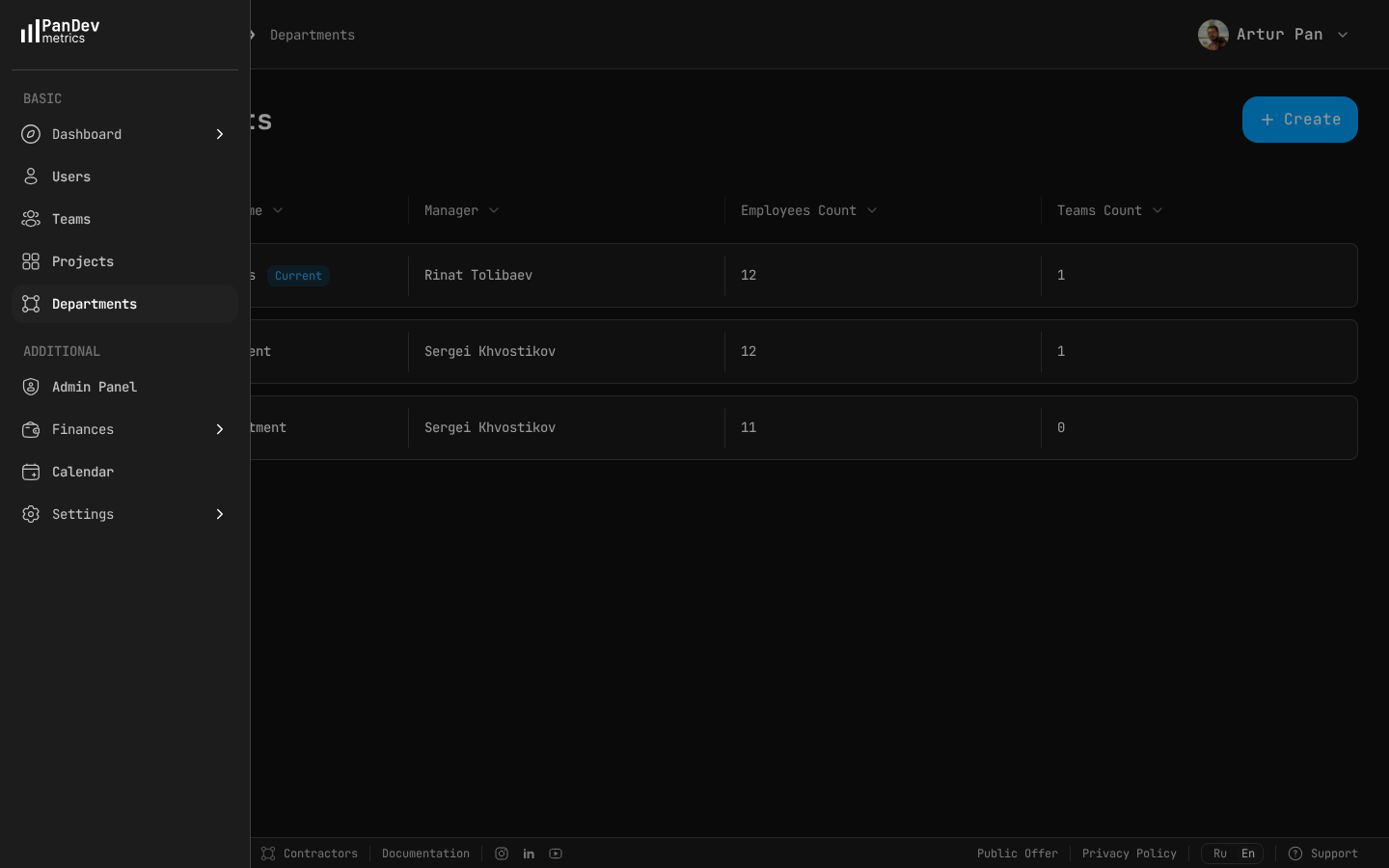
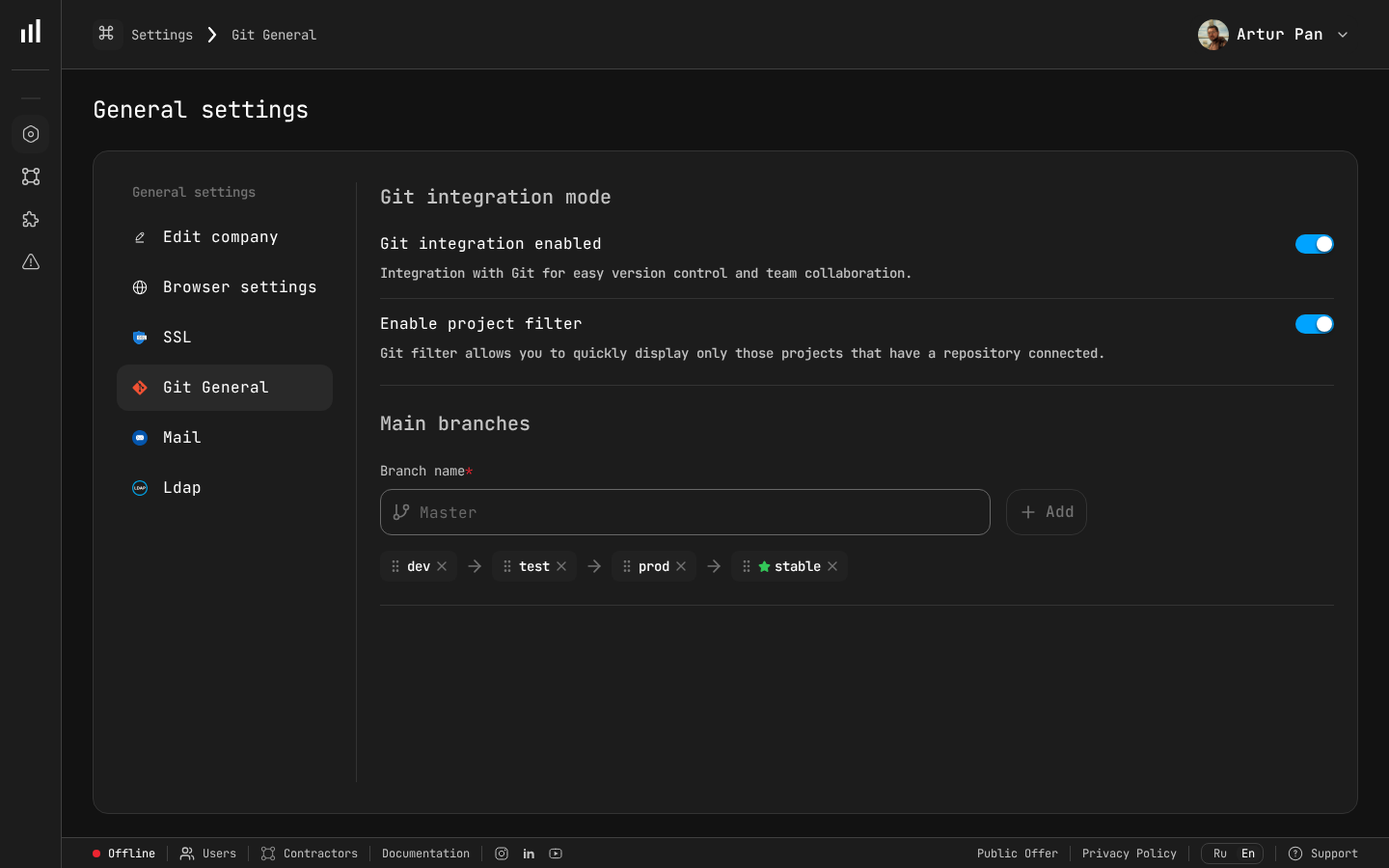
<p><img decoding="async" loading="lazy" alt="Departments overview with team structure and employee counts" src="https://pandev-metrics.com/docs/assets/images/dashboard-departments-f67f571db6718bd47bff72f14c08c5ec.png" width="1440" height="900" class="img_ev3q">
<em>PanDev Metrics departments view — see how teams are structured, who manages each department, and where headcount is distributed.</em></p>
<h2 class="anchor anchorTargetStickyNavbar_Vzrq" id="the-anti-metrics-what-not-to-track">The Anti-Metrics: What NOT to Track<a href="https://pandev-metrics.com/docs/blog/10-metrics-every-engineering-manager-should-track#the-anti-metrics-what-not-to-track" class="hash-link" aria-label="Direct link to The Anti-Metrics: What NOT to Track" title="Direct link to The Anti-Metrics: What NOT to Track" translate="no">​</a></h2>
<table><thead><tr><th>Metric</th><th>Why it's harmful</th></tr></thead><tbody><tr><td><strong>Lines of code</strong></td><td>Incentivizes bloated code. Deleting code is often more valuable.</td></tr><tr><td><strong>Commits per day</strong></td><td>Incentivizes meaningless micro-commits.</td></tr><tr><td><strong>Hours in office/online</strong></td><td>Measures presence, not productivity.</td></tr><tr><td><strong>Individual rankings</strong></td><td>Creates competition instead of collaboration.</td></tr><tr><td><strong>Story points velocity</strong></td><td>Easily gamed, varies wildly between teams, meaningless for comparison. The SPACE framework (Forsgren et al., 2021) explicitly warns against using single activity metrics to evaluate individuals.</td></tr></tbody></table>
<blockquote>
<p>"As a CTO and for our tech leads, it's important to see not individual employees but the state of the development process: where it's efficient and where it breaks down. The product allows natively collecting metrics right from the IDE, without feeling controlled or surveilled."
— Maksim Popov, CTO ABR Tech (<a href="https://forbes.kz/" target="_blank" rel="noopener noreferrer" class="">Forbes Kazakhstan, April 2026</a>)</p>
</blockquote>
<h2 class="anchor anchorTargetStickyNavbar_Vzrq" id="building-your-dashboard">Building Your Dashboard<a href="https://pandev-metrics.com/docs/blog/10-metrics-every-engineering-manager-should-track#building-your-dashboard" class="hash-link" aria-label="Direct link to Building Your Dashboard" title="Direct link to Building Your Dashboard" translate="no">​</a></h2>
<p>Start with these three. Add more only when you've acted on these:</p>
<p><strong>Tier 1 (start here):</strong></p>
<ol>
<li class="">Activity Time (team average)</li>
<li class="">Lead Time with stage breakdown</li>
<li class="">Deployment Frequency</li>
</ol>
<p><strong>Tier 2 (add after 1 month):</strong>
4. Focus Time
5. Change Failure Rate
6. Planning Accuracy</p>
<p><strong>Tier 3 (add after 3 months):</strong>
7. Cost per Project
8. Delivery Index
9. MTTR
10. Team Productivity Trend</p>
<hr>
<p><em>Benchmarks based on DORA State of DevOps Reports (Google Cloud, 2019-2023), SPACE framework (Forsgren et al., ACM Queue, 2021), McKinsey developer productivity report (2023), and PanDev Metrics platform data across B2B engineering organizations.</em></p>
<p><strong>Track all 10 metrics from a single platform.</strong> <a href="https://pandev-metrics.com/" target="_blank" rel="noopener noreferrer" class="">PanDev Metrics</a> connects to your IDE, Git provider, and task tracker — giving you a complete picture in one dashboard. Free to start.</p>]]></content>
        <author>
            <name>Artur Pan</name>
            <uri>https://www.linkedin.com/in/apan98/</uri>
        </author>
        <category label="engineering-management" term="engineering-management"/>
        <category label="metrics" term="metrics"/>
        <category label="developer-productivity" term="developer-productivity"/>
        <category label="leadership" term="leadership"/>
    </entry>
    <entry>
        <title type="html"><![CDATA[How to Measure Lead Time for Changes: The 4-Stage Breakdown That Reveals Your Real Bottlenecks]]></title>
        <id>https://pandev-metrics.com/docs/blog/lead-time-4-stages-breakdown</id>
        <link href="https://pandev-metrics.com/docs/blog/lead-time-4-stages-breakdown"/>
        <updated>2026-04-08T00:00:00.000Z</updated>
        <summary type="html"><![CDATA[Break Lead Time into 4 stages — Coding, Pickup, Review, Deploy — to find where your delivery pipeline actually stalls. With benchmarks and fixes.]]></summary>
        <content type="html"><![CDATA[<p>Stripe's 2018 "Developer Coefficient" study estimated that $300 billion is lost globally each year to developer inefficiency. A large share of that waste hides inside a single metric: Lead Time. A Lead Time of 5 days tells you nothing. Is it 4 days of coding and 1 day of review? Or 1 day of coding and 4 days waiting for someone to open your merge request? The fix for each scenario is completely different — and if you're treating Lead Time as a single number, you're solving the wrong problem.</p>
<!-- -->
<h2 class="anchor anchorTargetStickyNavbar_Vzrq" id="why-a-single-lead-time-number-is-useless">Why a Single Lead Time Number Is Useless<a href="https://pandev-metrics.com/docs/blog/lead-time-4-stages-breakdown#why-a-single-lead-time-number-is-useless" class="hash-link" aria-label="Direct link to Why a Single Lead Time Number Is Useless" title="Direct link to Why a Single Lead Time Number Is Useless" translate="no">​</a></h2>
<p>The DORA research program defines Lead Time for Changes as the time from first commit to code running in production. The 2023 State of DevOps Report sets the benchmarks:</p>
<table><thead><tr><th>Performance Level</th><th>Lead Time</th></tr></thead><tbody><tr><td>Elite</td><td>Less than 1 hour</td></tr><tr><td>High</td><td>Between 1 day and 1 week</td></tr><tr><td>Medium</td><td>Between 1 week and 1 month</td></tr><tr><td>Low</td><td>More than 1 month</td></tr></tbody></table>
<p>These benchmarks are useful for positioning your team on the industry curve. They are useless for figuring out what to fix. If your Lead Time is 12 days, the aggregate number doesn't tell you whether to invest in CI/CD automation, code review processes, or developer tooling.</p>
<p>You need decomposition.</p>
<h2 class="anchor anchorTargetStickyNavbar_Vzrq" id="the-4-stages-of-lead-time">The 4 Stages of Lead Time<a href="https://pandev-metrics.com/docs/blog/lead-time-4-stages-breakdown#the-4-stages-of-lead-time" class="hash-link" aria-label="Direct link to The 4 Stages of Lead Time" title="Direct link to The 4 Stages of Lead Time" translate="no">​</a></h2>
<p>At PanDev Metrics, we break Lead Time into four sequential stages. Each stage represents a distinct phase with distinct owners, distinct causes of delay, and distinct interventions.</p>
<h3 class="anchor anchorTargetStickyNavbar_Vzrq" id="stage-1-coding-time">Stage 1: Coding Time<a href="https://pandev-metrics.com/docs/blog/lead-time-4-stages-breakdown#stage-1-coding-time" class="hash-link" aria-label="Direct link to Stage 1: Coding Time" title="Direct link to Stage 1: Coding Time" translate="no">​</a></h3>
<p><strong>Definition:</strong> From the first commit on a branch to the moment a merge request (or pull request) is created.</p>
<p><strong>What it captures:</strong> The time a developer spends writing, testing locally, and preparing the change for review. This includes IDE time, local debugging, and writing test coverage.</p>
<p><strong>Healthy range:</strong> 1–3 days for a typical feature. Anything over 5 days often signals scope creep, unclear requirements, or a developer stuck without help.</p>
<p><strong>Common antipatterns:</strong></p>
<ul>
<li class="">Developers batch multiple unrelated changes into one MR because the review process is painful</li>
<li class="">No work-in-progress limits, so developers context-switch between 3–4 features</li>
<li class="">Requirements are ambiguous, leading to rework before the MR is even opened</li>
</ul>
<p><strong>What to fix:</strong></p>
<ul>
<li class="">Break work into smaller tickets (aim for MRs under 400 lines of diff)</li>
<li class="">Track IDE activity with heartbeat data to distinguish "actively coding" from "branch sits idle"</li>
<li class="">Pair unclear tickets with a short design review before coding starts</li>
</ul>
<h3 class="anchor anchorTargetStickyNavbar_Vzrq" id="stage-2-pickup-time">Stage 2: Pickup Time<a href="https://pandev-metrics.com/docs/blog/lead-time-4-stages-breakdown#stage-2-pickup-time" class="hash-link" aria-label="Direct link to Stage 2: Pickup Time" title="Direct link to Stage 2: Pickup Time" translate="no">​</a></h3>
<p><strong>Definition:</strong> From when the merge request is created to the first meaningful review action (comment, approval, or request for changes).</p>
<p><strong>What it captures:</strong> How long code sits waiting for someone to start reviewing it. This is pure queue time — no value is being added.</p>
<p><strong>Healthy range:</strong> Under 4 hours during business hours. Over 24 hours is a red flag.</p>
<p><strong>Why this stage matters most:</strong> Our platform data across B2B engineering teams consistently shows Pickup Time as the #1 hidden bottleneck — a pattern that mirrors findings in the GitHub Octoverse reports, where pull request wait times are a leading indicator of delivery friction. Teams often assume their problem is slow reviews. In reality, the review itself takes 30 minutes — but the MR sat in a queue for 2 days before anyone opened it.</p>
<p><strong>Common antipatterns:</strong></p>
<ul>
<li class="">No clear reviewer assignment — MRs sit in a shared queue that everyone ignores</li>
<li class="">Reviewers are overloaded (each reviewer has 8+ open MRs assigned)</li>
<li class="">Teams work across time zones without accounting for review handoff delays</li>
<li class="">MR notifications drown in Slack noise</li>
</ul>
<p><strong>What to fix:</strong></p>
<ul>
<li class="">Assign reviewers explicitly at MR creation (use CODEOWNERS or round-robin)</li>
<li class="">Set a team SLA: "Every MR gets a first review within 4 business hours"</li>
<li class="">Create a dedicated review channel or dashboard — not a Slack thread</li>
<li class="">Monitor Pickup Time as a team metric, not an individual metric</li>
</ul>
<h3 class="anchor anchorTargetStickyNavbar_Vzrq" id="stage-3-review-time">Stage 3: Review Time<a href="https://pandev-metrics.com/docs/blog/lead-time-4-stages-breakdown#stage-3-review-time" class="hash-link" aria-label="Direct link to Stage 3: Review Time" title="Direct link to Stage 3: Review Time" translate="no">​</a></h3>
<p><strong>Definition:</strong> From the first review action to the merge request being approved and ready to merge.</p>
<p><strong>What it captures:</strong> The back-and-forth of code review — comments, discussions, requested changes, and follow-up commits.</p>
<p><strong>Healthy range:</strong> 4–24 hours for most changes. Multi-day reviews usually signal either large MRs or architectural disagreements that should have been resolved earlier.</p>
<p><strong>Common antipatterns:</strong></p>
<ul>
<li class="">Large MRs (1000+ lines) that take multiple rounds of review</li>
<li class="">"Approval gatekeeping" — only one senior engineer can approve, and they're in meetings all day</li>
<li class="">Nit-picking style issues that could be caught by automated linters</li>
<li class="">Review ping-pong: reviewer requests changes → developer pushes fix 2 days later → reviewer re-reviews 1 day later</li>
</ul>
<p><strong>What to fix:</strong></p>
<ul>
<li class="">Enforce MR size limits (most teams see optimal throughput at 200–400 lines)</li>
<li class="">Automate style and formatting checks (linters, formatters in CI)</li>
<li class="">Expand the pool of approved reviewers — invest in enabling mid-level engineers to review</li>
<li class="">Set expectations for re-review turnaround (same day)</li>
</ul>
<h3 class="anchor anchorTargetStickyNavbar_Vzrq" id="stage-4-deploy-time">Stage 4: Deploy Time<a href="https://pandev-metrics.com/docs/blog/lead-time-4-stages-breakdown#stage-4-deploy-time" class="hash-link" aria-label="Direct link to Stage 4: Deploy Time" title="Direct link to Stage 4: Deploy Time" translate="no">​</a></h3>
<p><strong>Definition:</strong> From merge request approval to code running in production.</p>
<p><strong>What it captures:</strong> The CI/CD pipeline execution, staging validation, manual approval gates, and the actual deployment process.</p>
<p><strong>Healthy range:</strong> Under 1 hour for Elite teams. Under 1 day for High performers.</p>
<p><strong>Common antipatterns:</strong></p>
<ul>
<li class="">Manual deployment windows ("we deploy on Tuesdays")</li>
<li class="">Slow CI pipelines (45+ minutes) that block the merge queue</li>
<li class="">Manual QA gates that require sign-off from a specific person</li>
<li class="">Deploy freezes that stack up changes and increase batch risk</li>
</ul>
<p><strong>What to fix:</strong></p>
<ul>
<li class="">Invest in CI speed: parallelize tests, cache dependencies, use faster runners</li>
<li class="">Move to continuous deployment with feature flags instead of release trains</li>
<li class="">Replace manual QA gates with automated smoke tests and canary deployments</li>
<li class="">Track deploy queue length — if 10 MRs are waiting to deploy, that's a problem</li>
</ul>
<h2 class="anchor anchorTargetStickyNavbar_Vzrq" id="benchmark-data-where-teams-actually-lose-time">Benchmark Data: Where Teams Actually Lose Time<a href="https://pandev-metrics.com/docs/blog/lead-time-4-stages-breakdown#benchmark-data-where-teams-actually-lose-time" class="hash-link" aria-label="Direct link to Benchmark Data: Where Teams Actually Lose Time" title="Direct link to Benchmark Data: Where Teams Actually Lose Time" translate="no">​</a></h2>
<p>Based on the DORA State of DevOps reports and industry research (consistent with patterns described in Forsgren, Humble, and Kim's <em>Accelerate</em>, 2018), here's where time typically goes for a team with a 10-day Lead Time:</p>
<table><thead><tr><th>Stage</th><th>Typical % of Lead Time</th><th>Typical Duration</th><th>Biggest Lever</th></tr></thead><tbody><tr><td>Coding</td><td>30–40%</td><td>3–4 days</td><td>Smaller tickets, clearer specs</td></tr><tr><td>Pickup</td><td>25–35%</td><td>2.5–3.5 days</td><td>Reviewer assignment, SLAs</td></tr><tr><td>Review</td><td>15–25%</td><td>1.5–2.5 days</td><td>Smaller MRs, automation</td></tr><tr><td>Deploy</td><td>10–15%</td><td>1–1.5 days</td><td>CI/CD speed, remove gates</td></tr></tbody></table>
<p>The takeaway: <strong>Pickup and Review together consume 40–60% of Lead Time</strong> in most organizations. These are process problems, not technical problems. They don't require new infrastructure — they require new habits.</p>
<h2 class="anchor anchorTargetStickyNavbar_Vzrq" id="how-to-measure-each-stage">How to Measure Each Stage<a href="https://pandev-metrics.com/docs/blog/lead-time-4-stages-breakdown#how-to-measure-each-stage" class="hash-link" aria-label="Direct link to How to Measure Each Stage" title="Direct link to How to Measure Each Stage" translate="no">​</a></h2>
<h3 class="anchor anchorTargetStickyNavbar_Vzrq" id="option-1-manual-tracking-not-recommended-long-term">Option 1: Manual Tracking (Not Recommended Long-Term)<a href="https://pandev-metrics.com/docs/blog/lead-time-4-stages-breakdown#option-1-manual-tracking-not-recommended-long-term" class="hash-link" aria-label="Direct link to Option 1: Manual Tracking (Not Recommended Long-Term)" title="Direct link to Option 1: Manual Tracking (Not Recommended Long-Term)" translate="no">​</a></h3>
<p>You can calculate stages from git and your code hosting platform:</p>
<ul>
<li class=""><strong>Coding Time:</strong> First commit timestamp → MR creation timestamp</li>
<li class=""><strong>Pickup Time:</strong> MR creation timestamp → first review comment/approval timestamp</li>
<li class=""><strong>Review Time:</strong> First review action → final approval timestamp</li>
<li class=""><strong>Deploy Time:</strong> Final approval → deployment timestamp (from CI/CD logs)</li>
</ul>
<p>This works for a one-time audit. It breaks down at scale because timestamps live in different systems, edge cases are messy (draft MRs, force-pushes, re-reviews), and nobody wants to maintain a spreadsheet.</p>
<h3 class="anchor anchorTargetStickyNavbar_Vzrq" id="option-2-automated-platform">Option 2: Automated Platform<a href="https://pandev-metrics.com/docs/blog/lead-time-4-stages-breakdown#option-2-automated-platform" class="hash-link" aria-label="Direct link to Option 2: Automated Platform" title="Direct link to Option 2: Automated Platform" translate="no">​</a></h3>
<p>Tools like PanDev Metrics connect to your Git provider (GitLab, GitHub, Bitbucket, Azure DevOps) and calculate all four stages automatically. The advantage isn't just automation — it's consistency. Every team uses the same definitions, the same edge-case handling, and the same benchmarks.</p>
<p>PanDev also correlates Lead Time stages with IDE heartbeat data. This means you can distinguish "Coding Time where a developer is actively writing code" from "Coding Time where a branch sits idle for 3 days because the developer is pulled into incident response."</p>
<p><img decoding="async" loading="lazy" alt="Team dashboard with delivery metrics" src="https://pandev-metrics.com/docs/assets/images/dashboard-clean-073abbdda4655766ee74a155d5088c26.png" width="1440" height="900" class="img_ev3q">
<em>PanDev Metrics team dashboard — track activity, online status, and event timeline to correlate Lead Time improvements with team behavior.</em></p>
<h2 class="anchor anchorTargetStickyNavbar_Vzrq" id="a-real-improvement-playbook">A Real Improvement Playbook<a href="https://pandev-metrics.com/docs/blog/lead-time-4-stages-breakdown#a-real-improvement-playbook" class="hash-link" aria-label="Direct link to A Real Improvement Playbook" title="Direct link to A Real Improvement Playbook" translate="no">​</a></h2>
<p>Here's a step-by-step approach that works for most teams with a Lead Time over 7 days:</p>
<p><strong>Week 1: Measure and baseline</strong></p>
<ul>
<li class="">Set up stage-level tracking for all MRs merged in the last 90 days</li>
<li class="">Identify which stage consumes the most time</li>
<li class="">Present findings to the team without blame — frame it as "where does our process create wait time?"</li>
</ul>
<p><strong>Week 2: Fix Pickup Time (usually the biggest win)</strong></p>
<ul>
<li class="">Implement explicit reviewer assignment</li>
<li class="">Set a team SLA (e.g., first review within 4 business hours)</li>
<li class="">Create visibility: a dashboard showing "MRs waiting for review" with age</li>
</ul>
<p><strong>Week 3–4: Fix Review Time</strong></p>
<ul>
<li class="">Introduce MR size guidelines (under 400 lines)</li>
<li class="">Add linters and formatters to CI to eliminate style-related review comments</li>
<li class="">Expand the reviewer pool</li>
</ul>
<p><strong>Week 5–6: Fix Deploy Time</strong></p>
<ul>
<li class="">Audit CI pipeline duration — target under 15 minutes</li>
<li class="">Remove or automate manual approval gates</li>
<li class="">Move toward deploying each MR independently</li>
</ul>
<p><strong>Expected results:</strong> Teams following this playbook typically reduce Lead Time by 40-60% within 6 weeks, consistent with improvement rates observed in the DORA research. The biggest gains come from Pickup Time — it's common to go from 3 days to 4 hours just by assigning reviewers and tracking the SLA.</p>
<h2 class="anchor anchorTargetStickyNavbar_Vzrq" id="what-about-coding-time">What About Coding Time?<a href="https://pandev-metrics.com/docs/blog/lead-time-4-stages-breakdown#what-about-coding-time" class="hash-link" aria-label="Direct link to What About Coding Time?" title="Direct link to What About Coding Time?" translate="no">​</a></h2>
<p>Coding Time is the hardest stage to compress because it depends on the complexity of the work. However, two interventions consistently help:</p>
<ol>
<li class="">
<p><strong>Smaller scope per ticket.</strong> If the median MR is 800 lines, the Coding Time reflects a large scope. Breaking tickets into smaller deliverables (200–400 lines) shortens each cycle.</p>
</li>
<li class="">
<p><strong>IDE activity tracking.</strong> Tools that capture developer heartbeats (keystrokes, file saves, build triggers) can distinguish between "actively coding" and "blocked." If a developer's branch shows zero activity for 2 days mid-coding, something is wrong — and it's probably not laziness. It's a blocker, a context switch, or a missing dependency.</p>
</li>
</ol>
<p>PanDev Metrics captures IDE heartbeats from 10+ IDE plugins (VS Code, JetBrains, Eclipse, Xcode, Visual Studio, and more) specifically to provide this visibility — not for surveillance, but for identifying systemic blockers.</p>
<h2 class="anchor anchorTargetStickyNavbar_Vzrq" id="common-mistakes-when-measuring-lead-time">Common Mistakes When Measuring Lead Time<a href="https://pandev-metrics.com/docs/blog/lead-time-4-stages-breakdown#common-mistakes-when-measuring-lead-time" class="hash-link" aria-label="Direct link to Common Mistakes When Measuring Lead Time" title="Direct link to Common Mistakes When Measuring Lead Time" translate="no">​</a></h2>
<p><strong>Mistake 1: Measuring from ticket creation, not first commit.</strong> Ticket creation captures planning time, which is a product management metric, not a delivery metric. DORA Lead Time starts at first commit.</p>
<p><strong>Mistake 2: Excluding weekends and holidays.</strong> The clock doesn't stop for customers waiting for a fix. Measure calendar time. If weekends distort your numbers, that tells you something useful about your deployment process.</p>
<p><strong>Mistake 3: Only measuring "happy path" MRs.</strong> Exclude reverted MRs or hotfixes and you lose the most informative data points. Measure everything, then segment.</p>
<p><strong>Mistake 4: Averaging instead of using percentiles.</strong> A mean Lead Time of 3 days might hide a bimodal distribution: 50% of MRs merge in 1 day, 50% take 5 days. Use p50, p75, and p95 to understand the real distribution.</p>
<p><strong>Mistake 5: Treating Lead Time as an individual metric.</strong> Lead Time is a team metric. Using it to evaluate individual developers creates incentives to game the numbers (small cosmetic MRs, skipping tests, avoiding complex work).</p>
<h2 class="anchor anchorTargetStickyNavbar_Vzrq" id="from-measurement-to-improvement">From Measurement to Improvement<a href="https://pandev-metrics.com/docs/blog/lead-time-4-stages-breakdown#from-measurement-to-improvement" class="hash-link" aria-label="Direct link to From Measurement to Improvement" title="Direct link to From Measurement to Improvement" translate="no">​</a></h2>
<p>The goal of measuring Lead Time in stages is not to produce dashboards. It's to make better decisions about where to invest engineering effort in process improvement. When you can see that 35% of your Lead Time is Pickup Time, you stop debating whether to rewrite the CI pipeline and start fixing reviewer assignment.</p>
<p>Measurement without action is overhead. Action without measurement is guessing. The 4-stage breakdown gives you the resolution to do both.</p>
<hr>
<p><em>Benchmarks cited from the DORA State of DevOps Reports (2019–2023) published by Google Cloud / DORA team.</em></p>
<p><strong>Ready to see where your Lead Time actually goes?</strong> PanDev Metrics breaks down Lead Time into Coding, Pickup, Review, and Deploy stages automatically — for GitLab, GitHub, Bitbucket, and Azure DevOps. <a href="https://pandev-metrics.com/" target="_blank" rel="noopener noreferrer" class="">Start measuring what matters →</a></p>]]></content>
        <author>
            <name>Artur Pan</name>
            <uri>https://www.linkedin.com/in/apan98/</uri>
        </author>
        <category label="dora-metrics" term="dora-metrics"/>
        <category label="lead-time" term="lead-time"/>
        <category label="engineering-leadership" term="engineering-leadership"/>
        <category label="bottlenecks" term="bottlenecks"/>
    </entry>
    <entry>
        <title type="html"><![CDATA[From Monthly Releases to Daily Deploys: A Practical Roadmap]]></title>
        <id>https://pandev-metrics.com/docs/blog/deployment-frequency-monthly-to-daily</id>
        <link href="https://pandev-metrics.com/docs/blog/deployment-frequency-monthly-to-daily"/>
        <updated>2026-04-06T00:00:00.000Z</updated>
        <summary type="html"><![CDATA[A step-by-step roadmap to move from monthly release cycles to daily deployments. With benchmarks, prerequisites, and real-world tradeoffs.]]></summary>
        <content type="html"><![CDATA[<p>The 2023 Accelerate State of DevOps Report found that elite teams deploy on demand, multiple times per day — and have <strong>fewer</strong> production incidents than teams deploying monthly. After ten years and 36,000+ survey respondents, the data is unambiguous: deploying more often does not mean breaking more things. Yet most teams are stuck in monthly release cycles, treating frequency as risk instead of risk mitigation. Here's a practical roadmap to change that.</p>
<!-- -->
<h2 class="anchor anchorTargetStickyNavbar_Vzrq" id="what-deployment-frequency-actually-measures">What Deployment Frequency Actually Measures<a href="https://pandev-metrics.com/docs/blog/deployment-frequency-monthly-to-daily#what-deployment-frequency-actually-measures" class="hash-link" aria-label="Direct link to What Deployment Frequency Actually Measures" title="Direct link to What Deployment Frequency Actually Measures" translate="no">​</a></h2>
<p>Deployment Frequency is one of the four DORA metrics. It measures how often your organization deploys code to production. Not to staging. Not to a QA environment. Production.</p>
<p>The 2023 State of DevOps Report benchmarks:</p>
<table><thead><tr><th>Performance Level</th><th>Deployment Frequency</th></tr></thead><tbody><tr><td>Elite</td><td>On-demand (multiple deploys per day)</td></tr><tr><td>High</td><td>Between once per day and once per week</td></tr><tr><td>Medium</td><td>Between once per week and once per month</td></tr><tr><td>Low</td><td>Fewer than once per month</td></tr></tbody></table>
<p>The gap between Elite and Low performers is staggering. Elite teams deploy <strong>973x more frequently</strong> than low performers. This isn't a marginal difference — it's a fundamentally different way of building software.</p>
<h2 class="anchor anchorTargetStickyNavbar_Vzrq" id="why-monthly-releases-cause-more-incidents-not-fewer">Why Monthly Releases Cause More Incidents, Not Fewer<a href="https://pandev-metrics.com/docs/blog/deployment-frequency-monthly-to-daily#why-monthly-releases-cause-more-incidents-not-fewer" class="hash-link" aria-label="Direct link to Why Monthly Releases Cause More Incidents, Not Fewer" title="Direct link to Why Monthly Releases Cause More Incidents, Not Fewer" translate="no">​</a></h2>
<p>It sounds counterintuitive: deploy more often, have fewer problems. But the math is straightforward.</p>
<p><strong>A monthly release bundles 4 weeks of changes into a single deployment.</strong> If something breaks, the blast radius is enormous. You have to sift through hundreds of commits to find the issue. Rollback means losing everything — including the 95% of changes that were fine.</p>
<p><strong>A daily deploy ships a few hours of changes.</strong> If something breaks, the diff is small. You know exactly what changed. Rollback is surgical. The mean time to restore (MTTR) drops dramatically because diagnosis is trivial.</p>
<p>The DORA data supports this: teams with Elite deployment frequency also have the lowest Change Failure Rate. More deploys = smaller batches = lower risk per deploy.</p>
<table><thead><tr><th>Batch Size</th><th>Avg Commits per Deploy</th><th>Typical Rollback Time</th><th>Debugging Difficulty</th></tr></thead><tbody><tr><td>Monthly</td><td>200–500+</td><td>Hours to days</td><td>Very high</td></tr><tr><td>Weekly</td><td>50–150</td><td>30 min to hours</td><td>Moderate</td></tr><tr><td>Daily</td><td>5–30</td><td>Minutes to 30 min</td><td>Low</td></tr><tr><td>On-demand</td><td>1–5</td><td>Minutes</td><td>Trivial</td></tr></tbody></table>
<h2 class="anchor anchorTargetStickyNavbar_Vzrq" id="the-prerequisites-dont-skip-these">The Prerequisites (Don't Skip These)<a href="https://pandev-metrics.com/docs/blog/deployment-frequency-monthly-to-daily#the-prerequisites-dont-skip-these" class="hash-link" aria-label="Direct link to The Prerequisites (Don't Skip These)" title="Direct link to The Prerequisites (Don't Skip These)" translate="no">​</a></h2>
<p>Before you increase deployment frequency, you need certain foundations in place. Skipping them turns "deploy more often" into "break production more often."</p>
<h3 class="anchor anchorTargetStickyNavbar_Vzrq" id="1-automated-testing-you-trust">1. Automated Testing You Trust<a href="https://pandev-metrics.com/docs/blog/deployment-frequency-monthly-to-daily#1-automated-testing-you-trust" class="hash-link" aria-label="Direct link to 1. Automated Testing You Trust" title="Direct link to 1. Automated Testing You Trust" translate="no">​</a></h3>
<p>You don't need 100% code coverage. You need a test suite that, when it passes, gives you confidence to deploy. Specifically:</p>
<ul>
<li class=""><strong>Unit tests</strong> covering core business logic</li>
<li class=""><strong>Integration tests</strong> for critical user flows (login, checkout, data processing)</li>
<li class=""><strong>Smoke tests</strong> that run post-deploy and verify the application starts correctly</li>
</ul>
<p>If your team routinely ignores test failures ("oh, that test is flaky"), fix or delete those tests first. A test suite nobody trusts is worse than no tests — it creates a false sense of security and slows down the pipeline.</p>
<h3 class="anchor anchorTargetStickyNavbar_Vzrq" id="2-cicd-pipeline-under-15-minutes">2. CI/CD Pipeline Under 15 Minutes<a href="https://pandev-metrics.com/docs/blog/deployment-frequency-monthly-to-daily#2-cicd-pipeline-under-15-minutes" class="hash-link" aria-label="Direct link to 2. CI/CD Pipeline Under 15 Minutes" title="Direct link to 2. CI/CD Pipeline Under 15 Minutes" translate="no">​</a></h3>
<p>If your pipeline takes 45 minutes, deploying daily means developers wait 45 minutes for feedback on every change. That's not sustainable. Target:</p>
<table><thead><tr><th>Pipeline Stage</th><th>Target Duration</th></tr></thead><tbody><tr><td>Build</td><td>Under 2 minutes</td></tr><tr><td>Unit tests</td><td>Under 5 minutes</td></tr><tr><td>Integration tests</td><td>Under 8 minutes</td></tr><tr><td>Deploy to staging</td><td>Under 2 minutes</td></tr><tr><td>Smoke tests</td><td>Under 2 minutes</td></tr><tr><td><strong>Total</strong></td><td><strong>Under 15 minutes</strong></td></tr></tbody></table>
<p>Common speedups: parallelize test suites, cache dependencies (Docker layers, npm/Maven caches), use faster CI runners, split slow tests into a separate non-blocking pipeline.</p>
<h3 class="anchor anchorTargetStickyNavbar_Vzrq" id="3-feature-flags">3. Feature Flags<a href="https://pandev-metrics.com/docs/blog/deployment-frequency-monthly-to-daily#3-feature-flags" class="hash-link" aria-label="Direct link to 3. Feature Flags" title="Direct link to 3. Feature Flags" translate="no">​</a></h3>
<p>When you deploy daily, you need to decouple deployment from release. Feature flags let you merge and deploy code that isn't ready for users yet. This eliminates long-lived feature branches and the merge conflicts that come with them.</p>
<p>Essential feature flag capabilities:</p>
<ul>
<li class="">Toggle features per environment, per user segment, or by percentage</li>
<li class="">Kill switch: disable a feature in production within seconds, without a new deploy</li>
<li class="">Cleanup: process for removing old flags (tech debt accumulates fast)</li>
</ul>
<h3 class="anchor anchorTargetStickyNavbar_Vzrq" id="4-monitoring-and-alerting">4. Monitoring and Alerting<a href="https://pandev-metrics.com/docs/blog/deployment-frequency-monthly-to-daily#4-monitoring-and-alerting" class="hash-link" aria-label="Direct link to 4. Monitoring and Alerting" title="Direct link to 4. Monitoring and Alerting" translate="no">​</a></h3>
<p>You can't deploy daily if you don't know when something breaks. Minimum viable monitoring:</p>
<ul>
<li class="">Application error rate tracking</li>
<li class="">Latency percentiles (p50, p95, p99)</li>
<li class="">Key business metric dashboards (conversion, sign-ups, transaction volume)</li>
<li class="">Alerting with clear ownership (who gets paged, and what's their runbook?)</li>
</ul>
<h3 class="anchor anchorTargetStickyNavbar_Vzrq" id="5-rollback-capability-under-5-minutes">5. Rollback Capability Under 5 Minutes<a href="https://pandev-metrics.com/docs/blog/deployment-frequency-monthly-to-daily#5-rollback-capability-under-5-minutes" class="hash-link" aria-label="Direct link to 5. Rollback Capability Under 5 Minutes" title="Direct link to 5. Rollback Capability Under 5 Minutes" translate="no">​</a></h3>
<p>If rollback requires a meeting, a ticket, and a deployment window, you can't deploy daily. Rollback must be:</p>
<ul>
<li class="">Triggerable by a single engineer</li>
<li class="">Executable in under 5 minutes</li>
<li class="">Tested regularly (if you've never rolled back, your first rollback will be during an incident)</li>
</ul>
<h2 class="anchor anchorTargetStickyNavbar_Vzrq" id="the-roadmap-month-by-month">The Roadmap: Month by Month<a href="https://pandev-metrics.com/docs/blog/deployment-frequency-monthly-to-daily#the-roadmap-month-by-month" class="hash-link" aria-label="Direct link to The Roadmap: Month by Month" title="Direct link to The Roadmap: Month by Month" translate="no">​</a></h2>
<p>Here's a realistic timeline for moving from monthly releases to daily deploys. This assumes a team of 8–15 engineers with an existing CI/CD pipeline.</p>
<h3 class="anchor anchorTargetStickyNavbar_Vzrq" id="month-1-baseline-and-foundations">Month 1: Baseline and Foundations<a href="https://pandev-metrics.com/docs/blog/deployment-frequency-monthly-to-daily#month-1-baseline-and-foundations" class="hash-link" aria-label="Direct link to Month 1: Baseline and Foundations" title="Direct link to Month 1: Baseline and Foundations" translate="no">​</a></h3>
<p><strong>Goal:</strong> Understand where you are and fix the biggest blocker.</p>
<ul>
<li class="">Measure your current Deployment Frequency. Count actual production deploys over the last 90 days. Not "releases" or "versions" — actual deployments.</li>
<li class="">Audit your CI pipeline speed. If it's over 15 minutes, make pipeline optimization the first project.</li>
<li class="">Inventory your test suite. Identify and fix or remove flaky tests. Calculate the "false failure rate" — how often does CI fail for reasons unrelated to the code change?</li>
<li class="">Set up deployment tracking. Every deploy should be recorded with a timestamp, the commit SHA, and who triggered it.</li>
</ul>
<p><strong>Target by end of Month 1:</strong> Pipeline under 20 minutes, flaky test rate under 5%.</p>
<h3 class="anchor anchorTargetStickyNavbar_Vzrq" id="month-2-move-to-biweekly">Month 2: Move to Biweekly<a href="https://pandev-metrics.com/docs/blog/deployment-frequency-monthly-to-daily#month-2-move-to-biweekly" class="hash-link" aria-label="Direct link to Month 2: Move to Biweekly" title="Direct link to Month 2: Move to Biweekly" translate="no">​</a></h3>
<p><strong>Goal:</strong> Cut your release cycle in half.</p>
<ul>
<li class="">If you're deploying monthly, move to biweekly deployments.</li>
<li class="">Create a lightweight release checklist (not a heavyweight process — a checklist).</li>
<li class="">Start each deploy with a small batch: limit the number of features per release to 3–5.</li>
<li class="">After each deploy, run a 15-minute retrospective: What broke? What was slow? What was scary?</li>
</ul>
<p><strong>Target by end of Month 2:</strong> Deploying every 2 weeks with a documented, repeatable process.</p>
<h3 class="anchor anchorTargetStickyNavbar_Vzrq" id="month-3-move-to-weekly">Month 3: Move to Weekly<a href="https://pandev-metrics.com/docs/blog/deployment-frequency-monthly-to-daily#month-3-move-to-weekly" class="hash-link" aria-label="Direct link to Month 3: Move to Weekly" title="Direct link to Month 3: Move to Weekly" translate="no">​</a></h3>
<p><strong>Goal:</strong> Deploy every week, same day.</p>
<ul>
<li class="">Pick a deploy day (Tuesday and Wednesday are popular — Monday has weekend carryover, Friday adds weekend risk).</li>
<li class="">Implement feature flags for any in-progress work that can't be completed within a week.</li>
<li class="">Automate the release checklist. Anything that requires a human should be questioned: does this step actually need a person, or can it be a CI job?</li>
<li class="">Start tracking Change Failure Rate alongside Deployment Frequency. You want to increase frequency without increasing failure rate.</li>
</ul>
<p><strong>Target by end of Month 3:</strong> Weekly deploys with under 15% Change Failure Rate.</p>
<h3 class="anchor anchorTargetStickyNavbar_Vzrq" id="month-4-move-to-twice-per-week">Month 4: Move to Twice Per Week<a href="https://pandev-metrics.com/docs/blog/deployment-frequency-monthly-to-daily#month-4-move-to-twice-per-week" class="hash-link" aria-label="Direct link to Month 4: Move to Twice Per Week" title="Direct link to Month 4: Move to Twice Per Week" translate="no">​</a></h3>
<p><strong>Goal:</strong> Prove that more frequent deploys don't increase risk.</p>
<ul>
<li class="">Deploy Monday/Wednesday or Tuesday/Thursday.</li>
<li class="">Remove remaining manual approval gates. Replace "manager approval" with "automated test pass + peer review approval."</li>
<li class="">Introduce canary deployments or blue-green deployments to reduce blast radius.</li>
<li class="">Start measuring MTTR. When something does break, how fast do you recover?</li>
</ul>
<p><strong>Target by end of Month 4:</strong> Deploying 2x per week with MTTR under 4 hours.</p>
<h3 class="anchor anchorTargetStickyNavbar_Vzrq" id="month-5-move-to-daily">Month 5: Move to Daily<a href="https://pandev-metrics.com/docs/blog/deployment-frequency-monthly-to-daily#month-5-move-to-daily" class="hash-link" aria-label="Direct link to Month 5: Move to Daily" title="Direct link to Month 5: Move to Daily" translate="no">​</a></h3>
<p><strong>Goal:</strong> Deploy at least once per business day.</p>
<ul>
<li class="">Move to trunk-based development or short-lived branches (merge within 1–2 days).</li>
<li class="">Implement automated deploy-on-merge: when a MR is merged to main and CI passes, it deploys automatically.</li>
<li class="">Set up a deploy dashboard visible to the whole team: what's deployed, what's in the queue, what's the current status.</li>
<li class="">Eliminate deploy freezes except for genuinely critical events (major infrastructure migration, not "it's Thursday afternoon").</li>
</ul>
<p><strong>Target by end of Month 5:</strong> Daily deploys, automated, with monitoring and rollback in place.</p>
<h3 class="anchor anchorTargetStickyNavbar_Vzrq" id="month-6-move-to-on-demand">Month 6: Move to On-Demand<a href="https://pandev-metrics.com/docs/blog/deployment-frequency-monthly-to-daily#month-6-move-to-on-demand" class="hash-link" aria-label="Direct link to Month 6: Move to On-Demand" title="Direct link to Month 6: Move to On-Demand" translate="no">​</a></h3>
<p><strong>Goal:</strong> Any engineer can deploy any time, multiple times per day.</p>
<ul>
<li class="">Self-service deploys: no coordination needed, no deploy queue, no "it's my turn."</li>
<li class="">Each merged MR deploys independently (no batching).</li>
<li class="">Progressive rollout: new code goes to 1% of traffic, then 10%, then 100%.</li>
<li class="">Invest in observability: distributed tracing, error budgets, SLO dashboards.</li>
</ul>
<p><strong>Target by end of Month 6:</strong> On-demand deployment capability. Elite DORA performance.</p>
<h2 class="anchor anchorTargetStickyNavbar_Vzrq" id="what-changes-in-your-team-culture">What Changes in Your Team Culture<a href="https://pandev-metrics.com/docs/blog/deployment-frequency-monthly-to-daily#what-changes-in-your-team-culture" class="hash-link" aria-label="Direct link to What Changes in Your Team Culture" title="Direct link to What Changes in Your Team Culture" translate="no">​</a></h2>
<p>Increasing deployment frequency changes more than your pipeline. It changes how your team works.</p>
<p><strong>Code review gets faster.</strong> When the goal is to merge and deploy today, reviewers can't sit on MRs for 3 days. Teams that deploy daily typically have Pickup Time under 4 hours.</p>
<p><strong>Scope per ticket shrinks.</strong> You can't ship a 2-week feature in a daily deploy cadence. Work gets broken into smaller, independently deployable increments. This is a good thing — smaller scope means less risk and faster feedback.</p>
<p><strong>Incidents feel less catastrophic.</strong> When you deploy daily, a production issue is "roll back this morning's change." When you deploy monthly, it's "cancel Thanksgiving."</p>
<p><strong>Product teams get happier.</strong> Features ship in days, not months. Experiments can be run and concluded within a week. The feedback loop between "we had an idea" and "users are using it" compresses dramatically.</p>
<h2 class="anchor anchorTargetStickyNavbar_Vzrq" id="metrics-to-track-during-the-transition">Metrics to Track During the Transition<a href="https://pandev-metrics.com/docs/blog/deployment-frequency-monthly-to-daily#metrics-to-track-during-the-transition" class="hash-link" aria-label="Direct link to Metrics to Track During the Transition" title="Direct link to Metrics to Track During the Transition" translate="no">​</a></h2>
<p>Don't just track Deployment Frequency in isolation. Monitor these alongside to ensure you're improving, not just going faster recklessly:</p>
<table><thead><tr><th>Metric</th><th>What to Watch For</th><th>Red Flag</th></tr></thead><tbody><tr><td>Deployment Frequency</td><td>Steady increase over months</td><td>Plateau or decrease</td></tr><tr><td>Change Failure Rate</td><td>Should stay flat or decrease</td><td>Rising with frequency</td></tr><tr><td>MTTR</td><td>Should decrease as batch size shrinks</td><td>Increasing (rollback isn't working)</td></tr><tr><td>Lead Time</td><td>Should decrease as process improves</td><td>Flat despite more deploys</td></tr><tr><td>CI Pipeline Duration</td><td>Must stay under 15 min</td><td>Creeping up as tests are added</td></tr><tr><td>Flaky Test Rate</td><td>Must stay under 5%</td><td>Rising, causing "just re-run it" culture</td></tr></tbody></table>
<h2 class="anchor anchorTargetStickyNavbar_Vzrq" id="common-objections-and-responses">Common Objections (And Responses)<a href="https://pandev-metrics.com/docs/blog/deployment-frequency-monthly-to-daily#common-objections-and-responses" class="hash-link" aria-label="Direct link to Common Objections (And Responses)" title="Direct link to Common Objections (And Responses)" translate="no">​</a></h2>
<p><strong>"We're in a regulated industry — we can't deploy daily."</strong>
Regulation typically requires auditability and approval, not infrequent deploys. Automated audit trails, mandatory code review, and automated compliance checks satisfy most regulatory requirements while enabling daily deployment. Some of the most regulated industries (banking, healthcare) include organizations deploying multiple times per day.</p>
<p><strong>"Our QA team needs time to test."</strong>
Shift testing left. Automated tests run in CI. QA focuses on exploratory testing and test automation, not manual regression. QA should be involved before the code is written (test planning), not after it's already in a deploy queue.</p>
<p><strong>"We have too many dependencies between services."</strong>
This is a valid concern and often the hardest to solve. Start by deploying independent services daily while maintaining a weekly cadence for tightly coupled services. Over time, invest in API contracts and backward compatibility to decouple deploy schedules.</p>
<p><strong>"Our customers don't want constant changes."</strong>
Deploy frequently, release carefully. Feature flags decouple deployment from user-facing changes. You can deploy 10 times a day without users noticing any change, then "release" a feature to all users with a flag flip.</p>
<h2 class="anchor anchorTargetStickyNavbar_Vzrq" id="measuring-deployment-frequency-properly">Measuring Deployment Frequency Properly<a href="https://pandev-metrics.com/docs/blog/deployment-frequency-monthly-to-daily#measuring-deployment-frequency-properly" class="hash-link" aria-label="Direct link to Measuring Deployment Frequency Properly" title="Direct link to Measuring Deployment Frequency Properly" translate="no">​</a></h2>
<p>What counts as a "deploy"? Be precise:</p>
<ul>
<li class=""><strong>Count:</strong> Automated deploys to production triggered by CI/CD</li>
<li class=""><strong>Count:</strong> Manual production deploys (but work to eliminate these)</li>
<li class=""><strong>Count:</strong> Hotfixes and rollbacks (they're deployments)</li>
<li class=""><strong>Don't count:</strong> Deploys to staging, QA, or development environments</li>
<li class=""><strong>Don't count:</strong> Infrastructure changes (unless they affect application behavior)</li>
<li class=""><strong>Don't count:</strong> Config changes via feature flag systems (no code deployed)</li>
</ul>
<p>Track deployment frequency per team or per service, not per organization. An organization-level number (like "we deploy 50 times per day") can mask the fact that one service deploys constantly while others deploy monthly.</p>
<p>PanDev Metrics calculates Deployment Frequency from your CI/CD pipeline data across GitLab, GitHub, Bitbucket, and Azure DevOps — automatically segmented by team, service, and time period.</p>
<p><img decoding="async" loading="lazy" alt="PanDev Metrics dashboard showing real-time team activity and deployment events" src="https://pandev-metrics.com/docs/assets/images/dashboard-clean-073abbdda4655766ee74a155d5088c26.png" width="1440" height="900" class="img_ev3q"></p>
<p><em>PanDev Metrics dashboard showing real-time team activity and deployment events.</em></p>
<h2 class="anchor anchorTargetStickyNavbar_Vzrq" id="the-bottom-line">The Bottom Line<a href="https://pandev-metrics.com/docs/blog/deployment-frequency-monthly-to-daily#the-bottom-line" class="hash-link" aria-label="Direct link to The Bottom Line" title="Direct link to The Bottom Line" translate="no">​</a></h2>
<p>Moving from monthly to daily deploys is not a weekend project. It's a 4–6 month journey that requires investment in testing, pipeline speed, feature flags, and monitoring. But the payoff is real: faster feedback, lower risk, fewer incidents, and happier teams.</p>
<p>The DORA data across ten years of research — published in <em>Accelerate</em> (Forsgren, Humble, Kim, 2018) and updated annually — is unambiguous: <strong>deploying more frequently is strictly better</strong>, as long as you invest in the supporting practices. There are no elite-performing teams deploying monthly. This finding is consistent with the CNCF Annual Survey, which shows organizations adopting cloud-native practices (containers, CI/CD automation) achieving significantly higher deployment cadence.</p>
<p>Start measuring, set a realistic timeline, and move one step at a time.</p>
<hr>
<p><em>Benchmarks from the DORA State of DevOps Reports (2019–2023), published by Google Cloud / DORA team.</em></p>
<p><strong>Want to track your Deployment Frequency alongside Lead Time, Change Failure Rate, and MTTR — all in one place?</strong> PanDev Metrics connects to your CI/CD pipeline and shows your DORA performance in real time. <a href="https://pandev-metrics.com/" target="_blank" rel="noopener noreferrer" class="">See where you stand →</a></p>]]></content>
        <author>
            <name>Artur Pan</name>
            <uri>https://www.linkedin.com/in/apan98/</uri>
        </author>
        <category label="dora-metrics" term="dora-metrics"/>
        <category label="deployment-frequency" term="deployment-frequency"/>
        <category label="devops" term="devops"/>
        <category label="continuous-deployment" term="continuous-deployment"/>
    </entry>
    <entry>
        <title type="html"><![CDATA[Change Failure Rate: Why 15% Is Normal and 0% Is Suspicious]]></title>
        <id>https://pandev-metrics.com/docs/blog/change-failure-rate-15-percent-normal</id>
        <link href="https://pandev-metrics.com/docs/blog/change-failure-rate-15-percent-normal"/>
        <updated>2026-04-03T00:00:00.000Z</updated>
        <summary type="html"><![CDATA[What your Change Failure Rate actually tells you, why 0% means you're hiding failures, and how to reduce it without slowing down.]]></summary>
        <content type="html"><![CDATA[<p>When a VP of Engineering tells me their Change Failure Rate is 0%, I don't congratulate them. I ask what they're not counting. Stripe's 2018 "Developer Coefficient" study estimated that $300 billion is lost globally to bad code and inefficient processes — and much of that loss hides behind unrealistic quality metrics. A 0% CFR almost always means the team either deploys so rarely that each release is over-tested to the point of paralysis, or — more commonly — they have a definition of "failure" so narrow that real incidents don't qualify.</p>
<!-- -->
<h2 class="anchor anchorTargetStickyNavbar_Vzrq" id="what-change-failure-rate-measures">What Change Failure Rate Measures<a href="https://pandev-metrics.com/docs/blog/change-failure-rate-15-percent-normal#what-change-failure-rate-measures" class="hash-link" aria-label="Direct link to What Change Failure Rate Measures" title="Direct link to What Change Failure Rate Measures" translate="no">​</a></h2>
<p>Change Failure Rate (CFR) is the percentage of deployments that cause a failure in production. "Failure" means the deployment requires a remediation action: a rollback, a hotfix, a forward-fix, or a patch.</p>
<p>The DORA benchmarks from the 2023 State of DevOps Report:</p>
<table><thead><tr><th>Performance Level</th><th>Change Failure Rate</th></tr></thead><tbody><tr><td>Elite</td><td>0–15%</td></tr><tr><td>High</td><td>0–15%</td></tr><tr><td>Medium</td><td>16–30%</td></tr><tr><td>Low</td><td>46–60%</td></tr></tbody></table>
<p>Notice something unusual: <strong>Elite and High performers share the same range.</strong> The researchers found that CFR doesn't meaningfully differentiate top performers. What differentiates them is how quickly they recover (MTTR) and how often they deploy (Deployment Frequency).</p>
<p>This is a critical insight. Optimizing for zero failures is the wrong goal.</p>
<h2 class="anchor anchorTargetStickyNavbar_Vzrq" id="why-0-change-failure-rate-is-a-red-flag">Why 0% Change Failure Rate Is a Red Flag<a href="https://pandev-metrics.com/docs/blog/change-failure-rate-15-percent-normal#why-0-change-failure-rate-is-a-red-flag" class="hash-link" aria-label="Direct link to Why 0% Change Failure Rate Is a Red Flag" title="Direct link to Why 0% Change Failure Rate Is a Red Flag" translate="no">​</a></h2>
<p>A 0% CFR typically signals one of these problems:</p>
<h3 class="anchor anchorTargetStickyNavbar_Vzrq" id="1-youre-not-counting-properly">1. You're Not Counting Properly<a href="https://pandev-metrics.com/docs/blog/change-failure-rate-15-percent-normal#1-youre-not-counting-properly" class="hash-link" aria-label="Direct link to 1. You're Not Counting Properly" title="Direct link to 1. You're Not Counting Properly" translate="no">​</a></h3>
<p>The most common cause. Teams exclude:</p>
<ul>
<li class=""><strong>Incidents that were "caught" before users noticed.</strong> If your monitoring caught a spike in 500 errors and you rolled back within 5 minutes, that's still a failure. The deployment caused a production issue.</li>
<li class=""><strong>Feature bugs discovered after deploy.</strong> If a feature doesn't work as intended and requires a follow-up fix, the original deployment failed.</li>
<li class=""><strong>Performance degradations.</strong> Latency doubled after a deploy but "no one complained"? That's a failure.</li>
<li class=""><strong>Config-related incidents.</strong> The code was fine but the deployment broke because of a missing environment variable. Still a deployment failure.</li>
</ul>
<p>A useful definition: <strong>any deployment that required unplanned remediation work is a failure.</strong> If an engineer had to do something they didn't expect to do because of that deployment, count it.</p>
<h3 class="anchor anchorTargetStickyNavbar_Vzrq" id="2-you-deploy-too-rarely">2. You Deploy Too Rarely<a href="https://pandev-metrics.com/docs/blog/change-failure-rate-15-percent-normal#2-you-deploy-too-rarely" class="hash-link" aria-label="Direct link to 2. You Deploy Too Rarely" title="Direct link to 2. You Deploy Too Rarely" translate="no">​</a></h3>
<p>If you deploy once a month with a week of manual QA, your CFR might genuinely be low. But you're paying for it with:</p>
<ul>
<li class="">4+ week Lead Times</li>
<li class="">Large, risky batches when something does slip through</li>
<li class="">Slow time-to-market for features and fixes</li>
<li class="">Developer frustration from slow feedback loops</li>
</ul>
<p>A low CFR achieved through infrequent deployment is not a win. It's a tradeoff — and usually a bad one.</p>
<h3 class="anchor anchorTargetStickyNavbar_Vzrq" id="3-youre-over-testing-in-production-environments">3. You're Over-Testing in Production Environments<a href="https://pandev-metrics.com/docs/blog/change-failure-rate-15-percent-normal#3-youre-over-testing-in-production-environments" class="hash-link" aria-label="Direct link to 3. You're Over-Testing in Production Environments" title="Direct link to 3. You're Over-Testing in Production Environments" translate="no">​</a></h3>
<p>Some teams run extensive manual testing in staging environments that mirror production perfectly. By the time code reaches production, it's been validated extensively. CFR is low, but:</p>
<ul>
<li class="">Staging environments are expensive to maintain</li>
<li class="">Manual testing is slow and doesn't scale</li>
<li class="">You've shifted the cost from "occasional production failure" to "permanent testing overhead"</li>
</ul>
<h2 class="anchor anchorTargetStickyNavbar_Vzrq" id="why-15-is-normal-and-healthy">Why 15% Is Normal (And Healthy)<a href="https://pandev-metrics.com/docs/blog/change-failure-rate-15-percent-normal#why-15-is-normal-and-healthy" class="hash-link" aria-label="Direct link to Why 15% Is Normal (And Healthy)" title="Direct link to Why 15% Is Normal (And Healthy)" translate="no">​</a></h2>
<p>The DORA research, validated across 36,000+ professionals over a decade (Forsgren, Humble, Kim, <em>Accelerate</em>, 2018; annual State of DevOps Reports), consistently shows that elite teams have a CFR of 5-15%. This is not a sign of poor quality. It's a sign of:</p>
<p><strong>Speed over perfection.</strong> Elite teams deploy multiple times per day. Not every deploy will be perfect. But every deploy is small, so when it fails, recovery is fast and blast radius is limited.</p>
<p><strong>Real-world complexity.</strong> Production is messy. No staging environment perfectly replicates production traffic patterns, data volumes, third-party API behavior, and user interaction sequences. Some failures can only be discovered in production.</p>
<p><strong>Honest measurement.</strong> Elite teams count everything. They have mature incident tracking, and they classify failures accurately. Teams with lower reported CFR often have less mature incident tracking.</p>
<p><strong>Innovation velocity.</strong> Teams that ship fast are trying new things. New features, new architectures, new integrations. Some will break. That's the cost of innovation, and it's worth paying.</p>
<h2 class="anchor anchorTargetStickyNavbar_Vzrq" id="the-real-cost-of-chasing-0">The Real Cost of Chasing 0%<a href="https://pandev-metrics.com/docs/blog/change-failure-rate-15-percent-normal#the-real-cost-of-chasing-0" class="hash-link" aria-label="Direct link to The Real Cost of Chasing 0%" title="Direct link to The Real Cost of Chasing 0%" translate="no">​</a></h2>
<p>Organizations that optimize for zero failures typically exhibit these behaviors:</p>
<table><thead><tr><th>Behavior</th><th>Surface Metric</th><th>Hidden Cost</th></tr></thead><tbody><tr><td>Week-long manual QA</td><td>Low CFR</td><td>Lead Time 4–6 weeks</td></tr><tr><td>Multiple approval gates</td><td>Low CFR</td><td>Pickup Time 3–5 days</td></tr><tr><td>Deploy freeze "just in case"</td><td>Low CFR</td><td>Deployment Frequency 1–2x/month</td></tr><tr><td>Reject risky features</td><td>Low CFR</td><td>Innovation velocity near zero</td></tr><tr><td>Under-report incidents</td><td>Low CFR</td><td>Reality disconnect, trust erosion</td></tr></tbody></table>
<p>The net result: the team is "safe" but slow. Product teams learn to work around engineering by hiring contractors, using no-code tools, or building features themselves. The engineering team becomes a bottleneck, not an enabler.</p>
<h2 class="anchor anchorTargetStickyNavbar_Vzrq" id="what-to-actually-optimize">What to Actually Optimize<a href="https://pandev-metrics.com/docs/blog/change-failure-rate-15-percent-normal#what-to-actually-optimize" class="hash-link" aria-label="Direct link to What to Actually Optimize" title="Direct link to What to Actually Optimize" translate="no">​</a></h2>
<p>Instead of minimizing CFR, optimize the <strong>cost of each failure.</strong> This means:</p>
<h3 class="anchor anchorTargetStickyNavbar_Vzrq" id="1-reduce-blast-radius">1. Reduce Blast Radius<a href="https://pandev-metrics.com/docs/blog/change-failure-rate-15-percent-normal#1-reduce-blast-radius" class="hash-link" aria-label="Direct link to 1. Reduce Blast Radius" title="Direct link to 1. Reduce Blast Radius" translate="no">​</a></h3>
<p>Make each failure affect fewer users for less time.</p>
<ul>
<li class=""><strong>Canary deployments:</strong> Route 1% of traffic to the new version first. If error rates spike, roll back automatically before 99% of users are affected.</li>
<li class=""><strong>Feature flags:</strong> Ship code behind a flag. Enable for internal users first, then 10%, then 100%. A "failure" affects only the flagged segment.</li>
<li class=""><strong>Independent service deploys:</strong> If Service A fails, Service B continues working. Microservices architecture limits blast radius.</li>
</ul>
<h3 class="anchor anchorTargetStickyNavbar_Vzrq" id="2-reduce-recovery-time-mttr">2. Reduce Recovery Time (MTTR)<a href="https://pandev-metrics.com/docs/blog/change-failure-rate-15-percent-normal#2-reduce-recovery-time-mttr" class="hash-link" aria-label="Direct link to 2. Reduce Recovery Time (MTTR)" title="Direct link to 2. Reduce Recovery Time (MTTR)" translate="no">​</a></h3>
<p>Make each failure shorter.</p>
<ul>
<li class=""><strong>One-click rollback:</strong> Any engineer should be able to roll back a deploy in under 5 minutes, without approval.</li>
<li class=""><strong>Automated rollback triggers:</strong> If error rate exceeds threshold within 10 minutes of deploy, roll back automatically.</li>
<li class=""><strong>Clear ownership:</strong> When an alert fires, one specific person is responsible. No "diffusion of responsibility."</li>
</ul>
<h3 class="anchor anchorTargetStickyNavbar_Vzrq" id="3-reduce-detection-time">3. Reduce Detection Time<a href="https://pandev-metrics.com/docs/blog/change-failure-rate-15-percent-normal#3-reduce-detection-time" class="hash-link" aria-label="Direct link to 3. Reduce Detection Time" title="Direct link to 3. Reduce Detection Time" translate="no">​</a></h3>
<p>Find failures faster.</p>
<ul>
<li class=""><strong>Real-time error tracking:</strong> Sentry, Datadog, or equivalent. Errors should be visible within seconds of occurring.</li>
<li class=""><strong>Deployment-correlated alerts:</strong> "Error rate increased 300% starting 2 minutes after deploy of commit abc123." Instant diagnosis.</li>
<li class=""><strong>Business metric monitoring:</strong> Technical metrics miss some failures. Monitor conversion rate, sign-up completion, transaction success rate.</li>
</ul>
<h3 class="anchor anchorTargetStickyNavbar_Vzrq" id="4-learn-from-each-failure">4. Learn from Each Failure<a href="https://pandev-metrics.com/docs/blog/change-failure-rate-15-percent-normal#4-learn-from-each-failure" class="hash-link" aria-label="Direct link to 4. Learn from Each Failure" title="Direct link to 4. Learn from Each Failure" translate="no">​</a></h3>
<p>Make each failure improve the system.</p>
<ul>
<li class=""><strong>Blameless post-mortems:</strong> Focus on "what happened" and "what do we change," not "who messed up."</li>
<li class=""><strong>Categorize failures:</strong> Was it a code bug, a configuration error, a dependency issue, an infrastructure problem? Each category has different prevention strategies.</li>
<li class=""><strong>Track repeat failures:</strong> If the same type of failure happens three times, it's a systemic issue that requires a systemic fix.</li>
</ul>
<h2 class="anchor anchorTargetStickyNavbar_Vzrq" id="how-to-measure-change-failure-rate-correctly">How to Measure Change Failure Rate Correctly<a href="https://pandev-metrics.com/docs/blog/change-failure-rate-15-percent-normal#how-to-measure-change-failure-rate-correctly" class="hash-link" aria-label="Direct link to How to Measure Change Failure Rate Correctly" title="Direct link to How to Measure Change Failure Rate Correctly" translate="no">​</a></h2>
<h3 class="anchor anchorTargetStickyNavbar_Vzrq" id="definition-agreement">Definition Agreement<a href="https://pandev-metrics.com/docs/blog/change-failure-rate-15-percent-normal#definition-agreement" class="hash-link" aria-label="Direct link to Definition Agreement" title="Direct link to Definition Agreement" translate="no">​</a></h3>
<p>Before you start measuring, the team must agree on what counts as a failure. Recommended definition:</p>
<p><strong>A deployment failure is any production deployment that results in:</strong></p>
<ul>
<li class="">A rollback</li>
<li class="">A hotfix deployed within 24 hours</li>
<li class="">A service degradation visible in monitoring (error rate increase, latency increase, availability decrease)</li>
<li class="">A customer-facing bug that requires immediate remediation</li>
</ul>
<p><strong>Not a deployment failure:</strong></p>
<ul>
<li class="">A bug discovered weeks later that was introduced by that deployment (this is a product quality issue, not a deployment issue)</li>
<li class="">A planned feature that doesn't get adopted (that's a product strategy issue)</li>
<li class="">An infrastructure issue unrelated to the deployment (cloud provider outage during deploy window)</li>
</ul>
<h3 class="anchor anchorTargetStickyNavbar_Vzrq" id="calculation">Calculation<a href="https://pandev-metrics.com/docs/blog/change-failure-rate-15-percent-normal#calculation" class="hash-link" aria-label="Direct link to Calculation" title="Direct link to Calculation" translate="no">​</a></h3>
<p>$$
Change Failure Rate = (Number of failed deployments / Total deployments) x 100%
$$</p>
<p>Measure this weekly or monthly. Single-week spikes are noise; multi-week trends are signals.</p>
<h3 class="anchor anchorTargetStickyNavbar_Vzrq" id="segmentation">Segmentation<a href="https://pandev-metrics.com/docs/blog/change-failure-rate-15-percent-normal#segmentation" class="hash-link" aria-label="Direct link to Segmentation" title="Direct link to Segmentation" translate="no">​</a></h3>
<p>Track CFR by:</p>
<ul>
<li class=""><strong>Team:</strong> Identify which teams need support</li>
<li class=""><strong>Service:</strong> Find which systems are fragile</li>
<li class=""><strong>Day of week:</strong> Some teams see higher failure rates on Mondays (weekend changes) or Fridays (rushed before weekend)</li>
<li class=""><strong>Deploy size:</strong> Correlate CFR with lines of code changed per deploy. This almost always shows larger deploys failing more often.</li>
</ul>
<h2 class="anchor anchorTargetStickyNavbar_Vzrq" id="cfr-benchmarks-by-industry">CFR Benchmarks by Industry<a href="https://pandev-metrics.com/docs/blog/change-failure-rate-15-percent-normal#cfr-benchmarks-by-industry" class="hash-link" aria-label="Direct link to CFR Benchmarks by Industry" title="Direct link to CFR Benchmarks by Industry" translate="no">​</a></h2>
<p>While the DORA report provides general benchmarks, industry context matters:</p>
<table><thead><tr><th>Industry</th><th>Typical CFR</th><th>Notes</th></tr></thead><tbody><tr><td>SaaS / Web applications</td><td>8–15%</td><td>High deploy frequency, fast recovery</td></tr><tr><td>Fintech</td><td>5–12%</td><td>Regulated, but mature engineering practices</td></tr><tr><td>E-commerce</td><td>10–20%</td><td>Seasonal spikes cause stress-related failures</td></tr><tr><td>Enterprise B2B</td><td>15–25%</td><td>Complex integrations, slower deploy cycles</td></tr><tr><td>Mobile apps</td><td>5–10%</td><td>Can't rollback easily; more cautious deploys</td></tr><tr><td>Embedded / IoT</td><td>3–8%</td><td>Rollback is expensive; more pre-release testing</td></tr></tbody></table>
<p>These ranges are consistent with data from Stack Overflow Developer Surveys and the DORA research. Your specific context matters more than industry averages.</p>
<h2 class="anchor anchorTargetStickyNavbar_Vzrq" id="a-framework-for-reducing-cfr-without-slowing-down">A Framework for Reducing CFR (Without Slowing Down)<a href="https://pandev-metrics.com/docs/blog/change-failure-rate-15-percent-normal#a-framework-for-reducing-cfr-without-slowing-down" class="hash-link" aria-label="Direct link to A Framework for Reducing CFR (Without Slowing Down)" title="Direct link to A Framework for Reducing CFR (Without Slowing Down)" translate="no">​</a></h2>
<p>If your CFR is above 20%, here's a priority-ordered list of interventions:</p>
<p><strong>Tier 1: High impact, low effort</strong></p>
<ul>
<li class="">Add deployment-correlated error tracking (so you know immediately when a deploy causes issues)</li>
<li class="">Implement one-click rollback</li>
<li class="">Enforce MR size limits (under 400 lines)</li>
</ul>
<p><strong>Tier 2: High impact, medium effort</strong></p>
<ul>
<li class="">Add automated smoke tests that run post-deploy</li>
<li class="">Implement canary deployments for critical services</li>
<li class="">Establish a blameless post-mortem process</li>
</ul>
<p><strong>Tier 3: High impact, high effort</strong></p>
<ul>
<li class="">Increase test coverage for critical paths</li>
<li class="">Decouple services for independent deployment</li>
<li class="">Build progressive rollout infrastructure</li>
</ul>
<p>Track CFR weekly as you implement each tier. Expect CFR to drop 5–10 percentage points per tier, with most of the improvement coming from Tier 1 (faster detection and rollback means you classify and count failures properly, and you recover before small issues become big ones).</p>
<h2 class="anchor anchorTargetStickyNavbar_Vzrq" id="the-relationship-between-cfr-and-other-dora-metrics">The Relationship Between CFR and Other DORA Metrics<a href="https://pandev-metrics.com/docs/blog/change-failure-rate-15-percent-normal#the-relationship-between-cfr-and-other-dora-metrics" class="hash-link" aria-label="Direct link to The Relationship Between CFR and Other DORA Metrics" title="Direct link to The Relationship Between CFR and Other DORA Metrics" translate="no">​</a></h2>
<p>CFR doesn't exist in isolation. Its relationship with other metrics tells a story:</p>
<p><strong>High CFR + Low Deployment Frequency</strong> = Large batches are causing failures. Fix: smaller, more frequent deploys.</p>
<p><strong>High CFR + High Deployment Frequency</strong> = Insufficient testing or review. Fix: invest in CI quality gates and code review.</p>
<p><strong>Low CFR + Low Deployment Frequency</strong> = Over-caution is masking quality problems. Fix: increase deployment frequency and see what surfaces.</p>
<p><strong>Low CFR + High Deployment Frequency</strong> = Strong engineering maturity. Maintain and iterate.</p>
<p>PanDev Metrics tracks all four DORA metrics together so you can see these correlations in real time — not in a quarterly report when it's too late to act.</p>
<p><img decoding="async" loading="lazy" alt="Real-time activity dashboard where deployment events and failures are tracked" src="https://pandev-metrics.com/docs/assets/images/dashboard-clean-073abbdda4655766ee74a155d5088c26.png" width="1440" height="900" class="img_ev3q"></p>
<p><em>Real-time activity dashboard where deployment events and failures are tracked.</em></p>
<h2 class="anchor anchorTargetStickyNavbar_Vzrq" id="the-bottom-line">The Bottom Line<a href="https://pandev-metrics.com/docs/blog/change-failure-rate-15-percent-normal#the-bottom-line" class="hash-link" aria-label="Direct link to The Bottom Line" title="Direct link to The Bottom Line" translate="no">​</a></h2>
<p>Change Failure Rate is a health metric, not a target to minimize to zero. Healthy teams fail 5–15% of the time because they're deploying frequently, measuring honestly, and recovering quickly. If your CFR is 0%, you're probably hiding failures. If it's above 25%, you need better testing and smaller batches.</p>
<p>The goal is not to prevent all failures. The goal is to make failures cheap, fast to detect, and fast to recover from.</p>
<hr>
<p><em>Benchmarks from the DORA State of DevOps Reports (2019–2023), published by Google Cloud / DORA team.</em></p>
<p><strong>Want to track your real Change Failure Rate — correlated with deployment events, incident data, and recovery time?</strong> PanDev Metrics calculates CFR automatically from your GitLab, GitHub, Bitbucket, or Azure DevOps pipeline data. <a href="https://pandev-metrics.com/" target="_blank" rel="noopener noreferrer" class="">Measure what matters →</a></p>]]></content>
        <author>
            <name>Artur Pan</name>
            <uri>https://www.linkedin.com/in/apan98/</uri>
        </author>
        <category label="dora-metrics" term="dora-metrics"/>
        <category label="change-failure-rate" term="change-failure-rate"/>
        <category label="engineering-leadership" term="engineering-leadership"/>
        <category label="quality" term="quality"/>
    </entry>
    <entry>
        <title type="html"><![CDATA[MTTR: Why Speed of Recovery Matters More Than Preventing All Failures]]></title>
        <id>https://pandev-metrics.com/docs/blog/mttr-speed-of-recovery</id>
        <link href="https://pandev-metrics.com/docs/blog/mttr-speed-of-recovery"/>
        <updated>2026-03-31T00:00:00.000Z</updated>
        <summary type="html"><![CDATA[Mean Time to Restore is the most underrated DORA metric. Learn why recovery speed beats failure prevention, and how elite teams achieve sub-1-hour MTTR.]]></summary>
        <content type="html"><![CDATA[<p>Google's Site Reliability Engineering book (2016) popularized a counterintuitive principle: accept failure as inevitable and invest in recovery speed. The DORA research confirmed it with data — the difference between elite and low-performing teams isn't that elite teams have fewer incidents. It's that they recover in under an hour instead of under a week. Every engineering organization invests in preventing failures. Fewer invest in recovering from them quickly. The data says this is backwards.</p>
<!-- -->
<h2 class="anchor anchorTargetStickyNavbar_Vzrq" id="what-mttr-actually-measures">What MTTR Actually Measures<a href="https://pandev-metrics.com/docs/blog/mttr-speed-of-recovery#what-mttr-actually-measures" class="hash-link" aria-label="Direct link to What MTTR Actually Measures" title="Direct link to What MTTR Actually Measures" translate="no">​</a></h2>
<p>MTTR in the DORA context stands for <strong>Mean Time to Restore Service</strong> — the average time from when a production failure is detected to when service is fully restored for users.</p>
<p>Key distinction: this is not Mean Time to Repair (fix the root cause). It's Mean Time to Restore (get users back to normal). You can restore service by rolling back while the root cause investigation continues. The DORA metric cares about user impact duration, not engineering investigation duration.</p>
<p>The 2023 State of DevOps Report benchmarks:</p>
<table><thead><tr><th>Performance Level</th><th>MTTR</th></tr></thead><tbody><tr><td>Elite</td><td>Less than 1 hour</td></tr><tr><td>High</td><td>Less than 1 day</td></tr><tr><td>Medium</td><td>Between 1 day and 1 week</td></tr><tr><td>Low</td><td>More than 1 week</td></tr></tbody></table>
<p>The gap is enormous. An elite team restores service in under 60 minutes. A low performer can take over a week. For a customer-facing service, the difference between 45 minutes and 5 days of degradation is not incremental — it's existential.</p>
<h2 class="anchor anchorTargetStickyNavbar_Vzrq" id="the-prevention-trap">The Prevention Trap<a href="https://pandev-metrics.com/docs/blog/mttr-speed-of-recovery#the-prevention-trap" class="hash-link" aria-label="Direct link to The Prevention Trap" title="Direct link to The Prevention Trap" translate="no">​</a></h2>
<p>Most engineering organizations invest heavily in prevention:</p>
<ul>
<li class="">More tests</li>
<li class="">More code review</li>
<li class="">More approval gates</li>
<li class="">More staging environments</li>
<li class="">Longer QA cycles</li>
</ul>
<p>These investments have diminishing returns. You can't test for every production scenario. You can't review away every bug. You can't gate-keep your way to zero incidents.</p>
<p>Meanwhile, the same organizations treat incident response as an afterthought:</p>
<ul>
<li class="">No documented runbooks</li>
<li class="">Rollback requires 3 approvals and a deployment window</li>
<li class="">Incident communication happens ad-hoc in a Slack thread</li>
<li class="">Post-mortems happen "when we have time" (never)</li>
<li class="">Nobody has practiced recovering from the most likely failure modes</li>
</ul>
<p>This is like a hospital that invests everything in preventive medicine and nothing in the emergency room. Prevention is important, but when something goes wrong — and it will — you need the ER to be world-class.</p>
<h2 class="anchor anchorTargetStickyNavbar_Vzrq" id="the-math-of-recovery-vs-prevention">The Math of Recovery vs. Prevention<a href="https://pandev-metrics.com/docs/blog/mttr-speed-of-recovery#the-math-of-recovery-vs-prevention" class="hash-link" aria-label="Direct link to The Math of Recovery vs. Prevention" title="Direct link to The Math of Recovery vs. Prevention" translate="no">​</a></h2>
<p>Consider two teams:</p>
<p><strong>Team A: Prevention-focused</strong></p>
<ul>
<li class="">Deploys biweekly (lots of QA)</li>
<li class="">Change Failure Rate: 5% (very low)</li>
<li class="">MTTR: 8 hours (slow recovery)</li>
<li class="">Deployments per month: ~2</li>
<li class="">Expected incidents per month: 0.1</li>
<li class="">Expected downtime per month: 0.1 × 8 hours = <strong>0.8 hours</strong></li>
</ul>
<p><strong>Team B: Recovery-focused</strong></p>
<ul>
<li class="">Deploys daily</li>
<li class="">Change Failure Rate: 12% (moderate)</li>
<li class="">MTTR: 30 minutes (fast recovery)</li>
<li class="">Deployments per month: ~22</li>
<li class="">Expected incidents per month: 2.6</li>
<li class="">Expected downtime per month: 2.6 × 0.5 hours = <strong>1.3 hours</strong></li>
</ul>
<p>Team B has more incidents and more total downtime. But Team B also ships 11x more frequently, has a 4x shorter Lead Time, gets faster feedback, and delivers features weeks sooner. The additional 30 minutes of monthly downtime is a trivial cost for a massive delivery advantage.</p>
<p>Now improve Team B's MTTR to 15 minutes:</p>
<ul>
<li class="">Expected downtime: 2.6 × 0.25 = <strong>0.65 hours</strong> — less than Team A.</li>
</ul>
<p><strong>Fast recovery + frequent deployment beats slow deployment + infrequent failure.</strong> This is the core DORA insight, articulated in <em>Accelerate</em> (Forsgren, Humble, Kim, 2018) and reinforced by the Google SRE framework's concept of error budgets.</p>
<h2 class="anchor anchorTargetStickyNavbar_Vzrq" id="the-anatomy-of-mttr">The Anatomy of MTTR<a href="https://pandev-metrics.com/docs/blog/mttr-speed-of-recovery#the-anatomy-of-mttr" class="hash-link" aria-label="Direct link to The Anatomy of MTTR" title="Direct link to The Anatomy of MTTR" translate="no">​</a></h2>
<p>MTTR consists of four phases. To improve MTTR, you need to compress each one:</p>
<h3 class="anchor anchorTargetStickyNavbar_Vzrq" id="phase-1-detection-time">Phase 1: Detection Time<a href="https://pandev-metrics.com/docs/blog/mttr-speed-of-recovery#phase-1-detection-time" class="hash-link" aria-label="Direct link to Phase 1: Detection Time" title="Direct link to Phase 1: Detection Time" translate="no">​</a></h3>
<p><strong>What it is:</strong> Time from when the failure occurs to when someone knows about it.</p>
<p><strong>Elite target:</strong> Under 5 minutes.</p>
<p><strong>What slows it down:</strong></p>
<ul>
<li class="">No automated alerting — incidents are discovered by customers or by someone manually checking dashboards</li>
<li class="">Alert fatigue — so many alerts fire that teams ignore them</li>
<li class="">Monitoring gaps — the affected component doesn't have health checks</li>
<li class="">Threshold-based alerts that don't account for normal variation</li>
</ul>
<p><strong>How to compress it:</strong></p>
<ul>
<li class="">Deploy anomaly detection on key metrics (error rate, latency p95, throughput)</li>
<li class="">Correlate alerts with deployment events — "error rate spiked 2 minutes after deploy X" is immediately actionable</li>
<li class="">Reduce alert noise: consolidate related alerts, set meaningful thresholds, delete alerts that never result in action</li>
<li class="">Implement synthetic monitoring (uptime checks every 30 seconds from multiple regions)</li>
</ul>
<h3 class="anchor anchorTargetStickyNavbar_Vzrq" id="phase-2-triage-time">Phase 2: Triage Time<a href="https://pandev-metrics.com/docs/blog/mttr-speed-of-recovery#phase-2-triage-time" class="hash-link" aria-label="Direct link to Phase 2: Triage Time" title="Direct link to Phase 2: Triage Time" translate="no">​</a></h3>
<p><strong>What it is:</strong> Time from detection to understanding the scope and severity of the incident.</p>
<p><strong>Elite target:</strong> Under 10 minutes.</p>
<p><strong>What slows it down:</strong></p>
<ul>
<li class="">Unclear ownership — "whose service is this?"</li>
<li class="">No standardized severity definitions — people argue about whether it's a P1 or P2</li>
<li class="">Incident response requires assembling a team manually</li>
<li class="">No deployment tracking — "did anyone deploy something recently?"</li>
</ul>
<p><strong>How to compress it:</strong></p>
<ul>
<li class="">Maintain a service ownership map (every service has a team, every team has an on-call)</li>
<li class="">Define severity levels with objective criteria (e.g., P1: &gt;1% of users affected, revenue impact &gt;$X/hour)</li>
<li class="">Automate incident channel creation with pre-populated context (recent deploys, current metrics, on-call roster)</li>
<li class="">Display recent deployments prominently in incident dashboards</li>
</ul>
<h3 class="anchor anchorTargetStickyNavbar_Vzrq" id="phase-3-remediation-time">Phase 3: Remediation Time<a href="https://pandev-metrics.com/docs/blog/mttr-speed-of-recovery#phase-3-remediation-time" class="hash-link" aria-label="Direct link to Phase 3: Remediation Time" title="Direct link to Phase 3: Remediation Time" translate="no">​</a></h3>
<p><strong>What it is:</strong> Time from understanding the problem to executing a fix (rollback, hotfix, config change, infrastructure scaling).</p>
<p><strong>Elite target:</strong> Under 15 minutes.</p>
<p><strong>What slows it down:</strong></p>
<ul>
<li class="">Rollback requires approval from someone who's asleep or in a meeting</li>
<li class="">No rollback automation — someone has to manually check out an old commit, build, test, and deploy</li>
<li class="">The system doesn't support rollback (database migrations are irreversible, API contracts are broken)</li>
<li class="">Hotfix process requires a full code review cycle</li>
</ul>
<p><strong>How to compress it:</strong></p>
<ul>
<li class=""><strong>One-click rollback:</strong> Any on-call engineer can trigger a rollback without approval. Trust your people.</li>
<li class=""><strong>Automated rollback:</strong> If error rate exceeds X% within Y minutes of deploy, roll back automatically</li>
<li class=""><strong>Forward-compatible changes:</strong> Database migrations should be backward-compatible. Old code should work with new schema and vice versa.</li>
<li class=""><strong>Hotfix fast path:</strong> A documented, expedited process for emergency changes (abbreviated review, immediate deploy)</li>
</ul>
<h3 class="anchor anchorTargetStickyNavbar_Vzrq" id="phase-4-verification-time">Phase 4: Verification Time<a href="https://pandev-metrics.com/docs/blog/mttr-speed-of-recovery#phase-4-verification-time" class="hash-link" aria-label="Direct link to Phase 4: Verification Time" title="Direct link to Phase 4: Verification Time" translate="no">​</a></h3>
<p><strong>What it is:</strong> Time from executing the fix to confirming that service is restored.</p>
<p><strong>Elite target:</strong> Under 10 minutes.</p>
<p><strong>What slows it down:</strong></p>
<ul>
<li class="">No automated health checks post-rollback</li>
<li class="">Manual verification requires someone to test multiple user flows</li>
<li class="">Monitoring lag — metrics take 10+ minutes to reflect reality</li>
<li class="">Unclear definition of "restored" — does latency need to return to baseline or just below the alert threshold?</li>
</ul>
<p><strong>How to compress it:</strong></p>
<ul>
<li class="">Automated post-rollback smoke tests</li>
<li class="">Real-time monitoring with sub-minute granularity</li>
<li class="">Define "service restored" criteria in advance (error rate below 0.1%, latency p95 below 200ms, key user flows succeeding)</li>
<li class="">Synthetic transactions that verify end-to-end functionality</li>
</ul>
<h2 class="anchor anchorTargetStickyNavbar_Vzrq" id="mttr-benchmark-data-across-industries">MTTR Benchmark Data Across Industries<a href="https://pandev-metrics.com/docs/blog/mttr-speed-of-recovery#mttr-benchmark-data-across-industries" class="hash-link" aria-label="Direct link to MTTR Benchmark Data Across Industries" title="Direct link to MTTR Benchmark Data Across Industries" translate="no">​</a></h2>
<p>Based on the State of DevOps research and industry surveys (including CNCF Annual Surveys for cloud-native organizations), here are typical MTTR ranges:</p>
<table><thead><tr><th>Industry</th><th>Median MTTR</th><th>Elite MTTR</th><th>Primary Recovery Challenge</th></tr></thead><tbody><tr><td>SaaS / Cloud-native</td><td>1–4 hours</td><td>15–30 min</td><td>Service dependency chains</td></tr><tr><td>Fintech</td><td>2–8 hours</td><td>30–60 min</td><td>Regulatory notification requirements</td></tr><tr><td>E-commerce</td><td>30 min–4 hours</td><td>10–30 min</td><td>Revenue pressure drives investment</td></tr><tr><td>Enterprise B2B</td><td>4–24 hours</td><td>1–4 hours</td><td>Complex on-premise deployments</td></tr><tr><td>Mobile apps</td><td>24–72 hours</td><td>4–24 hours</td><td>App store review for hotfixes</td></tr><tr><td>Government / Public sector</td><td>Days to weeks</td><td>4–24 hours</td><td>Change control processes</td></tr></tbody></table>
<p>Mobile apps are a notable outlier: you can't roll back a mobile release. This makes prevention more important for mobile — and makes server-side feature flags critical for controlling behavior without app updates.</p>
<h2 class="anchor anchorTargetStickyNavbar_Vzrq" id="building-an-mttr-improvement-program">Building an MTTR Improvement Program<a href="https://pandev-metrics.com/docs/blog/mttr-speed-of-recovery#building-an-mttr-improvement-program" class="hash-link" aria-label="Direct link to Building an MTTR Improvement Program" title="Direct link to Building an MTTR Improvement Program" translate="no">​</a></h2>
<h3 class="anchor anchorTargetStickyNavbar_Vzrq" id="step-1-measure-accurately-week-1">Step 1: Measure Accurately (Week 1)<a href="https://pandev-metrics.com/docs/blog/mttr-speed-of-recovery#step-1-measure-accurately-week-1" class="hash-link" aria-label="Direct link to Step 1: Measure Accurately (Week 1)" title="Direct link to Step 1: Measure Accurately (Week 1)" translate="no">​</a></h3>
<p>Most teams don't measure MTTR at all, or measure it incorrectly. Start with:</p>
<ol>
<li class=""><strong>Define "incident" for your team.</strong> Recommendation: any event that causes user-visible degradation or requires unplanned remediation work.</li>
<li class=""><strong>Record four timestamps for every incident:</strong> Detection time, Triage complete, Remediation executed, Service verified restored.</li>
<li class=""><strong>Calculate MTTR</strong> as the duration from Detection to Verification.</li>
<li class=""><strong>Baseline your current MTTR</strong> using the last 90 days of incidents. If you don't have clean data, start tracking now.</li>
</ol>
<h3 class="anchor anchorTargetStickyNavbar_Vzrq" id="step-2-fix-detection-week-23">Step 2: Fix Detection (Week 2–3)<a href="https://pandev-metrics.com/docs/blog/mttr-speed-of-recovery#step-2-fix-detection-week-23" class="hash-link" aria-label="Direct link to Step 2: Fix Detection (Week 2–3)" title="Direct link to Step 2: Fix Detection (Week 2–3)" translate="no">​</a></h3>
<p>Detection is often the longest phase and the easiest to fix.</p>
<ul>
<li class="">Audit your monitoring: does every production service have error rate, latency, and availability metrics?</li>
<li class="">Audit your alerting: are alerts actionable? Review the last 30 alerts — how many required human action? Delete the rest.</li>
<li class="">Implement deployment-correlated alerting: when a deploy happens, tighten alert thresholds for 30 minutes.</li>
<li class="">Add synthetic monitoring for critical user journeys.</li>
</ul>
<p><strong>Expected improvement:</strong> Detection time drops from 15–30 minutes to under 5 minutes.</p>
<h3 class="anchor anchorTargetStickyNavbar_Vzrq" id="step-3-fix-remediation-week-34">Step 3: Fix Remediation (Week 3–4)<a href="https://pandev-metrics.com/docs/blog/mttr-speed-of-recovery#step-3-fix-remediation-week-34" class="hash-link" aria-label="Direct link to Step 3: Fix Remediation (Week 3–4)" title="Direct link to Step 3: Fix Remediation (Week 3–4)" translate="no">​</a></h3>
<p>The highest-impact investment.</p>
<ul>
<li class=""><strong>Build one-click rollback.</strong> If your system doesn't support rollback, this is your top priority.</li>
<li class=""><strong>Write runbooks for the top 5 incident types.</strong> Look at your last 20 incidents, categorize them, and write step-by-step remediation guides for the most common categories.</li>
<li class=""><strong>Run a "game day."</strong> Simulate a production incident during business hours. Practice the entire response: detection, triage, remediation, verification. Time each phase. Identify bottlenecks.</li>
<li class=""><strong>Eliminate approval gates for rollback.</strong> If rollback requires a manager's approval, remove that requirement. The on-call engineer should be empowered to act.</li>
</ul>
<p><strong>Expected improvement:</strong> Remediation time drops from hours to under 15 minutes for rollback-eligible incidents.</p>
<h3 class="anchor anchorTargetStickyNavbar_Vzrq" id="step-4-build-the-feedback-loop-ongoing">Step 4: Build the Feedback Loop (Ongoing)<a href="https://pandev-metrics.com/docs/blog/mttr-speed-of-recovery#step-4-build-the-feedback-loop-ongoing" class="hash-link" aria-label="Direct link to Step 4: Build the Feedback Loop (Ongoing)" title="Direct link to Step 4: Build the Feedback Loop (Ongoing)" translate="no">​</a></h3>
<ul>
<li class=""><strong>Blameless post-mortems</strong> for every P1 and P2 incident, within 48 hours.</li>
<li class=""><strong>Track MTTR trend</strong> weekly. Display it on a team dashboard.</li>
<li class=""><strong>Categorize incidents</strong> by root cause type. If 40% of incidents are caused by deployment config errors, invest in config validation.</li>
<li class=""><strong>Run game days quarterly.</strong> Practice builds confidence and reveals decay in processes.</li>
</ul>
<h2 class="anchor anchorTargetStickyNavbar_Vzrq" id="mttr-vs-mttf-the-philosophical-shift">MTTR vs. MTTF: The Philosophical Shift<a href="https://pandev-metrics.com/docs/blog/mttr-speed-of-recovery#mttr-vs-mttf-the-philosophical-shift" class="hash-link" aria-label="Direct link to MTTR vs. MTTF: The Philosophical Shift" title="Direct link to MTTR vs. MTTF: The Philosophical Shift" translate="no">​</a></h2>
<p>Traditional reliability engineering focuses on <strong>Mean Time to Failure (MTTF)</strong> — how long the system runs between failures. The goal is to maximize uptime by preventing failures.</p>
<p>Modern reliability engineering (SRE, DORA) focuses on <strong>MTTR</strong> — how quickly you recover when (not if) failures occur. The goal is to minimize the impact of inevitable failures.</p>
<p>This represents a philosophical shift:</p>
<table><thead><tr><th>Aspect</th><th>MTTF / Prevention</th><th>MTTR / Recovery</th></tr></thead><tbody><tr><td>Assumption</td><td>Failures are preventable</td><td>Failures are inevitable</td></tr><tr><td>Strategy</td><td>Invest in quality gates</td><td>Invest in recovery speed</td></tr><tr><td>Risk model</td><td>Avoid risk</td><td>Manage risk</td></tr><tr><td>Deploy approach</td><td>Deploy rarely, test exhaustively</td><td>Deploy frequently, recover quickly</td></tr><tr><td>Culture</td><td>Failure is bad</td><td>Failure is expected and manageable</td></tr><tr><td>Scale behavior</td><td>Gets harder as system grows</td><td>Can improve as system grows</td></tr></tbody></table>
<p>The MTTF approach breaks down at scale. Complex distributed systems have so many potential failure modes that preventing them all is impossible. The MTTR approach scales: invest in observability, automation, and response processes that work regardless of the specific failure.</p>
<h2 class="anchor anchorTargetStickyNavbar_Vzrq" id="mttr-and-the-other-dora-metrics">MTTR and the Other DORA Metrics<a href="https://pandev-metrics.com/docs/blog/mttr-speed-of-recovery#mttr-and-the-other-dora-metrics" class="hash-link" aria-label="Direct link to MTTR and the Other DORA Metrics" title="Direct link to MTTR and the Other DORA Metrics" translate="no">​</a></h2>
<p>MTTR is deeply connected to the other three DORA metrics:</p>
<p><strong>Deployment Frequency → MTTR:</strong> More frequent deploys mean smaller changesets. Smaller changesets are easier to diagnose and roll back. Teams that deploy daily have inherently lower MTTR than teams that deploy monthly.</p>
<p><strong>Lead Time → MTTR:</strong> Shorter lead times mean hotfixes ship faster. If a forward-fix takes 2 hours to go from commit to production instead of 2 weeks, your MTTR for non-rollback-eligible issues drops dramatically.</p>
<p><strong>Change Failure Rate → MTTR:</strong> A lower CFR means fewer incidents to respond to, which means less alert fatigue and more capacity for each response. However, investing heavily in CFR reduction at the expense of MTTR improvement is a common mistake.</p>
<h2 class="anchor anchorTargetStickyNavbar_Vzrq" id="tools-for-measuring-mttr">Tools for Measuring MTTR<a href="https://pandev-metrics.com/docs/blog/mttr-speed-of-recovery#tools-for-measuring-mttr" class="hash-link" aria-label="Direct link to Tools for Measuring MTTR" title="Direct link to Tools for Measuring MTTR" translate="no">​</a></h2>
<p>To measure MTTR accurately, you need:</p>
<ol>
<li class=""><strong>Incident tracking</strong> with timestamps (PagerDuty, Opsgenie, or even a well-maintained spreadsheet)</li>
<li class=""><strong>Deployment tracking</strong> with timestamps (CI/CD pipeline data)</li>
<li class=""><strong>Correlation</strong> between deployments and incidents</li>
</ol>
<p>PanDev Metrics connects to your Git provider (GitLab, GitHub, Bitbucket, Azure DevOps) and correlates deployment events with incident data to calculate MTTR automatically. The AI assistant (powered by Gemini) can analyze your incident patterns and suggest specific interventions based on your team's data.</p>
<p><img decoding="async" loading="lazy" alt="Team dashboard showing online status and event timeline for incident response tracking" src="https://pandev-metrics.com/docs/assets/images/dashboard-clean-073abbdda4655766ee74a155d5088c26.png" width="1440" height="900" class="img_ev3q"></p>
<p><em>Team dashboard showing online status and event timeline for incident response tracking.</em></p>
<h2 class="anchor anchorTargetStickyNavbar_Vzrq" id="the-bottom-line">The Bottom Line<a href="https://pandev-metrics.com/docs/blog/mttr-speed-of-recovery#the-bottom-line" class="hash-link" aria-label="Direct link to The Bottom Line" title="Direct link to The Bottom Line" translate="no">​</a></h2>
<p>MTTR is the most underrated DORA metric. Teams pour resources into prevention (testing, review, QA) while neglecting recovery (monitoring, rollback, runbooks, practice). The data is clear: elite teams don't prevent all failures. They recover from failures so fast that most users never notice.</p>
<p>If you could improve only one DORA metric, improve MTTR. Fast recovery makes every other metric more forgiving. High Change Failure Rate? Less painful if you recover in 15 minutes. Low Deployment Frequency? Less risky to increase if you know you can roll back instantly.</p>
<p>Invest in the emergency room, not just preventive medicine.</p>
<hr>
<p><em>Benchmarks from the DORA State of DevOps Reports (2019–2023), published by Google Cloud / DORA team. Philosophy influenced by the Google SRE book (2016).</em></p>
<p><strong>Want to track MTTR alongside all four DORA metrics?</strong> PanDev Metrics correlates your deployment and incident data to calculate recovery time automatically — and the AI assistant identifies patterns in your incidents. <a href="https://pandev-metrics.com/" target="_blank" rel="noopener noreferrer" class="">Measure recovery speed →</a></p>]]></content>
        <author>
            <name>Artur Pan</name>
            <uri>https://www.linkedin.com/in/apan98/</uri>
        </author>
        <category label="dora-metrics" term="dora-metrics"/>
        <category label="mttr" term="mttr"/>
        <category label="sre" term="sre"/>
        <category label="incident-management" term="incident-management"/>
        <category label="devops" term="devops"/>
    </entry>
    <entry>
        <title type="html"><![CDATA[DORA vs SPACE vs DevEx: Which Framework Should You Choose in 2026?]]></title>
        <id>https://pandev-metrics.com/docs/blog/dora-vs-space-vs-devex-2026</id>
        <link href="https://pandev-metrics.com/docs/blog/dora-vs-space-vs-devex-2026"/>
        <updated>2026-03-30T00:00:00.000Z</updated>
        <summary type="html"><![CDATA[A practical comparison of DORA, SPACE, and DevEx frameworks. What each measures, where they overlap, and how to combine them effectively.]]></summary>
        <content type="html"><![CDATA[<p>The 2023 Stack Overflow Developer Survey reported that developer satisfaction directly predicts retention and output quality. Meanwhile, DORA metrics predict organizational performance. And yet many engineering leaders treat these as competing approaches rather than complementary lenses. In 2026, the problem isn't lack of frameworks — it's choosing the right combination. DORA, SPACE, and DevEx each claim to measure "developer productivity." None of them measures the same thing.</p>
<p>Here's how to cut through the noise.</p>
<!-- -->
<h2 class="anchor anchorTargetStickyNavbar_Vzrq" id="the-three-frameworks-at-a-glance">The Three Frameworks at a Glance<a href="https://pandev-metrics.com/docs/blog/dora-vs-space-vs-devex-2026#the-three-frameworks-at-a-glance" class="hash-link" aria-label="Direct link to The Three Frameworks at a Glance" title="Direct link to The Three Frameworks at a Glance" translate="no">​</a></h2>
<p>Before comparing, let's establish what each framework actually is and where it came from.</p>
<h3 class="anchor anchorTargetStickyNavbar_Vzrq" id="dora-metrics">DORA Metrics<a href="https://pandev-metrics.com/docs/blog/dora-vs-space-vs-devex-2026#dora-metrics" class="hash-link" aria-label="Direct link to DORA Metrics" title="Direct link to DORA Metrics" translate="no">​</a></h3>
<p><strong>Origin:</strong> The DevOps Research and Assessment (DORA) team, originally independent, acquired by Google in 2018. Based on 10+ years of research across tens of thousands of organizations.</p>
<p><strong>Published in:</strong> <em>Accelerate: The Science of Lean Software and DevOps</em> (2018) by Nicole Forsgren, Jez Humble, and Gene Kim. Updated annually in the State of DevOps Report.</p>
<p><strong>What it measures:</strong> Software delivery performance — how quickly and reliably an engineering team delivers changes to production.</p>
<p><strong>The four metrics:</strong></p>
<table><thead><tr><th>Metric</th><th>Measures</th><th>Direction</th></tr></thead><tbody><tr><td>Deployment Frequency</td><td>How often you deploy to production</td><td>Higher is better</td></tr><tr><td>Lead Time for Changes</td><td>Time from commit to production</td><td>Lower is better</td></tr><tr><td>Change Failure Rate</td><td>% of deploys causing failures</td><td>Lower is better</td></tr><tr><td>Mean Time to Restore (MTTR)</td><td>Recovery time from failures</td><td>Lower is better</td></tr></tbody></table>
<p><strong>Strengths:</strong> Objective, measurable from system data (no surveys needed), well-researched, industry-standard benchmarks.</p>
<p><strong>Limitations:</strong> Only measures the delivery pipeline. Doesn't capture developer experience, collaboration quality, or whether the team is building the right things.</p>
<h3 class="anchor anchorTargetStickyNavbar_Vzrq" id="space-framework">SPACE Framework<a href="https://pandev-metrics.com/docs/blog/dora-vs-space-vs-devex-2026#space-framework" class="hash-link" aria-label="Direct link to SPACE Framework" title="Direct link to SPACE Framework" translate="no">​</a></h3>
<p><strong>Origin:</strong> Nicole Forsgren (again), Margaret-Anne Storey, Chandra Maddila, Thomas Zimmermann, Brian Houck, and Jenna Butler. Published in 2021.</p>
<p><strong>Published in:</strong> ACM Queue (March 2021), "The SPACE of Developer Productivity."</p>
<p><strong>What it measures:</strong> Developer productivity across five dimensions. SPACE is an acronym:</p>
<table><thead><tr><th>Dimension</th><th>What It Covers</th><th>Example Metrics</th></tr></thead><tbody><tr><td><strong>S</strong>atisfaction and well-being</td><td>How developers feel about their work</td><td>Survey: job satisfaction, burnout risk</td></tr><tr><td><strong>P</strong>erformance</td><td>Outcomes of the work</td><td>Quality, reliability, customer impact</td></tr><tr><td><strong>A</strong>ctivity</td><td>Observable actions</td><td>Commits, PRs, deployments, code reviews</td></tr><tr><td><strong>C</strong>ommunication and collaboration</td><td>How people work together</td><td>Review turnaround, knowledge sharing, meeting load</td></tr><tr><td><strong>E</strong>fficiency and flow</td><td>Speed and interruptions</td><td>Flow state frequency, wait times, handoff delays</td></tr></tbody></table>
<p><strong>Strengths:</strong> Holistic view, combines quantitative data with surveys, explicitly warns against using metrics for individual evaluation.</p>
<p><strong>Limitations:</strong> Requires surveys (ongoing cost), many metrics are subjective, harder to benchmark across organizations, no standard implementation.</p>
<h3 class="anchor anchorTargetStickyNavbar_Vzrq" id="devex-framework">DevEx Framework<a href="https://pandev-metrics.com/docs/blog/dora-vs-space-vs-devex-2026#devex-framework" class="hash-link" aria-label="Direct link to DevEx Framework" title="Direct link to DevEx Framework" translate="no">​</a></h3>
<p><strong>Origin:</strong> Abi Noda, Margaret-Anne Storey, Nicole Forsgren, and Michaela Greiler. Published in 2023.</p>
<p><strong>Published in:</strong> ACM Queue (April 2023), "DevEx: What Actually Drives Productivity."</p>
<p><strong>What it measures:</strong> The lived experience of developers across three dimensions:</p>
<table><thead><tr><th>Dimension</th><th>What It Covers</th><th>Example Metrics</th></tr></thead><tbody><tr><td><strong>Feedback loops</strong></td><td>How quickly developers get responses</td><td>CI speed, code review turnaround, deployment time</td></tr><tr><td><strong>Cognitive load</strong></td><td>Mental effort required to do the work</td><td>Codebase complexity, documentation quality, number of tools</td></tr><tr><td><strong>Flow state</strong></td><td>Ability to focus and make progress</td><td>Interruptions per day, meeting-free blocks, context switches</td></tr></tbody></table>
<p><strong>Strengths:</strong> Developer-centric, research-backed, focuses on actionable dimensions that engineering leaders can directly influence.</p>
<p><strong>Limitations:</strong> Primarily survey-based, newer (less longitudinal data), no established industry benchmarks.</p>
<h2 class="anchor anchorTargetStickyNavbar_Vzrq" id="the-key-differences">The Key Differences<a href="https://pandev-metrics.com/docs/blog/dora-vs-space-vs-devex-2026#the-key-differences" class="hash-link" aria-label="Direct link to The Key Differences" title="Direct link to The Key Differences" translate="no">​</a></h2>
<h3 class="anchor anchorTargetStickyNavbar_Vzrq" id="what-they-measure">What They Measure<a href="https://pandev-metrics.com/docs/blog/dora-vs-space-vs-devex-2026#what-they-measure" class="hash-link" aria-label="Direct link to What They Measure" title="Direct link to What They Measure" translate="no">​</a></h3>
<p>These frameworks measure fundamentally different things:</p>
<table><thead><tr><th>Framework</th><th>Measures</th><th>Analogy</th></tr></thead><tbody><tr><td>DORA</td><td>Output of the delivery system</td><td>Car speedometer and fuel efficiency</td></tr><tr><td>SPACE</td><td>Multiple dimensions of productivity</td><td>Full vehicle diagnostic dashboard</td></tr><tr><td>DevEx</td><td>The driver's experience</td><td>Driver comfort and ergonomics survey</td></tr></tbody></table>
<p><strong>DORA</strong> answers: "How fast and reliably does our pipeline deliver software?"</p>
<p><strong>SPACE</strong> answers: "How productive is our engineering organization across multiple dimensions?"</p>
<p><strong>DevEx</strong> answers: "How do our developers experience their daily work?"</p>
<h3 class="anchor anchorTargetStickyNavbar_Vzrq" id="data-sources">Data Sources<a href="https://pandev-metrics.com/docs/blog/dora-vs-space-vs-devex-2026#data-sources" class="hash-link" aria-label="Direct link to Data Sources" title="Direct link to Data Sources" translate="no">​</a></h3>
<table><thead><tr><th>Framework</th><th>Primary Data Source</th><th>Survey Required?</th><th>Automation Level</th></tr></thead><tbody><tr><td>DORA</td><td>System data (Git, CI/CD, incident tracking)</td><td>No</td><td>Fully automatable</td></tr><tr><td>SPACE</td><td>Mixed (system data + surveys)</td><td>Yes</td><td>Partially automatable</td></tr><tr><td>DevEx</td><td>Primarily surveys + some system data</td><td>Yes</td><td>Mostly manual</td></tr></tbody></table>
<p>This difference matters operationally. DORA metrics can be computed entirely from system data — no surveys, no manual input, no quarterly data collection exercises. You connect your Git provider and CI/CD system, and you have metrics immediately.</p>
<p>SPACE and DevEx require ongoing survey programs. Surveys need to be designed, distributed, collected, and analyzed. Response rates matter. Question phrasing affects results. Survey fatigue is real. This creates operational overhead that DORA avoids.</p>
<h3 class="anchor anchorTargetStickyNavbar_Vzrq" id="research-foundation">Research Foundation<a href="https://pandev-metrics.com/docs/blog/dora-vs-space-vs-devex-2026#research-foundation" class="hash-link" aria-label="Direct link to Research Foundation" title="Direct link to Research Foundation" translate="no">​</a></h3>
<table><thead><tr><th>Framework</th><th>Years of Research</th><th>Sample Size</th><th>Predictive Validity</th></tr></thead><tbody><tr><td>DORA</td><td>10+ years (2014–present)</td><td>36,000+ professionals</td><td>Proven: predicts organizational performance</td></tr><tr><td>SPACE</td><td>3+ years</td><td>Research-backed but smaller empirical base</td><td>Theoretical framework, validated dimensions</td></tr><tr><td>DevEx</td><td>2+ years</td><td>Research-backed, industry surveys</td><td>Emerging validation</td></tr></tbody></table>
<p>DORA has the strongest empirical foundation. The research, led by Nicole Forsgren and published through Google Cloud, has demonstrated statistically significant links between DORA metrics and organizational outcomes (profitability, market share, customer satisfaction). Notably, the SPACE framework was co-authored by Forsgren as a deliberate extension of DORA's scope, not a replacement. DevEx, published in ACM Queue by Noda, Storey, Forsgren, and Greiler, is conceptually sound and research-backed but has less longitudinal validation.</p>
<h2 class="anchor anchorTargetStickyNavbar_Vzrq" id="when-to-use-each-framework">When to Use Each Framework<a href="https://pandev-metrics.com/docs/blog/dora-vs-space-vs-devex-2026#when-to-use-each-framework" class="hash-link" aria-label="Direct link to When to Use Each Framework" title="Direct link to When to Use Each Framework" translate="no">​</a></h2>
<h3 class="anchor anchorTargetStickyNavbar_Vzrq" id="use-dora-when">Use DORA When:<a href="https://pandev-metrics.com/docs/blog/dora-vs-space-vs-devex-2026#use-dora-when" class="hash-link" aria-label="Direct link to Use DORA When:" title="Direct link to Use DORA When:" translate="no">​</a></h3>
<p><strong>You need to measure and improve your delivery pipeline.</strong> DORA is unmatched for answering "how fast and reliably do we ship software?"</p>
<p><strong>You want objective, automated metrics.</strong> No surveys, no opinions — just data from your systems.</p>
<p><strong>You need industry benchmarks.</strong> DORA's Elite/High/Medium/Low benchmarks let you compare against the industry.</p>
<p><strong>You're reporting to executives or boards.</strong> DORA's four metrics are simple enough for non-technical stakeholders to understand. "We deploy 3x per day with a 10% failure rate and 45-minute recovery time" is a sentence a CFO can process.</p>
<p><strong>You're a team of any size.</strong> DORA scales from a 5-person startup to a 5,000-person enterprise.</p>
<h3 class="anchor anchorTargetStickyNavbar_Vzrq" id="use-space-when">Use SPACE When:<a href="https://pandev-metrics.com/docs/blog/dora-vs-space-vs-devex-2026#use-space-when" class="hash-link" aria-label="Direct link to Use SPACE When:" title="Direct link to Use SPACE When:" translate="no">​</a></h3>
<p><strong>You suspect your delivery metrics are fine but something is still wrong.</strong> If DORA numbers look good but developers are burned out, turnover is high, and morale is low, SPACE captures what DORA misses.</p>
<p><strong>You're managing a large engineering organization.</strong> SPACE's breadth is useful at the VP/CTO level when you need to understand productivity across dozens of teams with different contexts.</p>
<p><strong>You want to measure collaboration quality.</strong> DORA doesn't directly measure how well people work together. SPACE's Communication dimension fills this gap.</p>
<p><strong>You have the operational capacity for ongoing surveys.</strong> SPACE requires survey infrastructure and someone to manage the program.</p>
<h3 class="anchor anchorTargetStickyNavbar_Vzrq" id="use-devex-when">Use DevEx When:<a href="https://pandev-metrics.com/docs/blog/dora-vs-space-vs-devex-2026#use-devex-when" class="hash-link" aria-label="Direct link to Use DevEx When:" title="Direct link to Use DevEx When:" translate="no">​</a></h3>
<p><strong>Developer retention is a priority.</strong> DevEx directly measures the factors that make developers want to stay or leave: cognitive load, flow state, feedback loops.</p>
<p><strong>You're investing in developer tooling.</strong> If you're spending money on internal platforms, developer portals, or toolchain improvements, DevEx surveys measure whether developers feel the impact.</p>
<p><strong>You want to identify friction points.</strong> DevEx's focus on cognitive load and flow state is excellent for finding the specific annoyances (bad documentation, slow CI, too many meetings) that make daily work painful.</p>
<h2 class="anchor anchorTargetStickyNavbar_Vzrq" id="the-case-for-combining-frameworks">The Case for Combining Frameworks<a href="https://pandev-metrics.com/docs/blog/dora-vs-space-vs-devex-2026#the-case-for-combining-frameworks" class="hash-link" aria-label="Direct link to The Case for Combining Frameworks" title="Direct link to The Case for Combining Frameworks" translate="no">​</a></h2>
<p>These frameworks are not competitors. They measure different things and complement each other naturally.</p>
<p>A practical combination for most organizations:</p>
<h3 class="anchor anchorTargetStickyNavbar_Vzrq" id="tier-1-dora-always-on">Tier 1: DORA (Always On)<a href="https://pandev-metrics.com/docs/blog/dora-vs-space-vs-devex-2026#tier-1-dora-always-on" class="hash-link" aria-label="Direct link to Tier 1: DORA (Always On)" title="Direct link to Tier 1: DORA (Always On)" translate="no">​</a></h3>
<p>Automate DORA metrics collection from day one. These are your continuous, objective delivery metrics. Track them weekly, display them on team dashboards, review them in retrospectives.</p>
<p>DORA gives you the "what" — what is our delivery performance right now?</p>
<h3 class="anchor anchorTargetStickyNavbar_Vzrq" id="tier-2-devex-surveys-quarterly">Tier 2: DevEx Surveys (Quarterly)<a href="https://pandev-metrics.com/docs/blog/dora-vs-space-vs-devex-2026#tier-2-devex-surveys-quarterly" class="hash-link" aria-label="Direct link to Tier 2: DevEx Surveys (Quarterly)" title="Direct link to Tier 2: DevEx Surveys (Quarterly)" translate="no">​</a></h3>
<p>Run a focused DevEx-style survey quarterly. Keep it short (15–20 questions). Focus on:</p>
<ul>
<li class="">Feedback loop speed (CI, code review, deployment)</li>
<li class="">Cognitive load (complexity, documentation, tooling)</li>
<li class="">Flow state (interruptions, meetings, context switches)</li>
</ul>
<p>DevEx gives you the "why" — why is delivery performance the way it is?</p>
<h3 class="anchor anchorTargetStickyNavbar_Vzrq" id="tier-3-space-dimensions-annual-deep-dive">Tier 3: SPACE Dimensions (Annual Deep Dive)<a href="https://pandev-metrics.com/docs/blog/dora-vs-space-vs-devex-2026#tier-3-space-dimensions-annual-deep-dive" class="hash-link" aria-label="Direct link to Tier 3: SPACE Dimensions (Annual Deep Dive)" title="Direct link to Tier 3: SPACE Dimensions (Annual Deep Dive)" translate="no">​</a></h3>
<p>Once a year, conduct a comprehensive assessment that includes SPACE's broader dimensions: satisfaction, well-being, collaboration, and performance outcomes.</p>
<p>SPACE gives you the "where" — where should you invest next year?</p>
<h3 class="anchor anchorTargetStickyNavbar_Vzrq" id="how-they-feed-each-other">How They Feed Each Other<a href="https://pandev-metrics.com/docs/blog/dora-vs-space-vs-devex-2026#how-they-feed-each-other" class="hash-link" aria-label="Direct link to How They Feed Each Other" title="Direct link to How They Feed Each Other" translate="no">​</a></h3>
<table><thead><tr><th>DORA Shows</th><th>DevEx Explains</th><th>SPACE Adds Context</th></tr></thead><tbody><tr><td>Lead Time is increasing</td><td>"CI takes 35 minutes and I have to wait for it"</td><td>Satisfaction is dropping; engineers feel blocked</td></tr><tr><td>Deployment Frequency plateaued</td><td>"I spend 3 hours/day in meetings, can't finish features"</td><td>Collaboration overhead is high; too many ceremonies</td></tr><tr><td>Change Failure Rate is rising</td><td>"The codebase is too complex, I can't understand the impact of changes"</td><td>Knowledge sharing is low; no documentation culture</td></tr><tr><td>MTTR is high</td><td>"I don't know which team owns which service"</td><td>Communication channels are unclear; no ownership map</td></tr></tbody></table>
<h2 class="anchor anchorTargetStickyNavbar_Vzrq" id="common-mistakes">Common Mistakes<a href="https://pandev-metrics.com/docs/blog/dora-vs-space-vs-devex-2026#common-mistakes" class="hash-link" aria-label="Direct link to Common Mistakes" title="Direct link to Common Mistakes" translate="no">​</a></h2>
<h3 class="anchor anchorTargetStickyNavbar_Vzrq" id="mistake-1-choosing-one-framework-and-ignoring-the-others">Mistake 1: Choosing One Framework and Ignoring the Others<a href="https://pandev-metrics.com/docs/blog/dora-vs-space-vs-devex-2026#mistake-1-choosing-one-framework-and-ignoring-the-others" class="hash-link" aria-label="Direct link to Mistake 1: Choosing One Framework and Ignoring the Others" title="Direct link to Mistake 1: Choosing One Framework and Ignoring the Others" translate="no">​</a></h3>
<p>"We use DORA, so we don't need to measure developer experience." This leads to optimizing delivery metrics while developers burn out. You can have elite DORA numbers and 30% annual turnover. That's not sustainable.</p>
<h3 class="anchor anchorTargetStickyNavbar_Vzrq" id="mistake-2-measuring-everything-at-once">Mistake 2: Measuring Everything at Once<a href="https://pandev-metrics.com/docs/blog/dora-vs-space-vs-devex-2026#mistake-2-measuring-everything-at-once" class="hash-link" aria-label="Direct link to Mistake 2: Measuring Everything at Once" title="Direct link to Mistake 2: Measuring Everything at Once" translate="no">​</a></h3>
<p>"We'll implement all three frameworks this quarter." This overwhelms teams with metrics, surveys, and dashboards. Start with DORA (automated, low overhead), add DevEx surveys after you've established a baseline, and explore SPACE dimensions when you're ready for a comprehensive assessment.</p>
<h3 class="anchor anchorTargetStickyNavbar_Vzrq" id="mistake-3-using-any-framework-for-individual-performance-evaluation">Mistake 3: Using Any Framework for Individual Performance Evaluation<a href="https://pandev-metrics.com/docs/blog/dora-vs-space-vs-devex-2026#mistake-3-using-any-framework-for-individual-performance-evaluation" class="hash-link" aria-label="Direct link to Mistake 3: Using Any Framework for Individual Performance Evaluation" title="Direct link to Mistake 3: Using Any Framework for Individual Performance Evaluation" translate="no">​</a></h3>
<p>All three frameworks explicitly warn against this. DORA metrics are team-level delivery indicators. SPACE dimensions are organizational health signals. DevEx measures are experience indicators. Using any of them to rank individual developers creates perverse incentives, gaming, and distrust.</p>
<h3 class="anchor anchorTargetStickyNavbar_Vzrq" id="mistake-4-survey-fatigue">Mistake 4: Survey Fatigue<a href="https://pandev-metrics.com/docs/blog/dora-vs-space-vs-devex-2026#mistake-4-survey-fatigue" class="hash-link" aria-label="Direct link to Mistake 4: Survey Fatigue" title="Direct link to Mistake 4: Survey Fatigue" translate="no">​</a></h3>
<p>If you run SPACE and DevEx surveys monthly, response rates will drop below 30% within two quarters. Quarterly is the right cadence for most organizations. Annual for comprehensive assessments.</p>
<h3 class="anchor anchorTargetStickyNavbar_Vzrq" id="mistake-5-ignoring-the-framework-that-challenges-you">Mistake 5: Ignoring the Framework That Challenges You<a href="https://pandev-metrics.com/docs/blog/dora-vs-space-vs-devex-2026#mistake-5-ignoring-the-framework-that-challenges-you" class="hash-link" aria-label="Direct link to Mistake 5: Ignoring the Framework That Challenges You" title="Direct link to Mistake 5: Ignoring the Framework That Challenges You" translate="no">​</a></h3>
<p>If DORA metrics look great, you'll be tempted to dismiss DevEx findings that say developers are unhappy. If DevEx scores are high, you'll be tempted to ignore DORA metrics showing you deploy once a month. Each framework reveals blind spots. That's the point.</p>
<h2 class="anchor anchorTargetStickyNavbar_Vzrq" id="the-2026-landscape">The 2026 Landscape<a href="https://pandev-metrics.com/docs/blog/dora-vs-space-vs-devex-2026#the-2026-landscape" class="hash-link" aria-label="Direct link to The 2026 Landscape" title="Direct link to The 2026 Landscape" translate="no">​</a></h2>
<p>Several trends are shaping how these frameworks are used in 2026:</p>
<p><strong>AI-assisted development changes the math.</strong> With AI coding assistants reducing Coding Time, the relative importance of Pickup Time and Review Time (DORA) increases. DevEx's "cognitive load" dimension becomes critical — AI generates code fast, but developers still need to understand and review it.</p>
<p><strong>Platform engineering makes DORA metrics easier to collect.</strong> Internal developer platforms increasingly provide DORA metrics out of the box. The barrier to adoption is lower than ever.</p>
<p><strong>Remote work makes DevEx more important.</strong> In distributed teams, friction that was invisible in an office (waiting for a reply, unclear ownership, poor documentation) becomes measurable and impactful. DevEx surveys surface these issues.</p>
<p><strong>Regulatory pressure increases demand for DORA.</strong> Industries like fintech, healthcare, and government increasingly require evidence of software delivery maturity. DORA metrics provide that evidence. (The EU's Digital Operational Resilience Act — also called DORA, confusingly — drives interest in the DevOps DORA metrics as a way to demonstrate operational maturity.)</p>
<h2 class="anchor anchorTargetStickyNavbar_Vzrq" id="practical-recommendations-by-role">Practical Recommendations by Role<a href="https://pandev-metrics.com/docs/blog/dora-vs-space-vs-devex-2026#practical-recommendations-by-role" class="hash-link" aria-label="Direct link to Practical Recommendations by Role" title="Direct link to Practical Recommendations by Role" translate="no">​</a></h2>
<h3 class="anchor anchorTargetStickyNavbar_Vzrq" id="for-ctos">For CTOs<a href="https://pandev-metrics.com/docs/blog/dora-vs-space-vs-devex-2026#for-ctos" class="hash-link" aria-label="Direct link to For CTOs" title="Direct link to For CTOs" translate="no">​</a></h3>
<p>Start with DORA. It's objective, automated, and speaks the language of business outcomes. Add DevEx surveys quarterly to understand developer satisfaction and retention risk. Use SPACE dimensions for annual strategic planning.</p>
<h3 class="anchor anchorTargetStickyNavbar_Vzrq" id="for-vps-of-engineering">For VPs of Engineering<a href="https://pandev-metrics.com/docs/blog/dora-vs-space-vs-devex-2026#for-vps-of-engineering" class="hash-link" aria-label="Direct link to For VPs of Engineering" title="Direct link to For VPs of Engineering" translate="no">​</a></h3>
<p>Implement DORA across all teams. Use it for identifying teams that need support (not punishment). Layer DevEx surveys to understand whether DORA improvements are translating into better developer experience.</p>
<h3 class="anchor anchorTargetStickyNavbar_Vzrq" id="for-engineering-managers">For Engineering Managers<a href="https://pandev-metrics.com/docs/blog/dora-vs-space-vs-devex-2026#for-engineering-managers" class="hash-link" aria-label="Direct link to For Engineering Managers" title="Direct link to For Engineering Managers" translate="no">​</a></h3>
<p>DORA is your weekly operating metric. Use it in retrospectives. DevEx feedback from your team tells you what to fix. Don't try to implement SPACE at the team level — it's designed for organizational assessment.</p>
<h3 class="anchor anchorTargetStickyNavbar_Vzrq" id="for-devops--platform-engineers">For DevOps / Platform Engineers<a href="https://pandev-metrics.com/docs/blog/dora-vs-space-vs-devex-2026#for-devops--platform-engineers" class="hash-link" aria-label="Direct link to For DevOps / Platform Engineers" title="Direct link to For DevOps / Platform Engineers" translate="no">​</a></h3>
<p>Focus on DORA. Your job is the delivery pipeline, and DORA measures exactly that. Use DevEx data to prioritize which parts of the pipeline to improve (developers will tell you whether CI speed or deployment complexity is the bigger pain point).</p>
<h2 class="anchor anchorTargetStickyNavbar_Vzrq" id="how-pandev-metrics-fits-in">How PanDev Metrics Fits In<a href="https://pandev-metrics.com/docs/blog/dora-vs-space-vs-devex-2026#how-pandev-metrics-fits-in" class="hash-link" aria-label="Direct link to How PanDev Metrics Fits In" title="Direct link to How PanDev Metrics Fits In" translate="no">​</a></h2>
<p>PanDev Metrics is a DORA-first platform. We automate collection of all four DORA metrics from your Git provider (GitLab, GitHub, Bitbucket, Azure DevOps) and project tracker (Jira, ClickUp, Yandex.Tracker). Lead Time is broken into four stages (Coding, Pickup, Review, Deploy) for actionable insights.</p>
<p>We complement DORA with IDE heartbeat tracking from 10+ plugins (VS Code, JetBrains, Eclipse, Xcode, Visual Studio, and more) — bridging into DevEx territory by measuring actual developer activity, not just pipeline events. This gives you data on cognitive load proxies (context switches, multi-repo work) and flow state indicators (uninterrupted coding blocks) without requiring surveys.</p>
<p><img decoding="async" loading="lazy" alt="Activity Time and Focus Time indicators — SPACE framework dimensions measured automatically" src="https://pandev-metrics.com/docs/assets/images/employee-metrics-safe-58ea998e310608925688331c8112f731.png" width="560" height="220" class="img_ev3q"></p>
<p><em>Activity Time and Focus Time indicators — SPACE framework dimensions measured automatically.</em></p>
<p>The built-in AI assistant (powered by Gemini) analyzes your metrics, identifies patterns, and suggests interventions — combining the objectivity of DORA data with the contextual intelligence that SPACE and DevEx frameworks emphasize.</p>
<hr>
<p><em>Framework sources: DORA State of DevOps Reports (2014–2023); "The SPACE of Developer Productivity" (ACM Queue, 2021); "DevEx: What Actually Drives Productivity" (ACM Queue, 2023).</em></p>
<p><strong>Start with what you can automate.</strong> PanDev Metrics gives you DORA metrics from day one — no surveys, no manual data collection, no spreadsheets. <a href="https://pandev-metrics.com/" target="_blank" rel="noopener noreferrer" class="">Get started →</a></p>]]></content>
        <author>
            <name>Artur Pan</name>
            <uri>https://www.linkedin.com/in/apan98/</uri>
        </author>
        <category label="dora-metrics" term="dora-metrics"/>
        <category label="space" term="space"/>
        <category label="devex" term="devex"/>
        <category label="developer-experience" term="developer-experience"/>
        <category label="engineering-leadership" term="engineering-leadership"/>
    </entry>
    <entry>
        <title type="html"><![CDATA[How to Implement DORA Metrics in Your Team in 2 Weeks]]></title>
        <id>https://pandev-metrics.com/docs/blog/implement-dora-metrics-2-weeks</id>
        <link href="https://pandev-metrics.com/docs/blog/implement-dora-metrics-2-weeks"/>
        <updated>2026-03-26T00:00:00.000Z</updated>
        <summary type="html"><![CDATA[A day-by-day tutorial for Engineering Managers: go from zero to live DORA dashboards in 2 weeks. Covers tooling, definitions, baselines, and team buy-in.]]></summary>
        <content type="html"><![CDATA[<p>Most DORA adoption efforts fail not because of tooling or data — but because they become 6-month projects that die in committee. The Accelerate research (Forsgren, Humble, Kim, 2018) showed that organizations with visible delivery metrics improve faster. The key word is <em>visible</em>: a dashboard nobody looks at is worse than no dashboard, because it creates the illusion of measurement. Here's a day-by-day plan to go from zero to live DORA dashboards in two weeks — fast enough that the momentum doesn't dissipate.</p>
<!-- -->
<h2 class="anchor anchorTargetStickyNavbar_Vzrq" id="before-you-start-prerequisites">Before You Start: Prerequisites<a href="https://pandev-metrics.com/docs/blog/implement-dora-metrics-2-weeks#before-you-start-prerequisites" class="hash-link" aria-label="Direct link to Before You Start: Prerequisites" title="Direct link to Before You Start: Prerequisites" translate="no">​</a></h2>
<p>This guide assumes:</p>
<ul>
<li class="">You're an Engineering Manager (or similar role) with a team of 5–30 engineers</li>
<li class="">Your team uses Git (GitLab, GitHub, Bitbucket, or Azure DevOps)</li>
<li class="">You have a CI/CD pipeline that deploys to production</li>
<li class="">You have some form of incident tracking (even if it's a Slack channel)</li>
<li class="">You have authority to introduce new tools and processes to your team</li>
</ul>
<p>If you're missing any of these, the plan still works — you'll just need to substitute or skip certain steps.</p>
<h2 class="anchor anchorTargetStickyNavbar_Vzrq" id="week-1-setup-and-baseline">Week 1: Setup and Baseline<a href="https://pandev-metrics.com/docs/blog/implement-dora-metrics-2-weeks#week-1-setup-and-baseline" class="hash-link" aria-label="Direct link to Week 1: Setup and Baseline" title="Direct link to Week 1: Setup and Baseline" translate="no">​</a></h2>
<h3 class="anchor anchorTargetStickyNavbar_Vzrq" id="day-1-define-your-metrics-precisely">Day 1: Define Your Metrics Precisely<a href="https://pandev-metrics.com/docs/blog/implement-dora-metrics-2-weeks#day-1-define-your-metrics-precisely" class="hash-link" aria-label="Direct link to Day 1: Define Your Metrics Precisely" title="Direct link to Day 1: Define Your Metrics Precisely" translate="no">​</a></h3>
<p>The biggest source of DORA measurement failure is ambiguous definitions. Before connecting any tools, write down exactly how you'll measure each metric.</p>
<p><strong>Deployment Frequency</strong></p>
<p>Answer these questions for your team:</p>
<ul>
<li class="">What counts as a "deployment"? (Recommended: any code change that reaches production, triggered by CI/CD or manually)</li>
<li class="">Do you count deploys to staging? (No — DORA measures production only)</li>
<li class="">Do you count hotfixes? (Yes)</li>
<li class="">Do you count rollbacks? (Yes — a rollback is a deployment)</li>
<li class="">Do you count infrastructure-only changes? (Recommended: only if they affect application behavior)</li>
</ul>
<p><strong>Lead Time for Changes</strong></p>
<ul>
<li class="">Where does the clock start? (Recommended: first commit on the branch)</li>
<li class="">Where does the clock stop? (Recommended: code running in production)</li>
<li class="">Do you count calendar time or business hours? (Recommended: calendar time — the DORA research uses calendar time)</li>
<li class="">How do you handle MRs that sit as drafts for a week before being marked "ready"? (Recommended: clock starts at first commit, not when MR is marked ready)</li>
</ul>
<p><strong>Change Failure Rate</strong></p>
<ul>
<li class="">What counts as a "failure"? (Recommended: any deployment that requires a rollback, hotfix, or unplanned remediation within 24 hours)</li>
<li class="">Do you count performance degradations? (Recommended: yes, if they breach your SLO)</li>
<li class="">Do you count feature bugs found post-deploy? (Recommended: yes, if they require a hotfix within 24 hours)</li>
<li class="">How do you handle partial failures? (e.g., deploy worked but one endpoint broke) (Recommended: count it as a failure)</li>
</ul>
<p><strong>MTTR (Mean Time to Restore)</strong></p>
<ul>
<li class="">When does the clock start? (Recommended: when the incident is detected — either by monitoring alert or customer report)</li>
<li class="">When does the clock stop? (Recommended: when service is verified restored — metrics back to normal, smoke tests passing)</li>
<li class="">Do you include only production incidents? (Recommended: yes)</li>
<li class="">What severity levels do you include? (Recommended: all severities for now; you can segment later)</li>
</ul>
<p><strong>Write these definitions in a shared document.</strong> They don't need to be perfect. They need to be explicit. You'll refine them in Week 2.</p>
<h3 class="anchor anchorTargetStickyNavbar_Vzrq" id="day-2-choose-your-tooling">Day 2: Choose Your Tooling<a href="https://pandev-metrics.com/docs/blog/implement-dora-metrics-2-weeks#day-2-choose-your-tooling" class="hash-link" aria-label="Direct link to Day 2: Choose Your Tooling" title="Direct link to Day 2: Choose Your Tooling" translate="no">​</a></h3>
<p>You have three options:</p>
<p><strong>Option A: Build It Yourself (Not Recommended)</strong></p>
<p>Query your Git API, CI/CD API, and incident tracker. Build dashboards in Grafana or Looker. This works for a proof of concept but requires ongoing maintenance, edge-case handling, and typically consumes 2–4 weeks of an engineer's time.</p>
<p><strong>Option B: Use a DORA Platform</strong></p>
<p>Tools like PanDev Metrics connect to your Git provider, CI/CD system, and project tracker. They calculate all four metrics (including Lead Time broken into Coding, Pickup, Review, and Deploy stages) automatically. Setup typically takes 30–60 minutes.</p>
<p><strong>Option C: Spreadsheet Baseline (Temporary)</strong></p>
<p>Export data from your Git provider and CI/CD system. Calculate metrics in a spreadsheet. This is appropriate for a one-time baseline assessment but is unsustainable for ongoing tracking.</p>
<p><strong>Recommendation:</strong> Use a platform (Option B) for automated, ongoing tracking. If budget approval takes time, start with Option C for the baseline and switch later.</p>
<h3 class="anchor anchorTargetStickyNavbar_Vzrq" id="day-3-connect-your-data-sources">Day 3: Connect Your Data Sources<a href="https://pandev-metrics.com/docs/blog/implement-dora-metrics-2-weeks#day-3-connect-your-data-sources" class="hash-link" aria-label="Direct link to Day 3: Connect Your Data Sources" title="Direct link to Day 3: Connect Your Data Sources" translate="no">​</a></h3>
<p>If using a platform like PanDev Metrics:</p>
<p><img decoding="async" loading="lazy" alt="Git integration settings in PanDev Metrics — Step 1 of DORA implementation" src="https://pandev-metrics.com/docs/assets/images/settings-git-detail-62c46531b92f26d5514520469e76d32c.png" width="1440" height="900" class="img_ev3q"></p>
<p><em>Git integration settings in PanDev Metrics — Step 1 of DORA implementation.</em></p>
<ol>
<li class="">
<p><strong>Connect your Git provider</strong> (GitLab, GitHub, Bitbucket, or Azure DevOps). This gives you:</p>
<ul>
<li class="">Deployment Frequency (from deployment/merge events)</li>
<li class="">Lead Time (from commit and MR timestamps)</li>
<li class="">Lead Time stages (from MR lifecycle events)</li>
</ul>
</li>
<li class="">
<p><strong>Connect your project tracker</strong> (Jira, ClickUp, or Yandex.Tracker). This gives you:</p>
<ul>
<li class="">Task-level context for changes</li>
<li class="">Correlation between tickets and code changes</li>
</ul>
</li>
<li class="">
<p><strong>Connect your CI/CD pipeline data.</strong> This gives you:</p>
<ul>
<li class="">Deploy timestamps</li>
<li class="">Build/test durations</li>
<li class="">Deploy success/failure status</li>
</ul>
</li>
<li class="">
<p><strong>Set up incident tracking integration</strong> (if available). This gives you:</p>
<ul>
<li class="">MTTR calculation</li>
<li class="">Change Failure Rate correlation</li>
</ul>
</li>
</ol>
<p>If doing this manually: export the last 90 days of merged MRs, deployments, and incidents. Organize them in a spreadsheet with timestamps.</p>
<h3 class="anchor anchorTargetStickyNavbar_Vzrq" id="day-4-calculate-your-baseline">Day 4: Calculate Your Baseline<a href="https://pandev-metrics.com/docs/blog/implement-dora-metrics-2-weeks#day-4-calculate-your-baseline" class="hash-link" aria-label="Direct link to Day 4: Calculate Your Baseline" title="Direct link to Day 4: Calculate Your Baseline" translate="no">​</a></h3>
<p>Run the numbers for the last 90 days. Fill in this table:</p>
<table><thead><tr><th>Metric</th><th>Your Value</th><th>DORA Level</th><th>Target</th></tr></thead><tbody><tr><td>Deployment Frequency</td><td>___ per week</td><td>Elite / High / Medium / Low</td><td></td></tr><tr><td>Lead Time for Changes</td><td>___ days (median)</td><td>Elite / High / Medium / Low</td><td></td></tr><tr><td>Change Failure Rate</td><td>___%</td><td>Elite / High / Medium / Low</td><td></td></tr><tr><td>MTTR</td><td>___ hours (median)</td><td>Elite / High / Medium / Low</td><td></td></tr></tbody></table>
<p>Use median, not mean. Means are distorted by outliers.</p>
<p><strong>Benchmark reference (2023 State of DevOps Report):</strong></p>
<table><thead><tr><th>Metric</th><th>Elite</th><th>High</th><th>Medium</th><th>Low</th></tr></thead><tbody><tr><td>Deploy Frequency</td><td>On-demand (multiple/day)</td><td>Daily to weekly</td><td>Weekly to monthly</td><td>Less than monthly</td></tr><tr><td>Lead Time</td><td>Less than 1 hour</td><td>1 day to 1 week</td><td>1 week to 1 month</td><td>More than 1 month</td></tr><tr><td>Change Failure Rate</td><td>0–15%</td><td>0–15%</td><td>16–30%</td><td>46–60%</td></tr><tr><td>MTTR</td><td>Less than 1 hour</td><td>Less than 1 day</td><td>1 day to 1 week</td><td>More than 1 week</td></tr></tbody></table>
<p>Don't set targets yet. Just understand where you are.</p>
<h3 class="anchor anchorTargetStickyNavbar_Vzrq" id="day-5-present-to-your-team">Day 5: Present to Your Team<a href="https://pandev-metrics.com/docs/blog/implement-dora-metrics-2-weeks#day-5-present-to-your-team" class="hash-link" aria-label="Direct link to Day 5: Present to Your Team" title="Direct link to Day 5: Present to Your Team" translate="no">​</a></h3>
<p>This is the most important day of the entire implementation. If you skip this or do it poorly, DORA metrics will be seen as surveillance, and your team will resist.</p>
<p><strong>Structure of the presentation (30 minutes):</strong></p>
<ol>
<li class="">
<p><strong>What DORA metrics are and why they exist</strong> (5 minutes)</p>
<ul>
<li class="">Research-backed by 10+ years of data from 36,000+ professionals (Forsgren et al., <em>Accelerate</em>, 2018)</li>
<li class="">Measures the delivery system, not individual developers — the SPACE framework (Forsgren, Storey, Maddila et al., 2021) explicitly warns against individual-level application</li>
<li class="">Teams that score well deliver faster AND have fewer incidents</li>
</ul>
</li>
<li class="">
<p><strong>Our baseline numbers</strong> (10 minutes)</p>
<ul>
<li class="">Show each metric and where the team falls on the DORA scale</li>
<li class="">Be honest about what's good and what's not</li>
<li class="">Frame gaps as process problems, not people problems</li>
</ul>
</li>
<li class="">
<p><strong>What we're NOT doing</strong> (5 minutes)</p>
<ul>
<li class="">Not using metrics for individual performance evaluation</li>
<li class="">Not setting arbitrary targets</li>
<li class="">Not punishing anyone for current numbers</li>
<li class="">Not adding more process or bureaucracy</li>
</ul>
</li>
<li class="">
<p><strong>What we ARE doing</strong> (5 minutes)</p>
<ul>
<li class="">Making delivery performance visible</li>
<li class="">Identifying one improvement area to work on</li>
<li class="">Tracking progress over time</li>
</ul>
</li>
<li class="">
<p><strong>Questions and concerns</strong> (5 minutes)</p>
<ul>
<li class="">Expect pushback. Listen to it. Address it honestly.</li>
</ul>
</li>
</ol>
<p><strong>Common concerns and how to address them:</strong></p>
<table><thead><tr><th>Concern</th><th>Response</th></tr></thead><tbody><tr><td>"You're going to judge me by commit count"</td><td>"DORA metrics are team-level. We're measuring the pipeline, not people."</td></tr><tr><td>"This is just micromanagement"</td><td>"The goal is to find process bottlenecks. If Lead Time is 2 weeks, I want to know if it's slow CI or slow reviews — so I can fix the system."</td></tr><tr><td>"Our numbers are bad because of X"</td><td>"Great — that's exactly the kind of insight we need. Let's document that context."</td></tr><tr><td>"We don't have time for metrics"</td><td>"The metrics are automated. No one needs to do manual tracking. The 30-minute weekly review replaces guessing about our delivery performance."</td></tr></tbody></table>
<h2 class="anchor anchorTargetStickyNavbar_Vzrq" id="week-2-refine-and-act">Week 2: Refine and Act<a href="https://pandev-metrics.com/docs/blog/implement-dora-metrics-2-weeks#week-2-refine-and-act" class="hash-link" aria-label="Direct link to Week 2: Refine and Act" title="Direct link to Week 2: Refine and Act" translate="no">​</a></h2>
<h3 class="anchor anchorTargetStickyNavbar_Vzrq" id="day-67-deep-dive-into-your-worst-metric">Day 6–7: Deep Dive Into Your Worst Metric<a href="https://pandev-metrics.com/docs/blog/implement-dora-metrics-2-weeks#day-67-deep-dive-into-your-worst-metric" class="hash-link" aria-label="Direct link to Day 6–7: Deep Dive Into Your Worst Metric" title="Direct link to Day 6–7: Deep Dive Into Your Worst Metric" translate="no">​</a></h3>
<p>Look at your baseline. Identify the metric where you're furthest from "High" performance. This is your focus area.</p>
<p><strong>If Deployment Frequency is your weakest:</strong></p>
<ul>
<li class="">Map your deployment process end-to-end. Where are the manual steps?</li>
<li class="">Identify what prevents you from deploying more often. Is it slow CI? Manual QA? Change approval boards?</li>
<li class="">Pick one blocker to remove in the next 2 weeks.</li>
</ul>
<p><strong>If Lead Time is your weakest:</strong></p>
<ul>
<li class="">Break it into stages (Coding, Pickup, Review, Deploy). PanDev Metrics does this automatically; if doing manually, sample 20 recent MRs and calculate each stage.</li>
<li class="">Identify the longest stage. This is where improvement effort should focus.</li>
<li class="">Common finding: Pickup Time (waiting for review) is the #1 bottleneck.</li>
</ul>
<p><strong>If Change Failure Rate is your weakest:</strong></p>
<ul>
<li class="">Categorize your last 10 failures by root cause: code bug, config error, dependency issue, infrastructure, other.</li>
<li class="">Identify the most common category.</li>
<li class="">Implement one prevention measure for that category (e.g., config validation in CI, dependency version pinning).</li>
</ul>
<p><strong>If MTTR is your weakest:</strong></p>
<ul>
<li class="">Time the last 5 incidents: detection → triage → remediation → verification.</li>
<li class="">Identify the longest phase.</li>
<li class="">Common finding: detection takes too long because monitoring is inadequate.</li>
</ul>
<h3 class="anchor anchorTargetStickyNavbar_Vzrq" id="day-8-set-your-first-target">Day 8: Set Your First Target<a href="https://pandev-metrics.com/docs/blog/implement-dora-metrics-2-weeks#day-8-set-your-first-target" class="hash-link" aria-label="Direct link to Day 8: Set Your First Target" title="Direct link to Day 8: Set Your First Target" translate="no">​</a></h3>
<p>Now that you understand the baseline and the biggest bottleneck, set one target:</p>
<p><strong>Rules for good targets:</strong></p>
<ul>
<li class="">One metric only. Don't try to improve everything at once.</li>
<li class="">Specific and time-bound. "Reduce median Lead Time from 8 days to 5 days within 6 weeks."</li>
<li class="">Achievable without heroics. Aim for a 20–40% improvement, not a 90% improvement.</li>
<li class="">Team-owned. The team should agree this is worth pursuing.</li>
</ul>
<p><strong>Example targets:</strong></p>
<table><thead><tr><th>Current State</th><th>Target</th><th>Timeline</th></tr></thead><tbody><tr><td>Deploy monthly</td><td>Deploy biweekly</td><td>4 weeks</td></tr><tr><td>Lead Time 12 days</td><td>Lead Time 7 days</td><td>6 weeks</td></tr><tr><td>CFR 25%</td><td>CFR below 18%</td><td>8 weeks</td></tr><tr><td>MTTR 6 hours</td><td>MTTR under 2 hours</td><td>4 weeks</td></tr></tbody></table>
<h3 class="anchor anchorTargetStickyNavbar_Vzrq" id="day-9-establish-your-review-cadence">Day 9: Establish Your Review Cadence<a href="https://pandev-metrics.com/docs/blog/implement-dora-metrics-2-weeks#day-9-establish-your-review-cadence" class="hash-link" aria-label="Direct link to Day 9: Establish Your Review Cadence" title="Direct link to Day 9: Establish Your Review Cadence" translate="no">​</a></h3>
<p>DORA metrics are useless if nobody looks at them. Set up:</p>
<p><strong>Weekly metric review (15 minutes, part of existing team meeting):</strong></p>
<ul>
<li class="">Display the DORA dashboard</li>
<li class="">Note any changes from last week</li>
<li class="">Discuss: "Is our improvement initiative making a difference?"</li>
<li class="">No blame, no individual call-outs</li>
</ul>
<p><strong>Monthly deep dive (30 minutes, standalone):</strong></p>
<ul>
<li class="">Review trend over the last month</li>
<li class="">Assess progress toward target</li>
<li class="">Decide: continue current initiative or pivot?</li>
<li class="">Identify next improvement area if current target is met</li>
</ul>
<p><strong>Quarterly review with leadership (30 minutes):</strong></p>
<ul>
<li class="">Present DORA performance and trends</li>
<li class="">Highlight improvements and their business impact</li>
<li class="">Request resources if needed (e.g., CI/CD investment, tooling budget)</li>
</ul>
<h3 class="anchor anchorTargetStickyNavbar_Vzrq" id="day-10-start-your-first-improvement-sprint">Day 10: Start Your First Improvement Sprint<a href="https://pandev-metrics.com/docs/blog/implement-dora-metrics-2-weeks#day-10-start-your-first-improvement-sprint" class="hash-link" aria-label="Direct link to Day 10: Start Your First Improvement Sprint" title="Direct link to Day 10: Start Your First Improvement Sprint" translate="no">​</a></h3>
<p>Pick one concrete action based on your Day 6–7 analysis. Examples:</p>
<p><strong>For Lead Time — reducing Pickup Time:</strong></p>
<ul>
<li class="">Implement CODEOWNERS for automatic reviewer assignment</li>
<li class="">Set team SLA: "Every MR reviewed within 4 business hours"</li>
<li class="">Create a "Needs Review" dashboard or Slack notification</li>
</ul>
<p><strong>For Deployment Frequency — removing manual gates:</strong></p>
<ul>
<li class="">Automate one manual step in your deployment process</li>
<li class="">Replace one approval gate with an automated check</li>
<li class="">Set a "deploy day" if you don't have a regular cadence</li>
</ul>
<p><strong>For Change Failure Rate — improving test coverage:</strong></p>
<ul>
<li class="">Add smoke tests for the top 3 user-facing flows</li>
<li class="">Fix or delete flaky tests (identify the top 5 flakiest)</li>
<li class="">Add deployment-correlated error tracking</li>
</ul>
<p><strong>For MTTR — improving detection:</strong></p>
<ul>
<li class="">Set up alerting for error rate and latency on your primary service</li>
<li class="">Create a basic runbook for the most common incident type</li>
<li class="">Practice a rollback (actually do it, in production, with a no-op change)</li>
</ul>
<h2 class="anchor anchorTargetStickyNavbar_Vzrq" id="after-week-2-the-ongoing-rhythm">After Week 2: The Ongoing Rhythm<a href="https://pandev-metrics.com/docs/blog/implement-dora-metrics-2-weeks#after-week-2-the-ongoing-rhythm" class="hash-link" aria-label="Direct link to After Week 2: The Ongoing Rhythm" title="Direct link to After Week 2: The Ongoing Rhythm" translate="no">​</a></h2>
<p>Congratulations — you now have DORA metrics tracking. The hard part isn't setup; it's sustaining the practice. Here's how to keep it alive:</p>
<h3 class="anchor anchorTargetStickyNavbar_Vzrq" id="monthly-checkpoints">Monthly Checkpoints<a href="https://pandev-metrics.com/docs/blog/implement-dora-metrics-2-weeks#monthly-checkpoints" class="hash-link" aria-label="Direct link to Monthly Checkpoints" title="Direct link to Monthly Checkpoints" translate="no">​</a></h3>
<table><thead><tr><th>Month</th><th>Activity</th></tr></thead><tbody><tr><td>Month 1</td><td>Baseline established, first improvement sprint running</td></tr><tr><td>Month 2</td><td>Evaluate first sprint results, start second improvement</td></tr><tr><td>Month 3</td><td>Review trends, adjust targets, present to leadership</td></tr><tr><td>Month 4–6</td><td>Continue improvement sprints, refine definitions</td></tr><tr><td>Month 6</td><td>Full retrospective: where were we, where are we, what worked</td></tr></tbody></table>
<h3 class="anchor anchorTargetStickyNavbar_Vzrq" id="signs-its-working">Signs It's Working<a href="https://pandev-metrics.com/docs/blog/implement-dora-metrics-2-weeks#signs-its-working" class="hash-link" aria-label="Direct link to Signs It's Working" title="Direct link to Signs It's Working" translate="no">​</a></h3>
<ul>
<li class="">Team discusses DORA metrics organically (not just in formal reviews)</li>
<li class="">Developers suggest improvements to the delivery process</li>
<li class="">Lead Time or Deployment Frequency is measurably better</li>
<li class="">New team members onboard faster because the process is visible</li>
</ul>
<h3 class="anchor anchorTargetStickyNavbar_Vzrq" id="signs-its-not-working">Signs It's Not Working<a href="https://pandev-metrics.com/docs/blog/implement-dora-metrics-2-weeks#signs-its-not-working" class="hash-link" aria-label="Direct link to Signs It's Not Working" title="Direct link to Signs It's Not Working" translate="no">​</a></h3>
<ul>
<li class="">Nobody looks at the dashboard</li>
<li class="">Metrics are discussed only to assign blame</li>
<li class="">Numbers improve but team sentiment worsens (gaming)</li>
<li class="">Targets are set but no action is taken to achieve them</li>
</ul>
<p>If it's not working, the most common cause is #2 — the metrics are being used punitively. Go back to Day 5 and reinforce the purpose.</p>
<h2 class="anchor anchorTargetStickyNavbar_Vzrq" id="common-pitfalls-and-how-to-avoid-them">Common Pitfalls and How to Avoid Them<a href="https://pandev-metrics.com/docs/blog/implement-dora-metrics-2-weeks#common-pitfalls-and-how-to-avoid-them" class="hash-link" aria-label="Direct link to Common Pitfalls and How to Avoid Them" title="Direct link to Common Pitfalls and How to Avoid Them" translate="no">​</a></h2>
<h3 class="anchor anchorTargetStickyNavbar_Vzrq" id="pitfall-1-measuring-individuals">Pitfall 1: Measuring Individuals<a href="https://pandev-metrics.com/docs/blog/implement-dora-metrics-2-weeks#pitfall-1-measuring-individuals" class="hash-link" aria-label="Direct link to Pitfall 1: Measuring Individuals" title="Direct link to Pitfall 1: Measuring Individuals" translate="no">​</a></h3>
<p><strong>Symptom:</strong> "Let's see who has the longest Lead Time."</p>
<p><strong>Fix:</strong> Aggregate all metrics at the team level. Never display individual developer metrics in team dashboards. If you need individual-level data for coaching, use it 1:1, privately, with context.</p>
<h3 class="anchor anchorTargetStickyNavbar_Vzrq" id="pitfall-2-optimizing-one-metric-at-the-expense-of-others">Pitfall 2: Optimizing One Metric at the Expense of Others<a href="https://pandev-metrics.com/docs/blog/implement-dora-metrics-2-weeks#pitfall-2-optimizing-one-metric-at-the-expense-of-others" class="hash-link" aria-label="Direct link to Pitfall 2: Optimizing One Metric at the Expense of Others" title="Direct link to Pitfall 2: Optimizing One Metric at the Expense of Others" translate="no">​</a></h3>
<p><strong>Symptom:</strong> Deployment Frequency goes up, but Change Failure Rate doubles.</p>
<p><strong>Fix:</strong> Always display all four DORA metrics together. Improvement in one metric should not degrade another. If it does, you're going too fast.</p>
<h3 class="anchor anchorTargetStickyNavbar_Vzrq" id="pitfall-3-perfect-definitions-before-starting">Pitfall 3: Perfect Definitions Before Starting<a href="https://pandev-metrics.com/docs/blog/implement-dora-metrics-2-weeks#pitfall-3-perfect-definitions-before-starting" class="hash-link" aria-label="Direct link to Pitfall 3: Perfect Definitions Before Starting" title="Direct link to Pitfall 3: Perfect Definitions Before Starting" translate="no">​</a></h3>
<p><strong>Symptom:</strong> "We can't start tracking until we agree on whether a canary rollback counts as a failure."</p>
<p><strong>Fix:</strong> Start with "good enough" definitions. Note the edge cases. Refine definitions monthly. Consistency matters more than perfection — if you count the same way every week, the trend is valid even if the absolute number is debatable.</p>
<h3 class="anchor anchorTargetStickyNavbar_Vzrq" id="pitfall-4-dashboard-without-action">Pitfall 4: Dashboard Without Action<a href="https://pandev-metrics.com/docs/blog/implement-dora-metrics-2-weeks#pitfall-4-dashboard-without-action" class="hash-link" aria-label="Direct link to Pitfall 4: Dashboard Without Action" title="Direct link to Pitfall 4: Dashboard Without Action" translate="no">​</a></h3>
<p><strong>Symptom:</strong> Beautiful Grafana dashboard. No improvement in 6 months.</p>
<p><strong>Fix:</strong> Every weekly review must end with: "What one thing are we doing this week to improve?" If the answer is "nothing," cancel the meeting and try again when there's energy for improvement.</p>
<h3 class="anchor anchorTargetStickyNavbar_Vzrq" id="pitfall-5-comparing-teams-without-context">Pitfall 5: Comparing Teams Without Context<a href="https://pandev-metrics.com/docs/blog/implement-dora-metrics-2-weeks#pitfall-5-comparing-teams-without-context" class="hash-link" aria-label="Direct link to Pitfall 5: Comparing Teams Without Context" title="Direct link to Pitfall 5: Comparing Teams Without Context" translate="no">​</a></h3>
<p><strong>Symptom:</strong> "Team Alpha deploys 3x per day. Why can't Team Beta?"</p>
<p><strong>Fix:</strong> Team Alpha builds a web frontend. Team Beta builds a banking core system with regulatory approval requirements. Context matters. Compare teams to their own historical baseline, not to each other.</p>
<h2 class="anchor anchorTargetStickyNavbar_Vzrq" id="the-tooling-decision">The Tooling Decision<a href="https://pandev-metrics.com/docs/blog/implement-dora-metrics-2-weeks#the-tooling-decision" class="hash-link" aria-label="Direct link to The Tooling Decision" title="Direct link to The Tooling Decision" translate="no">​</a></h2>
<p>A quick comparison of approaches:</p>
<table><thead><tr><th>Approach</th><th>Setup Time</th><th>Ongoing Effort</th><th>Coverage</th><th>Cost</th></tr></thead><tbody><tr><td>Spreadsheet</td><td>2–4 hours</td><td>2–3 hours/week</td><td>Basic 4 metrics</td><td>Free</td></tr><tr><td>Custom scripts + Grafana</td><td>2–4 weeks</td><td>4–8 hours/week</td><td>4 metrics + custom</td><td>Engineer time</td></tr><tr><td>DORA platform (e.g., PanDev Metrics)</td><td>30–60 minutes</td><td>15 min/week (review)</td><td>4 metrics + stages + IDE data</td><td>Subscription</td></tr></tbody></table>
<p>For this 2-week tutorial, any approach works. For ongoing tracking, a platform pays for itself quickly — the 2–3 hours/week spent on spreadsheet maintenance is better spent on actually improving the metrics.</p>
<p>PanDev Metrics specifically offers:</p>
<ul>
<li class="">Automated DORA metrics from GitLab, GitHub, Bitbucket, Azure DevOps</li>
<li class="">Lead Time broken into 4 stages (Coding, Pickup, Review, Deploy)</li>
<li class="">IDE heartbeat tracking from 10+ plugins for Coding Time visibility</li>
<li class="">Integration with Jira, ClickUp, and Yandex.Tracker</li>
<li class="">AI assistant (powered by Gemini) that analyzes your data and suggests improvements</li>
<li class="">On-premise deployment option with LDAP/SSO for enterprise security requirements</li>
</ul>
<h2 class="anchor anchorTargetStickyNavbar_Vzrq" id="day-by-day-checklist">Day-by-Day Checklist<a href="https://pandev-metrics.com/docs/blog/implement-dora-metrics-2-weeks#day-by-day-checklist" class="hash-link" aria-label="Direct link to Day-by-Day Checklist" title="Direct link to Day-by-Day Checklist" translate="no">​</a></h2>
<p>Here's your complete checklist:</p>
<table><thead><tr><th>Day</th><th>Task</th><th>Output</th></tr></thead><tbody><tr><td>1</td><td>Define metrics precisely</td><td>Shared document with metric definitions</td></tr><tr><td>2</td><td>Choose tooling</td><td>Tool selected, access requested</td></tr><tr><td>3</td><td>Connect data sources</td><td>Data flowing into dashboard</td></tr><tr><td>4</td><td>Calculate baseline</td><td>Table with 4 metrics + DORA levels</td></tr><tr><td>5</td><td>Present to team</td><td>Team alignment, concerns addressed</td></tr><tr><td>6–7</td><td>Deep dive into weakest metric</td><td>Root cause analysis</td></tr><tr><td>8</td><td>Set first target</td><td>One specific, time-bound goal</td></tr><tr><td>9</td><td>Establish review cadence</td><td>Weekly review on team calendar</td></tr><tr><td>10</td><td>Start first improvement sprint</td><td>One concrete action in progress</td></tr></tbody></table>
<p>After Day 10, you have: live DORA metrics, a baseline, a target, and an active improvement. That's more than most teams achieve in a quarter.</p>
<blockquote>
<p>"As a CTO and for our tech leads, it's important to see not individual employees but the state of the development process: where it's efficient and where it breaks down. The product allows natively collecting metrics right from the IDE, without feeling controlled or surveilled. Implementation was very simple."
— Maksim Popov, CTO ABR Tech (<a href="https://forbes.kz/" target="_blank" rel="noopener noreferrer" class="">Forbes Kazakhstan, April 2026</a>)</p>
</blockquote>
<hr>
<p><em>Benchmarks from the DORA State of DevOps Reports (2019–2023), published by Google Cloud / DORA team.</em></p>
<p><strong>Ready to set up DORA metrics in under an hour?</strong> PanDev Metrics connects to your Git provider, breaks Lead Time into 4 stages, and gives you a live DORA dashboard — no spreadsheets, no custom scripts. <a href="https://pandev-metrics.com/" target="_blank" rel="noopener noreferrer" class="">Start your 2-week implementation →</a></p>]]></content>
        <author>
            <name>Artur Pan</name>
            <uri>https://www.linkedin.com/in/apan98/</uri>
        </author>
        <category label="dora-metrics" term="dora-metrics"/>
        <category label="tutorial" term="tutorial"/>
        <category label="engineering-management" term="engineering-management"/>
        <category label="implementation" term="implementation"/>
    </entry>
    <entry>
        <title type="html"><![CDATA[DORA Metrics for Fintech: Proving Process Maturity to Regulators]]></title>
        <id>https://pandev-metrics.com/docs/blog/dora-metrics-fintech-regulators</id>
        <link href="https://pandev-metrics.com/docs/blog/dora-metrics-fintech-regulators"/>
        <updated>2026-03-23T00:00:00.000Z</updated>
        <summary type="html"><![CDATA[How fintech CTOs use DORA metrics to demonstrate operational maturity to regulators, auditors, and enterprise clients. Practical guide with compliance mapping.]]></summary>
        <content type="html"><![CDATA[<p>Regulation is not the enemy of speed — lack of measurement is. The 2023 State of DevOps Report shows that top-quartile financial services organizations deploy daily while maintaining stricter change control than their slower peers. When an auditor asks "how do you ensure your deployment process is controlled and reliable?" you need a better answer than "we have code review." DORA metrics give you that answer — with quantitative evidence that auditors and risk committees can actually verify.</p>
<!-- -->
<h2 class="anchor anchorTargetStickyNavbar_Vzrq" id="the-regulatory-landscape-for-fintech-delivery">The Regulatory Landscape for Fintech Delivery<a href="https://pandev-metrics.com/docs/blog/dora-metrics-fintech-regulators#the-regulatory-landscape-for-fintech-delivery" class="hash-link" aria-label="Direct link to The Regulatory Landscape for Fintech Delivery" title="Direct link to The Regulatory Landscape for Fintech Delivery" translate="no">​</a></h2>
<p>Fintech companies operate under a growing web of regulations that directly affect how software is built and deployed. The key regulations and frameworks in 2026:</p>
<h3 class="anchor anchorTargetStickyNavbar_Vzrq" id="eu-digital-operational-resilience-act-dora-regulation">EU Digital Operational Resilience Act (DORA Regulation)<a href="https://pandev-metrics.com/docs/blog/dora-metrics-fintech-regulators#eu-digital-operational-resilience-act-dora-regulation" class="hash-link" aria-label="Direct link to EU Digital Operational Resilience Act (DORA Regulation)" title="Direct link to EU Digital Operational Resilience Act (DORA Regulation)" translate="no">​</a></h3>
<p>Yes, "DORA" appears twice in fintech — the DevOps Research and Assessment metrics, and the EU's Digital Operational Resilience Act (Regulation (EU) 2022/2554). This is not a coincidence in naming, but the two are distinct. The EU regulation took full effect in January 2025 and applies to:</p>
<ul>
<li class="">Banks and credit institutions</li>
<li class="">Payment service providers</li>
<li class="">Electronic money institutions</li>
<li class="">Investment firms</li>
<li class="">Insurance companies</li>
<li class="">ICT third-party service providers</li>
</ul>
<p>The regulation requires financial entities to maintain and test their ICT risk management frameworks, including software delivery and change management processes. Article 9 specifically requires "ICT change management" controls, including documentation, testing, and rollback capabilities.</p>
<h3 class="anchor anchorTargetStickyNavbar_Vzrq" id="pci-dss-40">PCI DSS 4.0<a href="https://pandev-metrics.com/docs/blog/dora-metrics-fintech-regulators#pci-dss-40" class="hash-link" aria-label="Direct link to PCI DSS 4.0" title="Direct link to PCI DSS 4.0" translate="no">​</a></h3>
<p>The Payment Card Industry Data Security Standard (version 4.0, effective March 2025) includes requirements for:</p>
<ul>
<li class="">Change control processes (Requirement 6.5)</li>
<li class="">Documented change management procedures</li>
<li class="">Testing of changes before deployment</li>
<li class="">Rollback procedures</li>
</ul>
<h3 class="anchor anchorTargetStickyNavbar_Vzrq" id="soc-2-type-ii">SOC 2 Type II<a href="https://pandev-metrics.com/docs/blog/dora-metrics-fintech-regulators#soc-2-type-ii" class="hash-link" aria-label="Direct link to SOC 2 Type II" title="Direct link to SOC 2 Type II" translate="no">​</a></h3>
<p>Not a regulation but effectively required for B2B fintech. SOC 2 audits evaluate:</p>
<ul>
<li class="">Change management controls</li>
<li class="">System monitoring and incident response</li>
<li class="">Risk assessment processes</li>
</ul>
<h3 class="anchor anchorTargetStickyNavbar_Vzrq" id="country-specific-regulations">Country-Specific Regulations<a href="https://pandev-metrics.com/docs/blog/dora-metrics-fintech-regulators#country-specific-regulations" class="hash-link" aria-label="Direct link to Country-Specific Regulations" title="Direct link to Country-Specific Regulations" translate="no">​</a></h3>
<ul>
<li class=""><strong>UK:</strong> FCA requirements for operational resilience</li>
<li class=""><strong>US:</strong> OCC guidance on third-party risk management, FFIEC IT Examination Handbook</li>
<li class=""><strong>Russia/CIS:</strong> Central Bank regulations on information security for financial organizations (242-P, 683-P), with similar frameworks emerging across CIS jurisdictions</li>
</ul>
<h2 class="anchor anchorTargetStickyNavbar_Vzrq" id="how-dora-metrics-map-to-regulatory-requirements">How DORA Metrics Map to Regulatory Requirements<a href="https://pandev-metrics.com/docs/blog/dora-metrics-fintech-regulators#how-dora-metrics-map-to-regulatory-requirements" class="hash-link" aria-label="Direct link to How DORA Metrics Map to Regulatory Requirements" title="Direct link to How DORA Metrics Map to Regulatory Requirements" translate="no">​</a></h2>
<p>Here's the key insight: DORA metrics provide <strong>quantitative evidence</strong> for controls that auditors typically verify through <strong>documentation review</strong>. Instead of showing auditors a 50-page change management policy that may or may not reflect reality, you show them live data.</p>
<h3 class="anchor anchorTargetStickyNavbar_Vzrq" id="deployment-frequency--change-management-control">Deployment Frequency → Change Management Control<a href="https://pandev-metrics.com/docs/blog/dora-metrics-fintech-regulators#deployment-frequency--change-management-control" class="hash-link" aria-label="Direct link to Deployment Frequency → Change Management Control" title="Direct link to Deployment Frequency → Change Management Control" translate="no">​</a></h3>
<table><thead><tr><th>Regulatory Requirement</th><th>What Auditors Want to See</th><th>How DORA Data Helps</th></tr></thead><tbody><tr><td>Changes are controlled and documented</td><td>Evidence that changes go through a defined process</td><td>Deployment Frequency data shows every production deployment, with timestamps, commit SHAs, and who triggered it</td></tr><tr><td>Changes are authorized</td><td>Approval before production deployment</td><td>MR approval data shows who reviewed and approved each change</td></tr><tr><td>No unauthorized changes</td><td>All production changes are tracked</td><td>Automated deployment tracking catches every change, including hotfixes</td></tr></tbody></table>
<p><strong>What to show auditors:</strong> "In Q1 2026, we made 247 production deployments. 100% went through our CI/CD pipeline with mandatory code review. Here's the log."</p>
<h3 class="anchor anchorTargetStickyNavbar_Vzrq" id="lead-time-for-changes--process-efficiency-evidence">Lead Time for Changes → Process Efficiency Evidence<a href="https://pandev-metrics.com/docs/blog/dora-metrics-fintech-regulators#lead-time-for-changes--process-efficiency-evidence" class="hash-link" aria-label="Direct link to Lead Time for Changes → Process Efficiency Evidence" title="Direct link to Lead Time for Changes → Process Efficiency Evidence" translate="no">​</a></h3>
<table><thead><tr><th>Regulatory Requirement</th><th>What Auditors Want to See</th><th>How DORA Data Helps</th></tr></thead><tbody><tr><td>Efficient change process</td><td>Changes don't sit in queue for weeks</td><td>Lead Time data shows median time from commit to production</td></tr><tr><td>Separation of duties</td><td>Different people write, review, and deploy code</td><td>Lead Time stages show different participants at each stage</td></tr><tr><td>Review before deployment</td><td>All changes are reviewed</td><td>Pickup Time and Review Time show every change was reviewed</td></tr></tbody></table>
<p><strong>What to show auditors:</strong> "Our median Lead Time is 3.2 days. Every change spends time in code review (median: 6 hours) before deployment. Different engineers write and review the code — here's the data."</p>
<h3 class="anchor anchorTargetStickyNavbar_Vzrq" id="change-failure-rate--quality-control-evidence">Change Failure Rate → Quality Control Evidence<a href="https://pandev-metrics.com/docs/blog/dora-metrics-fintech-regulators#change-failure-rate--quality-control-evidence" class="hash-link" aria-label="Direct link to Change Failure Rate → Quality Control Evidence" title="Direct link to Change Failure Rate → Quality Control Evidence" translate="no">​</a></h3>
<table><thead><tr><th>Regulatory Requirement</th><th>What Auditors Want to See</th><th>How DORA Data Helps</th></tr></thead><tbody><tr><td>Testing before deployment</td><td>Changes are validated before production</td><td>Low CFR demonstrates effective testing</td></tr><tr><td>Post-deployment monitoring</td><td>Failures are detected and tracked</td><td>CFR tracking shows incidents are identified and classified</td></tr><tr><td>Continuous improvement</td><td>Process improves over time</td><td>CFR trend shows improvement quarter over quarter</td></tr></tbody></table>
<p><strong>What to show auditors:</strong> "Our Change Failure Rate in Q1 was 8.5%, down from 12% in Q4. Here's the trend chart and the root cause breakdown."</p>
<h3 class="anchor anchorTargetStickyNavbar_Vzrq" id="mttr--incident-response-evidence">MTTR → Incident Response Evidence<a href="https://pandev-metrics.com/docs/blog/dora-metrics-fintech-regulators#mttr--incident-response-evidence" class="hash-link" aria-label="Direct link to MTTR → Incident Response Evidence" title="Direct link to MTTR → Incident Response Evidence" translate="no">​</a></h3>
<table><thead><tr><th>Regulatory Requirement</th><th>What Auditors Want to See</th><th>How DORA Data Helps</th></tr></thead><tbody><tr><td>Incident response capability</td><td>Documented incident response process</td><td>MTTR data shows actual response times</td></tr><tr><td>Timely recovery</td><td>Systems are restored within defined SLAs</td><td>MTTR demonstrates recovery capability with real data</td></tr><tr><td>Incident tracking</td><td>All incidents are documented with timestamps</td><td>MTTR calculation requires and provides this data</td></tr><tr><td>Business continuity</td><td>Organization can recover from disruption</td><td>MTTR trend shows recovery capability is maintained</td></tr></tbody></table>
<p><strong>What to show auditors:</strong> "Our median MTTR is 47 minutes. In Q1, we had 21 incidents. The longest recovery took 3.5 hours. Here's the incident log with timestamps for detection, triage, and restoration."</p>
<h2 class="anchor anchorTargetStickyNavbar_Vzrq" id="building-an-audit-ready-dora-dashboard">Building an Audit-Ready DORA Dashboard<a href="https://pandev-metrics.com/docs/blog/dora-metrics-fintech-regulators#building-an-audit-ready-dora-dashboard" class="hash-link" aria-label="Direct link to Building an Audit-Ready DORA Dashboard" title="Direct link to Building an Audit-Ready DORA Dashboard" translate="no">​</a></h2>
<p>An audit-ready DORA dashboard differs from an internal engineering dashboard in several ways:</p>
<h3 class="anchor anchorTargetStickyNavbar_Vzrq" id="data-retention">Data Retention<a href="https://pandev-metrics.com/docs/blog/dora-metrics-fintech-regulators#data-retention" class="hash-link" aria-label="Direct link to Data Retention" title="Direct link to Data Retention" translate="no">​</a></h3>
<p>Internal dashboards might show the last 30 days. Audit dashboards need:</p>
<ul>
<li class=""><strong>Minimum 12 months of historical data</strong> (most regulations require 1–3 years)</li>
<li class=""><strong>Immutable records</strong> (data cannot be retroactively modified)</li>
<li class=""><strong>Export capability</strong> (auditors may request raw data)</li>
</ul>
<h3 class="anchor anchorTargetStickyNavbar_Vzrq" id="access-control">Access Control<a href="https://pandev-metrics.com/docs/blog/dora-metrics-fintech-regulators#access-control" class="hash-link" aria-label="Direct link to Access Control" title="Direct link to Access Control" translate="no">​</a></h3>
<ul>
<li class=""><strong>Role-based access:</strong> Auditors get read-only access</li>
<li class=""><strong>Audit trail:</strong> Log who accessed the dashboard and when</li>
<li class=""><strong>SSO integration:</strong> Use your corporate identity provider (LDAP, SAML)</li>
</ul>
<h3 class="anchor anchorTargetStickyNavbar_Vzrq" id="content-requirements">Content Requirements<a href="https://pandev-metrics.com/docs/blog/dora-metrics-fintech-regulators#content-requirements" class="hash-link" aria-label="Direct link to Content Requirements" title="Direct link to Content Requirements" translate="no">​</a></h3>
<p>Your audit dashboard should show:</p>
<p><strong>Per quarter:</strong></p>
<ul>
<li class="">Deployment Frequency (total count + weekly average)</li>
<li class="">Lead Time (median, p75, p95)</li>
<li class="">Change Failure Rate (percentage + raw numbers)</li>
<li class="">MTTR (median, p75, p95)</li>
<li class="">Trend vs. previous quarter</li>
</ul>
<p><strong>Per deployment:</strong></p>
<ul>
<li class="">Timestamp</li>
<li class="">Commit SHA and branch</li>
<li class="">Who authored the change</li>
<li class="">Who reviewed and approved the change</li>
<li class="">CI/CD pipeline status (all stages passed)</li>
<li class="">Whether the deployment caused a failure (and if so, recovery details)</li>
</ul>
<p><strong>Per incident:</strong></p>
<ul>
<li class="">Detection timestamp</li>
<li class="">Severity classification</li>
<li class="">Affected services</li>
<li class="">Root cause category</li>
<li class="">Time to restore</li>
<li class="">Post-mortem reference</li>
</ul>
<h2 class="anchor anchorTargetStickyNavbar_Vzrq" id="the-compliance-argument-for-higher-deployment-frequency">The Compliance Argument for Higher Deployment Frequency<a href="https://pandev-metrics.com/docs/blog/dora-metrics-fintech-regulators#the-compliance-argument-for-higher-deployment-frequency" class="hash-link" aria-label="Direct link to The Compliance Argument for Higher Deployment Frequency" title="Direct link to The Compliance Argument for Higher Deployment Frequency" translate="no">​</a></h2>
<p>Many fintech CTOs assume regulators want infrequent, heavily-controlled releases. This is a misunderstanding. Regulators want <strong>controlled</strong> releases. They don't specify frequency.</p>
<p>In fact, the DORA research demonstrates that higher deployment frequency correlates with:</p>
<ul>
<li class="">Lower Change Failure Rate (smaller batches are less risky)</li>
<li class="">Lower MTTR (smaller changes are easier to roll back)</li>
<li class="">Better audit trails (automated CI/CD captures everything)</li>
<li class="">Stronger separation of duties (every change goes through review and automated gates)</li>
</ul>
<p><strong>The argument to make to auditors and risk committees:</strong></p>
<p>"We deploy 3 times per day instead of once per month. Each deployment is small (median 150 lines of code change), automatically tested by 2,400 tests in our CI pipeline, reviewed by a different engineer, and deployed through an automated pipeline that captures a full audit trail. If any deployment causes an issue, we detect it within 3 minutes and roll back within 10 minutes. Our Change Failure Rate is 8%, and our recovery time is under 1 hour.</p>
<p>Compare this to monthly deployments: 5,000 lines of change, manual testing, higher risk of failure, and a rollback that requires reverting a month of work."</p>
<p>This argument works because regulators care about <strong>risk management</strong>, not release cadence. Frequent, small, automated deployments with comprehensive audit trails represent better risk management than infrequent, large, partially-manual deployments.</p>
<h2 class="anchor anchorTargetStickyNavbar_Vzrq" id="the-eu-dora-regulation-specific-requirements">The EU DORA Regulation: Specific Requirements<a href="https://pandev-metrics.com/docs/blog/dora-metrics-fintech-regulators#the-eu-dora-regulation-specific-requirements" class="hash-link" aria-label="Direct link to The EU DORA Regulation: Specific Requirements" title="Direct link to The EU DORA Regulation: Specific Requirements" translate="no">​</a></h2>
<p>The EU Digital Operational Resilience Act (the regulation, not the metrics) has specific ICT change management requirements that DORA metrics (the DevOps metrics) directly address:</p>
<h3 class="anchor anchorTargetStickyNavbar_Vzrq" id="article-9-protection-and-prevention">Article 9: Protection and Prevention<a href="https://pandev-metrics.com/docs/blog/dora-metrics-fintech-regulators#article-9-protection-and-prevention" class="hash-link" aria-label="Direct link to Article 9: Protection and Prevention" title="Direct link to Article 9: Protection and Prevention" translate="no">​</a></h3>
<p>The regulation requires financial entities to implement ICT change management policies that include:</p>
<ol>
<li class="">
<p><strong>Documentation of changes:</strong> DORA metrics platforms automatically log every deployment with full metadata.</p>
</li>
<li class="">
<p><strong>Testing of changes:</strong> Lead Time stages show that every change goes through a CI pipeline (testing) before deployment.</p>
</li>
<li class="">
<p><strong>Risk assessment of changes:</strong> Change Failure Rate data provides quantitative risk assessment of the deployment process.</p>
</li>
<li class="">
<p><strong>Rollback capability:</strong> MTTR data demonstrates that the organization can and does roll back failed changes.</p>
</li>
<li class="">
<p><strong>Post-implementation review:</strong> DORA metrics provide automatic post-deployment monitoring through deployment-correlated incident tracking.</p>
</li>
</ol>
<h3 class="anchor anchorTargetStickyNavbar_Vzrq" id="article-11-response-and-recovery">Article 11: Response and Recovery<a href="https://pandev-metrics.com/docs/blog/dora-metrics-fintech-regulators#article-11-response-and-recovery" class="hash-link" aria-label="Direct link to Article 11: Response and Recovery" title="Direct link to Article 11: Response and Recovery" translate="no">​</a></h3>
<p>The regulation requires:</p>
<ol>
<li class="">
<p><strong>ICT incident management process:</strong> MTTR tracking requires and demonstrates this.</p>
</li>
<li class="">
<p><strong>Classification of incidents:</strong> Change Failure Rate categorization includes incident classification.</p>
</li>
<li class="">
<p><strong>Timely detection and response:</strong> MTTR data shows detection and response times.</p>
</li>
</ol>
<h3 class="anchor anchorTargetStickyNavbar_Vzrq" id="article-25-testing-of-ict-tools-and-systems">Article 25: Testing of ICT Tools and Systems<a href="https://pandev-metrics.com/docs/blog/dora-metrics-fintech-regulators#article-25-testing-of-ict-tools-and-systems" class="hash-link" aria-label="Direct link to Article 25: Testing of ICT Tools and Systems" title="Direct link to Article 25: Testing of ICT Tools and Systems" translate="no">​</a></h3>
<p>The regulation requires regular testing of operational resilience. DORA metrics provide ongoing evidence that:</p>
<ul>
<li class="">The deployment pipeline works reliably (Deployment Frequency data)</li>
<li class="">Changes are tested (Lead Time stages include CI/CD pipeline data)</li>
<li class="">Recovery procedures work (MTTR data from real incidents)</li>
</ul>
<h2 class="anchor anchorTargetStickyNavbar_Vzrq" id="benchmarks-dora-performance-in-financial-services">Benchmarks: DORA Performance in Financial Services<a href="https://pandev-metrics.com/docs/blog/dora-metrics-fintech-regulators#benchmarks-dora-performance-in-financial-services" class="hash-link" aria-label="Direct link to Benchmarks: DORA Performance in Financial Services" title="Direct link to Benchmarks: DORA Performance in Financial Services" translate="no">​</a></h2>
<p>Based on the DORA State of DevOps Reports and industry surveys, fintech organizations typically perform as follows:</p>
<table><thead><tr><th>Metric</th><th>Fintech Median</th><th>Fintech Top Quartile</th><th>DORA "Elite"</th></tr></thead><tbody><tr><td>Deployment Frequency</td><td>1–2x per week</td><td>Daily</td><td>Multiple per day</td></tr><tr><td>Lead Time</td><td>3–7 days</td><td>1–2 days</td><td>Less than 1 hour</td></tr><tr><td>Change Failure Rate</td><td>10–15%</td><td>5–8%</td><td>0–15%</td></tr><tr><td>MTTR</td><td>2–6 hours</td><td>30 min–1 hour</td><td>Less than 1 hour</td></tr></tbody></table>
<p>Top-quartile fintech organizations are at or near DORA "Elite" performance. These include major digital banks, payment processors, and trading platforms. This pattern aligns with findings in the <em>Accelerate</em> research (Forsgren, Humble, Kim, 2018): regulation is not a barrier to elite performance — it's an incentive to automate and measure rigorously. The CNCF Annual Survey similarly shows that regulated industries adopting cloud-native practices achieve deployment frequencies comparable to unregulated SaaS companies.</p>
<h2 class="anchor anchorTargetStickyNavbar_Vzrq" id="implementation-guide-for-fintech">Implementation Guide for Fintech<a href="https://pandev-metrics.com/docs/blog/dora-metrics-fintech-regulators#implementation-guide-for-fintech" class="hash-link" aria-label="Direct link to Implementation Guide for Fintech" title="Direct link to Implementation Guide for Fintech" translate="no">​</a></h2>
<h3 class="anchor anchorTargetStickyNavbar_Vzrq" id="phase-1-instrument-weeks-12">Phase 1: Instrument (Weeks 1–2)<a href="https://pandev-metrics.com/docs/blog/dora-metrics-fintech-regulators#phase-1-instrument-weeks-12" class="hash-link" aria-label="Direct link to Phase 1: Instrument (Weeks 1–2)" title="Direct link to Phase 1: Instrument (Weeks 1–2)" translate="no">​</a></h3>
<ol>
<li class="">
<p><strong>Connect your Git provider</strong> to a DORA metrics platform. Ensure the connection captures:</p>
<ul>
<li class="">All merge requests and deployments</li>
<li class="">Author and reviewer identity</li>
<li class="">Timestamps for all lifecycle events</li>
</ul>
</li>
<li class="">
<p><strong>Connect your CI/CD pipeline</strong> data. Ensure capture of:</p>
<ul>
<li class="">All pipeline stages and their status</li>
<li class="">Build artifacts and their provenance</li>
<li class="">Deployment targets (staging, production)</li>
</ul>
</li>
<li class="">
<p><strong>Connect your incident tracker.</strong> Ensure capture of:</p>
<ul>
<li class="">Incident creation and resolution timestamps</li>
<li class="">Severity and impact classification</li>
<li class="">Associated deployments (if deployment-caused)</li>
</ul>
</li>
<li class="">
<p><strong>Verify data retention</strong> meets regulatory requirements (minimum 12 months, ideally 3 years).</p>
</li>
</ol>
<h3 class="anchor anchorTargetStickyNavbar_Vzrq" id="phase-2-baseline-and-context-weeks-34">Phase 2: Baseline and Context (Weeks 3–4)<a href="https://pandev-metrics.com/docs/blog/dora-metrics-fintech-regulators#phase-2-baseline-and-context-weeks-34" class="hash-link" aria-label="Direct link to Phase 2: Baseline and Context (Weeks 3–4)" title="Direct link to Phase 2: Baseline and Context (Weeks 3–4)" translate="no">​</a></h3>
<ol>
<li class=""><strong>Calculate baseline metrics</strong> for the last 90 days.</li>
<li class=""><strong>Document your deployment process</strong> end-to-end, mapping it to DORA stages.</li>
<li class=""><strong>Create a compliance mapping document</strong> showing how each DORA metric addresses specific regulatory requirements.</li>
<li class=""><strong>Review with your compliance team.</strong> Get their input on what additional data auditors might request.</li>
</ol>
<h3 class="anchor anchorTargetStickyNavbar_Vzrq" id="phase-3-improve-and-document-months-23">Phase 3: Improve and Document (Months 2–3)<a href="https://pandev-metrics.com/docs/blog/dora-metrics-fintech-regulators#phase-3-improve-and-document-months-23" class="hash-link" aria-label="Direct link to Phase 3: Improve and Document (Months 2–3)" title="Direct link to Phase 3: Improve and Document (Months 2–3)" translate="no">​</a></h3>
<ol>
<li class=""><strong>Set targets</strong> for each metric (aligned with DORA "High" performance level as a starting point).</li>
<li class=""><strong>Run improvement sprints</strong> focused on the weakest metric.</li>
<li class=""><strong>Document all improvements</strong> — auditors want to see continuous improvement.</li>
<li class=""><strong>Create audit-ready reports</strong> that can be generated on demand.</li>
</ol>
<h3 class="anchor anchorTargetStickyNavbar_Vzrq" id="phase-4-audit-preparation-ongoing">Phase 4: Audit Preparation (Ongoing)<a href="https://pandev-metrics.com/docs/blog/dora-metrics-fintech-regulators#phase-4-audit-preparation-ongoing" class="hash-link" aria-label="Direct link to Phase 4: Audit Preparation (Ongoing)" title="Direct link to Phase 4: Audit Preparation (Ongoing)" translate="no">​</a></h3>
<ol>
<li class=""><strong>Prepare a DORA metrics briefing</strong> for auditors. Explain what each metric measures and how it relates to their requirements.</li>
<li class=""><strong>Maintain a FAQ</strong> based on previous auditor questions.</li>
<li class=""><strong>Run quarterly internal audits</strong> of your DORA data accuracy (are all deployments captured? Are incidents correctly classified?).</li>
<li class=""><strong>Keep historical data</strong> accessible and exportable.</li>
</ol>
<h2 class="anchor anchorTargetStickyNavbar_Vzrq" id="enterprise-client-requirements">Enterprise Client Requirements<a href="https://pandev-metrics.com/docs/blog/dora-metrics-fintech-regulators#enterprise-client-requirements" class="hash-link" aria-label="Direct link to Enterprise Client Requirements" title="Direct link to Enterprise Client Requirements" translate="no">​</a></h2>
<p>Beyond regulators, enterprise fintech clients often require evidence of engineering maturity during vendor due diligence. DORA metrics address common RFP questions:</p>
<table><thead><tr><th>RFP Question</th><th>DORA Answer</th></tr></thead><tbody><tr><td>"What is your release cadence?"</td><td>Deployment Frequency data with trend</td></tr><tr><td>"How do you manage change control?"</td><td>Lead Time stages showing review, testing, and approval</td></tr><tr><td>"What is your production failure rate?"</td><td>Change Failure Rate with quarterly trend</td></tr><tr><td>"How quickly do you recover from incidents?"</td><td>MTTR with percentile breakdown</td></tr><tr><td>"Do you have automated testing?"</td><td>CI/CD pipeline data within Lead Time metrics</td></tr><tr><td>"What is your rollback procedure?"</td><td>MTTR data showing actual rollback execution times</td></tr><tr><td>"How do you ensure separation of duties?"</td><td>Lead Time stages showing different participants for authoring, reviewing, and deploying</td></tr></tbody></table>
<p>Having DORA data ready for these questions differentiates you from competitors who can only provide policy documents. Data beats documentation.</p>
<h2 class="anchor anchorTargetStickyNavbar_Vzrq" id="security-and-deployment-considerations">Security and Deployment Considerations<a href="https://pandev-metrics.com/docs/blog/dora-metrics-fintech-regulators#security-and-deployment-considerations" class="hash-link" aria-label="Direct link to Security and Deployment Considerations" title="Direct link to Security and Deployment Considerations" translate="no">​</a></h2>
<p>Fintech organizations often have stricter security requirements for any tool that accesses their codebase. Key considerations when choosing a DORA metrics platform:</p>
<p><strong>On-premise deployment:</strong> Some organizations cannot send code metadata to cloud services. PanDev Metrics offers on-premise deployment, keeping all data within your infrastructure.</p>
<p><strong>SSO/LDAP integration:</strong> Access control must integrate with your identity provider. PanDev Metrics supports LDAP and SSO.</p>
<p><img decoding="async" loading="lazy" alt="LDAP/AD integration settings with enterprise security compliance" src="https://pandev-metrics.com/docs/assets/images/settings-ldap-c83b9b9ccde2b701f6a441cb261c948c.png" width="1440" height="900" class="img_ev3q"></p>
<p><em>LDAP/AD integration settings with enterprise security compliance.</em></p>
<p><strong>Data classification:</strong> DORA metrics platforms access commit messages, branch names, and MR titles — which may contain references to security issues or customer data. Ensure your platform encrypts data at rest and in transit, and that access is audited.</p>
<p><strong>Network security:</strong> The platform should only require outbound connections to your Git provider API. No inbound ports, no agent installation on production servers, no access to source code contents (only metadata).</p>
<h2 class="anchor anchorTargetStickyNavbar_Vzrq" id="real-world-compliance-scenarios">Real-World Compliance Scenarios<a href="https://pandev-metrics.com/docs/blog/dora-metrics-fintech-regulators#real-world-compliance-scenarios" class="hash-link" aria-label="Direct link to Real-World Compliance Scenarios" title="Direct link to Real-World Compliance Scenarios" translate="no">​</a></h2>
<h3 class="anchor anchorTargetStickyNavbar_Vzrq" id="scenario-1-soc-2-audit">Scenario 1: SOC 2 Audit<a href="https://pandev-metrics.com/docs/blog/dora-metrics-fintech-regulators#scenario-1-soc-2-audit" class="hash-link" aria-label="Direct link to Scenario 1: SOC 2 Audit" title="Direct link to Scenario 1: SOC 2 Audit" translate="no">​</a></h3>
<p><strong>Auditor question:</strong> "Show me evidence that all production changes go through your change management process."</p>
<p><strong>Traditional answer:</strong> Policy document + sample of 25 change records manually compiled.</p>
<p><strong>DORA-powered answer:</strong> Live dashboard showing 100% of 847 production deployments in the audit period, each with automated CI/CD pipeline records, code review approvals, and deployment timestamps. Exportable as CSV.</p>
<h3 class="anchor anchorTargetStickyNavbar_Vzrq" id="scenario-2-eu-dora-regulation-compliance-review">Scenario 2: EU DORA Regulation Compliance Review<a href="https://pandev-metrics.com/docs/blog/dora-metrics-fintech-regulators#scenario-2-eu-dora-regulation-compliance-review" class="hash-link" aria-label="Direct link to Scenario 2: EU DORA Regulation Compliance Review" title="Direct link to Scenario 2: EU DORA Regulation Compliance Review" translate="no">​</a></h3>
<p><strong>Regulator question:</strong> "Demonstrate your ICT change management and incident response capabilities."</p>
<p><strong>Traditional answer:</strong> 30-page policy document + quarterly test results.</p>
<p><strong>DORA-powered answer:</strong> 12-month DORA metrics dashboard showing:</p>
<ul>
<li class="">1,247 deployments with full audit trail</li>
<li class="">Median Lead Time of 2.8 days with stage breakdown</li>
<li class="">Change Failure Rate of 7.2% (below industry median)</li>
<li class="">Median MTTR of 38 minutes with incident classification</li>
<li class="">Quarter-over-quarter improvement trend</li>
</ul>
<h3 class="anchor anchorTargetStickyNavbar_Vzrq" id="scenario-3-enterprise-client-due-diligence">Scenario 3: Enterprise Client Due Diligence<a href="https://pandev-metrics.com/docs/blog/dora-metrics-fintech-regulators#scenario-3-enterprise-client-due-diligence" class="hash-link" aria-label="Direct link to Scenario 3: Enterprise Client Due Diligence" title="Direct link to Scenario 3: Enterprise Client Due Diligence" translate="no">​</a></h3>
<p><strong>Client question:</strong> "How mature is your engineering process? We need confidence that your platform will be reliable."</p>
<p><strong>Traditional answer:</strong> Architecture diagram + SLA commitment.</p>
<p><strong>DORA-powered answer:</strong> "We deploy to production 4x per day. Our median Lead Time is 1.8 days. Our Change Failure Rate is 6%. When failures occur, we recover in under 45 minutes on average. Here's our DORA dashboard showing the last 12 months of data. We benchmark as 'Elite' on 3 of 4 metrics and 'High' on the fourth."</p>
<h2 class="anchor anchorTargetStickyNavbar_Vzrq" id="the-competitive-advantage">The Competitive Advantage<a href="https://pandev-metrics.com/docs/blog/dora-metrics-fintech-regulators#the-competitive-advantage" class="hash-link" aria-label="Direct link to The Competitive Advantage" title="Direct link to The Competitive Advantage" translate="no">​</a></h2>
<p>Fintech companies that track DORA metrics gain three competitive advantages:</p>
<ol>
<li class="">
<p><strong>Faster audits.</strong> Instead of weeks of document preparation, generate reports on demand. Auditors spend less time requesting evidence and more time on substantive review.</p>
</li>
<li class="">
<p><strong>Stronger sales.</strong> Enterprise clients choose vendors with demonstrable engineering maturity. DORA data is more convincing than marketing claims.</p>
</li>
<li class="">
<p><strong>Better engineering.</strong> The metrics don't just satisfy auditors — they actually improve your delivery process. You ship faster, break less, and recover quicker.</p>
</li>
</ol>
<p>In a market where every fintech claims "bank-grade security" and "enterprise reliability," DORA metrics provide proof. As the Basel III operational risk framework evolves to cover ICT risk more explicitly, having quantitative engineering data will shift from competitive advantage to regulatory necessity.</p>
<hr>
<p><em>Benchmarks from the DORA State of DevOps Reports (2019–2023), published by Google Cloud / DORA team. Regulatory references: EU Regulation 2022/2554 (Digital Operational Resilience Act), PCI DSS v4.0, SOC 2 Trust Services Criteria.</em></p>
<p><strong>Need audit-ready DORA metrics for your fintech?</strong> PanDev Metrics provides automated DORA tracking with on-premise deployment, LDAP/SSO, and full data export — built for regulated environments. <a href="https://pandev-metrics.com/" target="_blank" rel="noopener noreferrer" class="">See how it works →</a></p>]]></content>
        <author>
            <name>Artur Pan</name>
            <uri>https://www.linkedin.com/in/apan98/</uri>
        </author>
        <category label="dora-metrics" term="dora-metrics"/>
        <category label="fintech" term="fintech"/>
        <category label="compliance" term="compliance"/>
        <category label="engineering-leadership" term="engineering-leadership"/>
        <category label="regulation" term="regulation"/>
    </entry>
    <entry>
        <title type="html"><![CDATA[Focus Time: Why 2 Hours of Uninterrupted Code Equals 6 Hours of Fragmented Work]]></title>
        <id>https://pandev-metrics.com/docs/blog/focus-time-deep-work</id>
        <link href="https://pandev-metrics.com/docs/blog/focus-time-deep-work"/>
        <updated>2026-03-20T00:00:00.000Z</updated>
        <summary type="html"><![CDATA[Data shows uninterrupted coding sessions produce 3x more output than fragmented ones. Here's how to protect focus time for your engineering team.]]></summary>
        <content type="html"><![CDATA[<p>Gloria Mark's research at UC Irvine found that it takes an average of <strong>23 minutes and 15 seconds</strong> to refocus after a single interruption. Now consider a typical developer morning: 9:07 Slack pings, 9:15 standup reminder, 9:45 a "quick question" from a PM. By 10:30, they've been "working" for 90 minutes but written exactly 11 lines of code. Three interruptions consumed roughly 70 minutes of cognitive recovery time.</p>
<p>This isn't a productivity problem. It's a <strong>focus time</strong> problem. And the data shows it's costing your team far more than you think.</p>
<!-- -->
<h2 class="anchor anchorTargetStickyNavbar_Vzrq" id="what-is-focus-time-and-why-it-matters">What Is Focus Time and Why It Matters<a href="https://pandev-metrics.com/docs/blog/focus-time-deep-work#what-is-focus-time-and-why-it-matters" class="hash-link" aria-label="Direct link to What Is Focus Time and Why It Matters" title="Direct link to What Is Focus Time and Why It Matters" translate="no">​</a></h2>
<p>Focus Time is uninterrupted, sustained coding activity — the periods when a developer is genuinely engaged in writing, refactoring, or debugging code without switching to Slack, email, or meetings.</p>
<p>Cal Newport's <em>Deep Work</em> (2016) argues that most knowledge workers can sustain at most <strong>4 hours of deeply focused creative work per day</strong> — and that this capacity is the scarce resource that determines output quality. For software developers, this translates directly to <strong>continuous IDE activity</strong> — the stretches where fingers are on the keyboard, the mental model of the codebase is loaded into working memory, and progress actually happens.</p>
<p>At PanDev Metrics, we track Focus Time as a core metric alongside Activity Time. The difference is significant: Activity Time counts any time the IDE is active. Focus Time counts only <strong>sustained sessions</strong> where a developer maintains continuous engagement without significant gaps.</p>
<h2 class="anchor anchorTargetStickyNavbar_Vzrq" id="the-research-behind-the-3x-multiplier">The Research Behind the 3x Multiplier<a href="https://pandev-metrics.com/docs/blog/focus-time-deep-work#the-research-behind-the-3x-multiplier" class="hash-link" aria-label="Direct link to The Research Behind the 3x Multiplier" title="Direct link to The Research Behind the 3x Multiplier" translate="no">​</a></h2>
<p>The claim that 2 hours of focused work equals 6 hours of fragmented work isn't hyperbole — it's grounded in research and production data.</p>
<h3 class="anchor anchorTargetStickyNavbar_Vzrq" id="the-cognitive-cost-of-interruptions">The cognitive cost of interruptions<a href="https://pandev-metrics.com/docs/blog/focus-time-deep-work#the-cognitive-cost-of-interruptions" class="hash-link" aria-label="Direct link to The cognitive cost of interruptions" title="Direct link to The cognitive cost of interruptions" translate="no">​</a></h3>
<p>A widely cited study by Gloria Mark at UC Irvine found that it takes an average of <strong>23 minutes and 15 seconds</strong> to return to a task after an interruption. But for developers, the cost is even higher. Programming requires holding complex mental models — data flows, state transitions, architectural patterns — in working memory. Each interruption forces a reload of that mental context.</p>
<p>Chris Parnin's research on programmer interruptions (published in IEEE) found that after being interrupted, developers needed an average of <strong>10-15 minutes</strong> to resume editing code, and only <strong>10% of interrupted sessions</strong> resulted in resuming work within a minute.</p>
<h3 class="anchor anchorTargetStickyNavbar_Vzrq" id="what-our-data-shows">What our data shows<a href="https://pandev-metrics.com/docs/blog/focus-time-deep-work#what-our-data-shows" class="hash-link" aria-label="Direct link to What our data shows" title="Direct link to What our data shows" translate="no">​</a></h3>
<p>Across B2B engineering teams tracked by PanDev Metrics, the median developer codes <strong>78 minutes per day</strong>, with a mean of <strong>111 minutes</strong>. These figures are consistent with McKinsey's 2023 finding that developers spend only 25-30% of their time writing code. But the averages hide a critical distribution pattern:</p>
<table><thead><tr><th>Session type</th><th style="text-align:center">Avg. duration</th><th style="text-align:center">Code output quality</th><th style="text-align:center">Frequency</th></tr></thead><tbody><tr><td>Micro-sessions (&lt; 15 min)</td><td style="text-align:center">8 min</td><td style="text-align:center">Low — mostly navigation and small fixes</td><td style="text-align:center">Very common</td></tr><tr><td>Short sessions (15–45 min)</td><td style="text-align:center">28 min</td><td style="text-align:center">Medium — feature work begins but rarely completes</td><td style="text-align:center">Common</td></tr><tr><td>Deep sessions (45–120 min)</td><td style="text-align:center">72 min</td><td style="text-align:center">High — complex features, meaningful refactors</td><td style="text-align:center">Uncommon</td></tr><tr><td>Extended sessions (120+ min)</td><td style="text-align:center">148 min</td><td style="text-align:center">Very high — architecture-level work</td><td style="text-align:center">Rare</td></tr></tbody></table>
<p>Developers in our dataset who maintain at least one 90+ minute uninterrupted session daily have significantly higher Delivery Index scores than those whose work is fragmented into sub-30-minute bursts.</p>
<h2 class="anchor anchorTargetStickyNavbar_Vzrq" id="the-tuesday-effect-when-focus-time-peaks">The Tuesday Effect: When Focus Time Peaks<a href="https://pandev-metrics.com/docs/blog/focus-time-deep-work#the-tuesday-effect-when-focus-time-peaks" class="hash-link" aria-label="Direct link to The Tuesday Effect: When Focus Time Peaks" title="Direct link to The Tuesday Effect: When Focus Time Peaks" translate="no">​</a></h2>
<p>Our data across thousands of tracked hours shows that <strong>Tuesday is the peak coding day</strong>. This isn't random. Here's the pattern:</p>
<table><thead><tr><th>Day</th><th style="text-align:center">Focus Time potential</th><th>Why</th></tr></thead><tbody><tr><td>Monday</td><td style="text-align:center">Medium</td><td>Standups, sprint planning, catching up on weekend messages</td></tr><tr><td><strong>Tuesday</strong></td><td style="text-align:center"><strong>High</strong></td><td>Plans are set, minimal meetings, maximum runway</td></tr><tr><td>Wednesday</td><td style="text-align:center">Medium-High</td><td>Mid-week reviews start creeping in</td></tr><tr><td>Thursday</td><td style="text-align:center">Medium</td><td>Demo prep, code reviews, planning next sprint</td></tr><tr><td>Friday</td><td style="text-align:center">Low-Medium</td><td>Wrap-up mentality, deployment freezes, early checkouts</td></tr></tbody></table>
<p>Tuesday works because Monday absorbs the coordination overhead. By Tuesday, developers know what they're building and have the clearest calendar to build it. Engineering managers who protect Tuesday and Wednesday mornings from meetings see measurable improvements in their team's Focus Time.</p>
<p><img decoding="async" loading="lazy" alt="Coding activity heatmap by hour and day" src="https://pandev-metrics.com/docs/assets/images/activity-heatmap-5d0bca1db24fdea91fb4a83019972277.png" width="1350" height="340" class="img_ev3q">
<em>Activity heatmap from PanDev Metrics — yellow blocks show active coding sessions, gaps reveal meetings and interruptions throughout the week.</em></p>
<h2 class="anchor anchorTargetStickyNavbar_Vzrq" id="five-practical-strategies-to-protect-focus-time">Five Practical Strategies to Protect Focus Time<a href="https://pandev-metrics.com/docs/blog/focus-time-deep-work#five-practical-strategies-to-protect-focus-time" class="hash-link" aria-label="Direct link to Five Practical Strategies to Protect Focus Time" title="Direct link to Five Practical Strategies to Protect Focus Time" translate="no">​</a></h2>
<h3 class="anchor anchorTargetStickyNavbar_Vzrq" id="1-implement-meeting-free-mornings">1. Implement meeting-free mornings<a href="https://pandev-metrics.com/docs/blog/focus-time-deep-work#1-implement-meeting-free-mornings" class="hash-link" aria-label="Direct link to 1. Implement meeting-free mornings" title="Direct link to 1. Implement meeting-free mornings" translate="no">​</a></h3>
<p>Block 9 AM to 12 PM (or your team's equivalent) on at least three days per week. Our data shows that morning coding sessions tend to be longer and more productive than afternoon ones. When meetings cluster in the morning, the entire day's deep work potential collapses.</p>
<p><strong>How to measure it:</strong> Track Focus Time before and after implementing the policy. In PanDev Metrics, compare Focus Time distribution across weeks to see if session lengths increase.</p>
<h3 class="anchor anchorTargetStickyNavbar_Vzrq" id="2-batch-communication-windows">2. Batch communication windows<a href="https://pandev-metrics.com/docs/blog/focus-time-deep-work#2-batch-communication-windows" class="hash-link" aria-label="Direct link to 2. Batch communication windows" title="Direct link to 2. Batch communication windows" translate="no">​</a></h3>
<p>Instead of real-time Slack responsiveness, establish 2-3 communication windows per day. For example: 8:30–9:00 AM, 12:00–12:30 PM, and 4:30–5:00 PM. Outside these windows, developers should feel empowered to mute notifications.</p>
<table><thead><tr><th>Communication model</th><th style="text-align:center">Avg. Focus session length</th><th style="text-align:center">Interruptions per hour</th></tr></thead><tbody><tr><td>Always-on Slack</td><td style="text-align:center">12–18 min</td><td style="text-align:center">3–5</td></tr><tr><td>Batched (3x/day)</td><td style="text-align:center">45–70 min</td><td style="text-align:center">0.5–1</td></tr><tr><td>Async-first (Slack + tickets)</td><td style="text-align:center">60–90 min</td><td style="text-align:center">0.3–0.5</td></tr></tbody></table>
<h3 class="anchor anchorTargetStickyNavbar_Vzrq" id="3-use-office-hours-for-cross-team-questions">3. Use "office hours" for cross-team questions<a href="https://pandev-metrics.com/docs/blog/focus-time-deep-work#3-use-office-hours-for-cross-team-questions" class="hash-link" aria-label="Direct link to 3. Use &quot;office hours&quot; for cross-team questions" title="Direct link to 3. Use &quot;office hours&quot; for cross-team questions" translate="no">​</a></h3>
<p>PMs, designers, and stakeholders often need developer input. Instead of ad-hoc interruptions, establish daily office hours — a 30-minute window where developers are available for questions. This respects both sides: stakeholders get access, developers get predictability.</p>
<h3 class="anchor anchorTargetStickyNavbar_Vzrq" id="4-make-focus-time-visible">4. Make Focus Time visible<a href="https://pandev-metrics.com/docs/blog/focus-time-deep-work#4-make-focus-time-visible" class="hash-link" aria-label="Direct link to 4. Make Focus Time visible" title="Direct link to 4. Make Focus Time visible" translate="no">​</a></h3>
<p>What gets measured gets managed. When Focus Time is a visible metric on a team dashboard, it changes behavior. Managers start noticing when a developer's Focus Time drops from 2 hours to 30 minutes — and they investigate why.</p>
<p>PanDev Metrics tracks Focus Time automatically through IDE plugins. No self-reporting, no timers, no distractions. The data flows from the editor directly into dashboards that engineering managers can review during 1:1s.</p>
<h3 class="anchor anchorTargetStickyNavbar_Vzrq" id="5-protect-your-top-contributors-differently">5. Protect your top contributors differently<a href="https://pandev-metrics.com/docs/blog/focus-time-deep-work#5-protect-your-top-contributors-differently" class="hash-link" aria-label="Direct link to 5. Protect your top contributors differently" title="Direct link to 5. Protect your top contributors differently" translate="no">​</a></h3>
<p>Our data shows significant variance in coding patterns. The top 6% of developers in our dataset code more than 4 hours per day. These developers aren't 3x more talented — they typically have <strong>fewer meetings, fewer Slack channels, and more autonomy</strong>. If your senior engineers are drowning in meetings, you're paying senior rates for junior-level output.</p>
<table><thead><tr><th>Developer tier</th><th style="text-align:center">Median daily coding time</th><th style="text-align:center">Typical meeting load</th></tr></thead><tbody><tr><td>IC (Junior)</td><td style="text-align:center">65 min</td><td style="text-align:center">1–2 meetings/day</td></tr><tr><td>IC (Mid)</td><td style="text-align:center">82 min</td><td style="text-align:center">2–3 meetings/day</td></tr><tr><td>IC (Senior)</td><td style="text-align:center">95 min</td><td style="text-align:center">3–5 meetings/day</td></tr><tr><td>Staff+</td><td style="text-align:center">45 min</td><td style="text-align:center">4–7 meetings/day</td></tr></tbody></table>
<p>Notice the paradox: Staff+ engineers — your most experienced and expensive contributors — often have the <strong>least</strong> Focus Time because they're pulled into every architectural discussion, planning meeting, and incident review.</p>
<h2 class="anchor anchorTargetStickyNavbar_Vzrq" id="how-to-measure-focus-time-properly">How to Measure Focus Time Properly<a href="https://pandev-metrics.com/docs/blog/focus-time-deep-work#how-to-measure-focus-time-properly" class="hash-link" aria-label="Direct link to How to Measure Focus Time Properly" title="Direct link to How to Measure Focus Time Properly" translate="no">​</a></h2>
<p>Not all "time tracking" captures Focus Time. Here's what works and what doesn't:</p>
<table><thead><tr><th>Method</th><th style="text-align:center">Accuracy</th><th style="text-align:center">Developer friction</th><th style="text-align:center">Captures Focus Time?</th></tr></thead><tbody><tr><td>Self-reported timesheets</td><td style="text-align:center">Low</td><td style="text-align:center">High</td><td style="text-align:center">No</td></tr><tr><td>Calendar analysis</td><td style="text-align:center">Medium</td><td style="text-align:center">None</td><td style="text-align:center">Partially (shows meeting load)</td></tr><tr><td>Browser/app tracking</td><td style="text-align:center">Medium</td><td style="text-align:center">Medium</td><td style="text-align:center">No (activity ≠ focus)</td></tr><tr><td><strong>IDE heartbeat tracking</strong></td><td style="text-align:center"><strong>High</strong></td><td style="text-align:center"><strong>None</strong></td><td style="text-align:center"><strong>Yes</strong></td></tr></tbody></table>
<p>IDE heartbeat tracking — the method used by PanDev Metrics — sends anonymous activity signals from the editor. When a developer is actively coding (keystrokes, navigation, debugging), the signal is "active." When they switch to Slack or a browser, the coding session ends. This creates an accurate timeline of Focus Time without requiring any manual input.</p>
<h2 class="anchor anchorTargetStickyNavbar_Vzrq" id="the-roi-of-protecting-focus-time">The ROI of Protecting Focus Time<a href="https://pandev-metrics.com/docs/blog/focus-time-deep-work#the-roi-of-protecting-focus-time" class="hash-link" aria-label="Direct link to The ROI of Protecting Focus Time" title="Direct link to The ROI of Protecting Focus Time" translate="no">​</a></h2>
<p>Let's do the math for a 10-person engineering team:</p>
<p><strong>Current state:</strong> Average 78 minutes of coding per day, fragmented into 5-6 sessions.</p>
<p><strong>After Focus Time protection:</strong> Average 110 minutes of coding per day, consolidated into 2-3 sessions.</p>
<p>That's a <strong>41% increase</strong> in coding time — without hiring anyone, without working longer hours, just by restructuring when and how interruptions happen.</p>
<table><thead><tr><th>Scenario</th><th style="text-align:center">Daily coding/developer</th><th style="text-align:center">Weekly team total</th><th style="text-align:center">Monthly team total</th></tr></thead><tbody><tr><td>Fragmented (baseline)</td><td style="text-align:center">78 min</td><td style="text-align:center">65 hours</td><td style="text-align:center">260 hours</td></tr><tr><td>Focus-protected</td><td style="text-align:center">110 min</td><td style="text-align:center">91.7 hours</td><td style="text-align:center">367 hours</td></tr><tr><td><strong>Difference</strong></td><td style="text-align:center"><strong>+32 min</strong></td><td style="text-align:center"><strong>+26.7 hours</strong></td><td style="text-align:center"><strong>+107 hours</strong></td></tr></tbody></table>
<p>That's the equivalent of adding <strong>2.7 full-time developers</strong> to your team — just by protecting focus.</p>
<h2 class="anchor anchorTargetStickyNavbar_Vzrq" id="what-engineering-managers-should-do-monday-morning">What Engineering Managers Should Do Monday Morning<a href="https://pandev-metrics.com/docs/blog/focus-time-deep-work#what-engineering-managers-should-do-monday-morning" class="hash-link" aria-label="Direct link to What Engineering Managers Should Do Monday Morning" title="Direct link to What Engineering Managers Should Do Monday Morning" translate="no">​</a></h2>
<ol>
<li class="">
<p><strong>Audit your team's meeting load.</strong> Count meetings per developer per day. If anyone has more than 2 hours of meetings daily, they're unlikely to achieve meaningful Focus Time.</p>
</li>
<li class="">
<p><strong>Establish meeting-free blocks.</strong> Start with Tuesday and Wednesday mornings. Communicate the policy clearly and enforce it.</p>
</li>
<li class="">
<p><strong>Start measuring Focus Time.</strong> You can't improve what you don't measure. Set up IDE-level tracking to see actual Focus Time, not estimated time.</p>
</li>
<li class="">
<p><strong>Review Focus Time in 1:1s.</strong> When a developer's Focus Time drops, ask why. Often the answer is a new recurring meeting, an on-call rotation, or a cross-team dependency that can be restructured.</p>
</li>
<li class="">
<p><strong>Set a team Focus Time target.</strong> Based on our data, a healthy target is <strong>90-120 minutes of Focus Time per developer per day</strong>. Not as a quota — as a signal that your team has the space to do their best work.</p>
</li>
</ol>
<h2 class="anchor anchorTargetStickyNavbar_Vzrq" id="focus-time-is-a-leadership-responsibility">Focus Time Is a Leadership Responsibility<a href="https://pandev-metrics.com/docs/blog/focus-time-deep-work#focus-time-is-a-leadership-responsibility" class="hash-link" aria-label="Direct link to Focus Time Is a Leadership Responsibility" title="Direct link to Focus Time Is a Leadership Responsibility" translate="no">​</a></h2>
<p>Developers can't protect their own Focus Time. They can't decline meetings invited by their skip-level. They can't ignore a VP's Slack message. They can't refuse to help a teammate who's stuck.</p>
<p>Protecting Focus Time is a <strong>management responsibility</strong>. It requires setting policies, enforcing boundaries, and sometimes saying "no" to stakeholders who want a developer's attention right now.</p>
<p>The data is clear: the difference between a high-performing engineering team and a struggling one often isn't talent, tools, or technology. It's whether developers have the uninterrupted time to actually think.</p>
<hr>
<p><em>Based on aggregated data from PanDev Metrics Cloud (April 2026), thousands of hours of IDE activity across B2B engineering teams. Research references: Gloria Mark, "The Cost of Interrupted Work" (UC Irvine, 2008); Chris Parnin, "Resumption Strategies for Interrupted Programming Tasks" (IEEE, 2011); Cal Newport, "Deep Work" (2016); McKinsey developer productivity report (2023).</em></p>
<p><strong>Ready to measure your team's Focus Time?</strong> <a href="https://pandev-metrics.com/" target="_blank" rel="noopener noreferrer" class="">PanDev Metrics</a> tracks Focus Time automatically through IDE plugins — no timers, no self-reporting, just real data from your editors.</p>]]></content>
        <author>
            <name>Artur Pan</name>
            <uri>https://www.linkedin.com/in/apan98/</uri>
        </author>
        <category label="focus-time" term="focus-time"/>
        <category label="developer-productivity" term="developer-productivity"/>
        <category label="deep-work" term="deep-work"/>
        <category label="engineering-management" term="engineering-management"/>
    </entry>
    <entry>
        <title type="html"><![CDATA[Delivery Index: How to Measure Development Velocity Without Lines of Code]]></title>
        <id>https://pandev-metrics.com/docs/blog/delivery-index-without-loc</id>
        <link href="https://pandev-metrics.com/docs/blog/delivery-index-without-loc"/>
        <updated>2026-03-18T00:00:00.000Z</updated>
        <summary type="html"><![CDATA[Lines of code is a broken metric. Delivery Index combines coding activity, task completion, and consistency to measure real development velocity.]]></summary>
        <content type="html"><![CDATA[<p>Fred Brooks warned in <em>The Mythical Man-Month</em> (1975) that measuring programmer productivity by volume of code is a trap: adding more code isn't the same as adding more value. Fifty years later, some organizations still equate lines written with work done. The SPACE framework (Forsgren et al., 2021) explicitly cautions against single-dimensional activity metrics — yet the need they address is real: <strong>how do you measure whether your engineering team is delivering?</strong></p>
<p>The answer isn't another vanity metric. It's a composite signal we call the <strong>Delivery Index</strong>.</p>
<!-- -->
<h2 class="anchor anchorTargetStickyNavbar_Vzrq" id="why-lines-of-code-failed">Why Lines of Code Failed<a href="https://pandev-metrics.com/docs/blog/delivery-index-without-loc#why-lines-of-code-failed" class="hash-link" aria-label="Direct link to Why Lines of Code Failed" title="Direct link to Why Lines of Code Failed" translate="no">​</a></h2>
<p>Lines of code (LoC) as a productivity metric has been criticized for decades, and for good reason. Let's start with the obvious problems:</p>
<table><thead><tr><th>Scenario</th><th style="text-align:center">Lines of code</th><th style="text-align:center">Actual value delivered</th></tr></thead><tbody><tr><td>Developer refactors 3,000 lines into 800</td><td style="text-align:center">−2,200</td><td style="text-align:center">High — simpler, faster, fewer bugs</td></tr><tr><td>Junior copies Stack Overflow answer</td><td style="text-align:center">+500</td><td style="text-align:center">Low — untested, poorly integrated</td></tr><tr><td>Senior designs clean API</td><td style="text-align:center">+120</td><td style="text-align:center">Very high — enables 5 other developers</td></tr><tr><td>Developer adds logging everywhere</td><td style="text-align:center">+2,000</td><td style="text-align:center">Low — noise, performance impact</td></tr></tbody></table>
<p>LoC penalizes good engineering. A senior developer who spends a week designing an elegant 200-line solution appears "less productive" than a junior who writes 2,000 lines of spaghetti. The metric rewards verbosity, not value.</p>
<h3 class="anchor anchorTargetStickyNavbar_Vzrq" id="but-the-deeper-problem-is-incentive-distortion">But the deeper problem is incentive distortion<a href="https://pandev-metrics.com/docs/blog/delivery-index-without-loc#but-the-deeper-problem-is-incentive-distortion" class="hash-link" aria-label="Direct link to But the deeper problem is incentive distortion" title="Direct link to But the deeper problem is incentive distortion" translate="no">​</a></h3>
<p>When you measure LoC, developers write more code. They copy-paste instead of abstracting. They avoid refactoring because it reduces their "score." They add unnecessary complexity. The metric doesn't just fail to measure productivity — it actively makes your codebase worse.</p>
<p>Bill Gates reportedly said: "Measuring software productivity by lines of code is like measuring progress on an airplane by how much it weighs." Whether he actually said it is debatable. Whether it's true is not.</p>
<h2 class="anchor anchorTargetStickyNavbar_Vzrq" id="what-the-vp-of-engineering-actually-needs">What the VP of Engineering Actually Needs<a href="https://pandev-metrics.com/docs/blog/delivery-index-without-loc#what-the-vp-of-engineering-actually-needs" class="hash-link" aria-label="Direct link to What the VP of Engineering Actually Needs" title="Direct link to What the VP of Engineering Actually Needs" translate="no">​</a></h2>
<p>When a VP of Engineering asks "are we delivering?", they're really asking several questions at once:</p>
<ol>
<li class=""><strong>Are developers actively working on the right things?</strong> (Activity)</li>
<li class=""><strong>Are tasks and features actually getting completed?</strong> (Throughput)</li>
<li class=""><strong>Is the pace sustainable and consistent?</strong> (Consistency)</li>
<li class=""><strong>Are estimates improving over time?</strong> (Predictability)</li>
</ol>
<p>No single metric answers all four. That's why we built Delivery Index as a <strong>composite metric</strong> that considers multiple signals.</p>
<h2 class="anchor anchorTargetStickyNavbar_Vzrq" id="how-delivery-index-works">How Delivery Index Works<a href="https://pandev-metrics.com/docs/blog/delivery-index-without-loc#how-delivery-index-works" class="hash-link" aria-label="Direct link to How Delivery Index Works" title="Direct link to How Delivery Index Works" translate="no">​</a></h2>
<p>Delivery Index in PanDev Metrics is calculated from several weighted components:</p>
<table><thead><tr><th>Component</th><th>What it measures</th><th>Why it matters</th></tr></thead><tbody><tr><td><strong>Activity Time</strong></td><td>Hours of active IDE coding time</td><td>Shows effort input — is the developer actually coding?</td></tr><tr><td><strong>Focus Time</strong></td><td>Sustained uninterrupted sessions</td><td>Quality of effort — fragmented vs. deep work</td></tr><tr><td><strong>Task velocity</strong></td><td>Tasks completed per time period</td><td>Output signal — are things getting done?</td></tr><tr><td><strong>Consistency score</strong></td><td>Variance in daily/weekly output</td><td>Sustainability — steady pace vs. boom-bust cycles</td></tr><tr><td><strong>Planning accuracy delta</strong></td><td>Estimated vs. actual completion</td><td>Predictability — can the team forecast reliably?</td></tr></tbody></table>
<p>The Delivery Index produces a normalized score that accounts for the reality of software development: some weeks are heavy coding weeks, some are architecture and planning weeks. A healthy Delivery Index doesn't require maximum coding every day — it requires <strong>consistent, predictable delivery</strong>.</p>
<h3 class="anchor anchorTargetStickyNavbar_Vzrq" id="the-math-in-plain-english">The math in plain English<a href="https://pandev-metrics.com/docs/blog/delivery-index-without-loc#the-math-in-plain-english" class="hash-link" aria-label="Direct link to The math in plain English" title="Direct link to The math in plain English" translate="no">​</a></h3>
<p>Think of Delivery Index like a credit score. No single factor determines it. A developer who codes 4 hours daily but never finishes tasks has a mediocre Delivery Index. A developer who codes 1 hour daily but consistently ships features on schedule scores well. The metric rewards <strong>completed work delivered predictably</strong> — not raw activity.</p>
<h2 class="anchor anchorTargetStickyNavbar_Vzrq" id="what-our-data-reveals-about-velocity">What Our Data Reveals About Velocity<a href="https://pandev-metrics.com/docs/blog/delivery-index-without-loc#what-our-data-reveals-about-velocity" class="hash-link" aria-label="Direct link to What Our Data Reveals About Velocity" title="Direct link to What Our Data Reveals About Velocity" translate="no">​</a></h2>
<p>Analyzing data from B2B engineering teams using PanDev Metrics, we see clear patterns in how healthy delivery looks — patterns that align with McKinsey's 2023 finding that developers spend only 25-30% of their time writing code:</p>
<p><img decoding="async" loading="lazy" alt="Activity heatmap showing real coding patterns — the data behind Delivery Index" src="https://pandev-metrics.com/docs/assets/images/activity-heatmap-5d0bca1db24fdea91fb4a83019972277.png" width="1350" height="340" class="img_ev3q"></p>
<p><em>Activity heatmap showing real coding patterns — the data behind Delivery Index.</em></p>
<h3 class="anchor anchorTargetStickyNavbar_Vzrq" id="coding-time-is-not-the-bottleneck-you-think-it-is">Coding time is not the bottleneck you think it is<a href="https://pandev-metrics.com/docs/blog/delivery-index-without-loc#coding-time-is-not-the-bottleneck-you-think-it-is" class="hash-link" aria-label="Direct link to Coding time is not the bottleneck you think it is" title="Direct link to Coding time is not the bottleneck you think it is" translate="no">​</a></h3>
<p>The median developer in our dataset codes <strong>78 minutes per day</strong>. The mean is <strong>111 minutes</strong>. This means the "typical" developer spends roughly 1.5 hours in active coding.</p>
<table><thead><tr><th>Coding time bucket</th><th style="text-align:center">% of developers</th><th style="text-align:center">Avg. Delivery Index</th></tr></thead><tbody><tr><td>&lt; 30 min/day</td><td style="text-align:center">12%</td><td style="text-align:center">Low — often blocked or in too many meetings</td></tr><tr><td>30–60 min/day</td><td style="text-align:center">21%</td><td style="text-align:center">Medium — common for senior roles with review duties</td></tr><tr><td>60–120 min/day</td><td style="text-align:center">32%</td><td style="text-align:center">High — the sweet spot for most IC roles</td></tr><tr><td>120–180 min/day</td><td style="text-align:center">9%</td><td style="text-align:center">High — strong individual contributors</td></tr><tr><td>180+ min/day</td><td style="text-align:center">27%</td><td style="text-align:center">Varies — sometimes high velocity, sometimes burnout signal</td></tr></tbody></table>
<p>The sweet spot is <strong>60-120 minutes of coding per day</strong> with a high Delivery Index. Developers in this range tend to code efficiently, complete tasks on schedule, and maintain a sustainable pace. Going above 180 minutes daily doesn't consistently correlate with better delivery — in some cases, it signals thrashing or rework.</p>
<h3 class="anchor anchorTargetStickyNavbar_Vzrq" id="ide-choice-and-velocity">IDE choice and velocity<a href="https://pandev-metrics.com/docs/blog/delivery-index-without-loc#ide-choice-and-velocity" class="hash-link" aria-label="Direct link to IDE choice and velocity" title="Direct link to IDE choice and velocity" translate="no">​</a></h3>
<p>Our data shows interesting patterns across the three dominant IDEs:</p>
<table><thead><tr><th>IDE</th><th style="text-align:center">Users</th><th style="text-align:center">Total hours</th><th style="text-align:center">Avg. hours/user</th></tr></thead><tbody><tr><td>VS Code</td><td style="text-align:center">100</td><td style="text-align:center">3,057</td><td style="text-align:center">30.6</td></tr><tr><td>IntelliJ IDEA</td><td style="text-align:center">26</td><td style="text-align:center">2,229</td><td style="text-align:center">85.7</td></tr><tr><td>Cursor</td><td style="text-align:center">24</td><td style="text-align:center">1,213</td><td style="text-align:center">50.5</td></tr></tbody></table>
<p>IntelliJ users show higher average hours per user — likely reflecting that Java (our #1 language at 2,107 hours) is primarily developed in IntelliJ, and Java projects tend to require more typing due to the language's verbosity. This is exactly why LoC doesn't work: a Java developer writing 200 lines has done less "work" than a Python developer writing 50 lines of equivalent logic.</p>
<h2 class="anchor anchorTargetStickyNavbar_Vzrq" id="five-anti-patterns-that-kill-delivery">Five Anti-Patterns That Kill Delivery<a href="https://pandev-metrics.com/docs/blog/delivery-index-without-loc#five-anti-patterns-that-kill-delivery" class="hash-link" aria-label="Direct link to Five Anti-Patterns That Kill Delivery" title="Direct link to Five Anti-Patterns That Kill Delivery" translate="no">​</a></h2>
<p>When Delivery Index drops across a team, it's usually caused by one of these patterns:</p>
<h3 class="anchor anchorTargetStickyNavbar_Vzrq" id="1-the-estimation-death-spiral">1. The estimation death spiral<a href="https://pandev-metrics.com/docs/blog/delivery-index-without-loc#1-the-estimation-death-spiral" class="hash-link" aria-label="Direct link to 1. The estimation death spiral" title="Direct link to 1. The estimation death spiral" translate="no">​</a></h3>
<p>Teams consistently underestimate tasks → they miss deadlines → managers add buffer → estimates become meaninglessly large → planning accuracy drops → nobody trusts the roadmap.</p>
<p><strong>Delivery Index signal:</strong> Planning accuracy component drops below 50%, task velocity stays flat or declines.</p>
<h3 class="anchor anchorTargetStickyNavbar_Vzrq" id="2-the-meeting-tax">2. The meeting tax<a href="https://pandev-metrics.com/docs/blog/delivery-index-without-loc#2-the-meeting-tax" class="hash-link" aria-label="Direct link to 2. The meeting tax" title="Direct link to 2. The meeting tax" translate="no">​</a></h3>
<p>A developer with 4 hours of meetings has, at best, 4 hours of fragmented time remaining. With context switching overhead, this yields maybe 45 minutes of actual Focus Time.</p>
<p><strong>Delivery Index signal:</strong> Activity Time drops while task assignments stay constant. The developer is "busy" but not coding.</p>
<h3 class="anchor anchorTargetStickyNavbar_Vzrq" id="3-the-hero-dependency">3. The hero dependency<a href="https://pandev-metrics.com/docs/blog/delivery-index-without-loc#3-the-hero-dependency" class="hash-link" aria-label="Direct link to 3. The hero dependency" title="Direct link to 3. The hero dependency" translate="no">​</a></h3>
<p>One senior developer is the bottleneck for all code reviews, architecture decisions, and debugging sessions. Their Delivery Index may look fine, but the team's aggregate drops because everyone is waiting on them.</p>
<p><strong>Delivery Index signal:</strong> One developer shows high Activity Time with low task velocity (they're helping others, not shipping their own work). Team-level Delivery Index declines despite individual effort.</p>
<h3 class="anchor anchorTargetStickyNavbar_Vzrq" id="4-the-scope-creep-silent-killer">4. The scope creep silent killer<a href="https://pandev-metrics.com/docs/blog/delivery-index-without-loc#4-the-scope-creep-silent-killer" class="hash-link" aria-label="Direct link to 4. The scope creep silent killer" title="Direct link to 4. The scope creep silent killer" translate="no">​</a></h3>
<p>Tasks keep growing after estimation. A "2-day feature" becomes a "2-week epic" through accumulated changes. The work gets done, but it doesn't match what was planned.</p>
<p><strong>Delivery Index signal:</strong> Task velocity drops dramatically while coding time stays constant or increases. Developers are working hard on tasks that never close.</p>
<h3 class="anchor anchorTargetStickyNavbar_Vzrq" id="5-the-tech-debt-avalanche">5. The tech debt avalanche<a href="https://pandev-metrics.com/docs/blog/delivery-index-without-loc#5-the-tech-debt-avalanche" class="hash-link" aria-label="Direct link to 5. The tech debt avalanche" title="Direct link to 5. The tech debt avalanche" translate="no">​</a></h3>
<p>The codebase is so fragile that every new feature requires fixing three things first. Development feels slow not because developers are slow, but because the environment resists change.</p>
<p><strong>Delivery Index signal:</strong> High Activity Time, high Focus Time, low task velocity. Developers are coding intensely but progress is minimal — a clear sign of codebase friction.</p>
<h2 class="anchor anchorTargetStickyNavbar_Vzrq" id="how-to-implement-delivery-index-in-your-organization">How to Implement Delivery Index in Your Organization<a href="https://pandev-metrics.com/docs/blog/delivery-index-without-loc#how-to-implement-delivery-index-in-your-organization" class="hash-link" aria-label="Direct link to How to Implement Delivery Index in Your Organization" title="Direct link to How to Implement Delivery Index in Your Organization" translate="no">​</a></h2>
<h3 class="anchor anchorTargetStickyNavbar_Vzrq" id="step-1-establish-a-baseline-week-1-2">Step 1: Establish a baseline (Week 1-2)<a href="https://pandev-metrics.com/docs/blog/delivery-index-without-loc#step-1-establish-a-baseline-week-1-2" class="hash-link" aria-label="Direct link to Step 1: Establish a baseline (Week 1-2)" title="Direct link to Step 1: Establish a baseline (Week 1-2)" translate="no">​</a></h3>
<p>Deploy IDE tracking across your team. PanDev Metrics supports VS Code, all JetBrains IDEs, Cursor, Visual Studio, and more. Let data collect for at least two full sprints before drawing conclusions.</p>
<h3 class="anchor anchorTargetStickyNavbar_Vzrq" id="step-2-identify-patterns-not-outliers-week-3-4">Step 2: Identify patterns, not outliers (Week 3-4)<a href="https://pandev-metrics.com/docs/blog/delivery-index-without-loc#step-2-identify-patterns-not-outliers-week-3-4" class="hash-link" aria-label="Direct link to Step 2: Identify patterns, not outliers (Week 3-4)" title="Direct link to Step 2: Identify patterns, not outliers (Week 3-4)" translate="no">​</a></h3>
<p>Look at team-level trends first:</p>
<table><thead><tr><th>What to look for</th><th>Healthy signal</th><th>Warning signal</th></tr></thead><tbody><tr><td>Daily coding time distribution</td><td>60–120 min median</td><td>Bimodal (&lt; 30 or &gt; 240)</td></tr><tr><td>Day-over-day consistency</td><td>Low variance</td><td>Boom-bust cycles</td></tr><tr><td>Task completion trend</td><td>Steady or improving</td><td>Declining week-over-week</td></tr><tr><td>Estimation accuracy</td><td>Within ±30%</td><td>Consistently off by 2x+</td></tr></tbody></table>
<h3 class="anchor anchorTargetStickyNavbar_Vzrq" id="step-3-address-systemic-issues-month-2">Step 3: Address systemic issues (Month 2)<a href="https://pandev-metrics.com/docs/blog/delivery-index-without-loc#step-3-address-systemic-issues-month-2" class="hash-link" aria-label="Direct link to Step 3: Address systemic issues (Month 2)" title="Direct link to Step 3: Address systemic issues (Month 2)" translate="no">​</a></h3>
<p>Use the data to make structural changes: reduce meeting load, rebalance work across the team, break down oversized tasks, or allocate time for tech debt reduction.</p>
<h3 class="anchor anchorTargetStickyNavbar_Vzrq" id="step-4-track-improvement-ongoing">Step 4: Track improvement (Ongoing)<a href="https://pandev-metrics.com/docs/blog/delivery-index-without-loc#step-4-track-improvement-ongoing" class="hash-link" aria-label="Direct link to Step 4: Track improvement (Ongoing)" title="Direct link to Step 4: Track improvement (Ongoing)" translate="no">​</a></h3>
<p>Delivery Index should trend upward as you remove friction. If it doesn't, you're solving the wrong problems.</p>
<h2 class="anchor anchorTargetStickyNavbar_Vzrq" id="delivery-index-vs-dora-metrics">Delivery Index vs. DORA Metrics<a href="https://pandev-metrics.com/docs/blog/delivery-index-without-loc#delivery-index-vs-dora-metrics" class="hash-link" aria-label="Direct link to Delivery Index vs. DORA Metrics" title="Direct link to Delivery Index vs. DORA Metrics" translate="no">​</a></h2>
<p>DORA metrics (Deployment Frequency, Lead Time, Change Failure Rate, Mean Time to Recovery) measure the <strong>delivery pipeline</strong>. Delivery Index measures the <strong>development process</strong> that feeds the pipeline.</p>
<table><thead><tr><th>Dimension</th><th>DORA</th><th>Delivery Index</th></tr></thead><tbody><tr><td>What it measures</td><td>CI/CD pipeline health</td><td>Developer and team work patterns</td></tr><tr><td>Granularity</td><td>Team/service level</td><td>Individual + team level</td></tr><tr><td>Leading/lagging</td><td>Mostly lagging (measures output)</td><td>Leading (measures conditions for output)</td></tr><tr><td>Data source</td><td>Git, CI/CD systems</td><td>IDE activity, task management</td></tr><tr><td>Best for</td><td>DevOps maturity</td><td>Engineering management</td></tr></tbody></table>
<p>They're complementary. DORA tells you <strong>how fast your pipeline ships</strong>. Delivery Index tells you <strong>how effectively your team develops</strong>. Poor Delivery Index will eventually show up as degraded DORA metrics — but by then, you've lost weeks.</p>
<h2 class="anchor anchorTargetStickyNavbar_Vzrq" id="what-to-tell-your-board">What to Tell Your Board<a href="https://pandev-metrics.com/docs/blog/delivery-index-without-loc#what-to-tell-your-board" class="hash-link" aria-label="Direct link to What to Tell Your Board" title="Direct link to What to Tell Your Board" translate="no">​</a></h2>
<p>VPs of Engineering often need to translate engineering metrics into business language. Here's how Delivery Index maps to business outcomes:</p>
<ul>
<li class=""><strong>High Delivery Index + High Planning Accuracy</strong> → "We ship what we promise, when we promise it."</li>
<li class=""><strong>High Delivery Index + Low Planning Accuracy</strong> → "We're delivering well, but our estimates need work. Roadmap dates have uncertainty."</li>
<li class=""><strong>Low Delivery Index + High Activity</strong> → "The team is working hard but there are structural blockers — tech debt, dependencies, or process overhead."</li>
<li class=""><strong>Low Delivery Index + Low Activity</strong> → "We have a staffing, engagement, or tooling problem."</li>
</ul>
<p>The value of Delivery Index isn't the number itself — it's the <strong>conversation it enables</strong>. Instead of "are we productive?", you can ask "what's blocking delivery?" and have data to guide the answer.</p>
<hr>
<p><em>Based on aggregated data from PanDev Metrics Cloud (April 2026), thousands of hours of IDE activity across B2B engineering teams. All data anonymized and aggregated. References: SPACE framework (Forsgren et al., ACM Queue, 2021); Fred Brooks, "The Mythical Man-Month" (1975); McKinsey developer productivity report (2023).</em></p>
<p><strong>Want to see your team's Delivery Index?</strong> <a href="https://pandev-metrics.com/" target="_blank" rel="noopener noreferrer" class="">PanDev Metrics</a> calculates it automatically from IDE activity and task data — no manual tracking, no timesheets, no guesswork.</p>]]></content>
        <author>
            <name>Artur Pan</name>
            <uri>https://www.linkedin.com/in/apan98/</uri>
        </author>
        <category label="delivery-index" term="delivery-index"/>
        <category label="engineering-metrics" term="engineering-metrics"/>
        <category label="developer-productivity" term="developer-productivity"/>
        <category label="velocity" term="velocity"/>
    </entry>
    <entry>
        <title type="html"><![CDATA[Planning Accuracy: How to Know If Your Team Overestimates or Underestimates Tasks]]></title>
        <id>https://pandev-metrics.com/docs/blog/planning-accuracy</id>
        <link href="https://pandev-metrics.com/docs/blog/planning-accuracy"/>
        <updated>2026-03-16T00:00:00.000Z</updated>
        <summary type="html"><![CDATA[Most engineering teams can't estimate well. Planning Accuracy tracks estimation bias over time so you can finally build roadmaps you can trust.]]></summary>
        <content type="html"><![CDATA[<p>"This should take two days." Three weeks later, the feature is still in progress.</p>
<p>Steve McConnell, in <em>Software Estimation: Demystifying the Black Art</em>, found that software projects typically overrun initial estimates by <strong>28-85%</strong>. Brooks's Law from <em>The Mythical Man-Month</em> explains part of the reason: complexity grows non-linearly with scope, and adding people to a late project makes it later. The PM is frustrated. The developer feels guilty. The roadmap is fiction. And the entire organization has quietly accepted that <strong>engineering estimates are unreliable</strong>.</p>
<p>This isn't a people problem. It's a measurement problem. And it's fixable.</p>
<!-- -->
<h2 class="anchor anchorTargetStickyNavbar_Vzrq" id="the-estimation-problem-nobody-wants-to-admit">The Estimation Problem Nobody Wants to Admit<a href="https://pandev-metrics.com/docs/blog/planning-accuracy#the-estimation-problem-nobody-wants-to-admit" class="hash-link" aria-label="Direct link to The Estimation Problem Nobody Wants to Admit" title="Direct link to The Estimation Problem Nobody Wants to Admit" translate="no">​</a></h2>
<p>Every engineering team estimates. Story points, t-shirt sizes, hours, days — the format varies, but the outcome is remarkably consistent: <strong>estimates are wrong</strong>.</p>
<p>The question isn't whether estimates are wrong. It's whether they're wrong in a <strong>predictable, correctable direction</strong>.</p>
<p>This is what Planning Accuracy measures: not whether your team estimates perfectly (nobody does), but whether their estimation bias is consistent enough to compensate for, and whether it's improving over time.</p>
<h3 class="anchor anchorTargetStickyNavbar_Vzrq" id="two-types-of-estimation-failure">Two types of estimation failure<a href="https://pandev-metrics.com/docs/blog/planning-accuracy#two-types-of-estimation-failure" class="hash-link" aria-label="Direct link to Two types of estimation failure" title="Direct link to Two types of estimation failure" translate="no">​</a></h3>
<table><thead><tr><th>Failure mode</th><th>What it looks like</th><th>Business impact</th></tr></thead><tbody><tr><td><strong>Chronic underestimation</strong></td><td>Tasks consistently take 2-3x longer than estimated</td><td>Missed deadlines, eroded stakeholder trust, death march sprints</td></tr><tr><td><strong>Chronic overestimation</strong></td><td>Tasks finish early but buffer time is wasted</td><td>Slow perceived velocity, sandbagged commitments, underutilized capacity</td></tr></tbody></table>
<p>Most teams suffer from underestimation. Research by Steve McConnell (author of <em>Software Estimation: Demystifying the Black Art</em>) found that software projects typically overrun initial estimates by <strong>28-85%</strong>, depending on how early the estimate was made.</p>
<p>But some teams — especially those burned by past deadline misses — swing the other way. They pad everything by 50-100%, delivering on time but at a pace that frustrates product teams.</p>
<p>Both patterns are problems. Both are fixable with data.</p>
<h2 class="anchor anchorTargetStickyNavbar_Vzrq" id="what-planning-accuracy-looks-like-in-practice">What Planning Accuracy Looks Like in Practice<a href="https://pandev-metrics.com/docs/blog/planning-accuracy#what-planning-accuracy-looks-like-in-practice" class="hash-link" aria-label="Direct link to What Planning Accuracy Looks Like in Practice" title="Direct link to What Planning Accuracy Looks Like in Practice" translate="no">​</a></h2>
<p>Planning Accuracy in PanDev Metrics compares <strong>estimated effort</strong> (hours, story points, or days — whatever your team uses) against <strong>actual effort</strong> (measured through IDE activity data and task completion timestamps).</p>
<p>The formula is straightforward:</p>
<p><strong>Planning Accuracy = 1 − |Estimated − Actual| / Estimated</strong></p>
<p>A score of 1.0 means perfect estimation. A score of 0.5 means your estimates are off by 50%. A negative score means your estimates are worse than random.</p>
<h3 class="anchor anchorTargetStickyNavbar_Vzrq" id="example-a-real-sprint-breakdown">Example: A real sprint breakdown<a href="https://pandev-metrics.com/docs/blog/planning-accuracy#example-a-real-sprint-breakdown" class="hash-link" aria-label="Direct link to Example: A real sprint breakdown" title="Direct link to Example: A real sprint breakdown" translate="no">​</a></h3>
<table><thead><tr><th>Task</th><th style="text-align:center">Estimated (days)</th><th style="text-align:center">Actual (days)</th><th style="text-align:center">Planning Accuracy</th></tr></thead><tbody><tr><td>User auth refactor</td><td style="text-align:center">3</td><td style="text-align:center">5</td><td style="text-align:center">0.33</td></tr><tr><td>Search API endpoint</td><td style="text-align:center">2</td><td style="text-align:center">2.5</td><td style="text-align:center">0.75</td></tr><tr><td>Dashboard widget</td><td style="text-align:center">1</td><td style="text-align:center">0.5</td><td style="text-align:center">0.50</td></tr><tr><td>CSV export</td><td style="text-align:center">2</td><td style="text-align:center">2</td><td style="text-align:center">1.00</td></tr><tr><td>Payment integration</td><td style="text-align:center">5</td><td style="text-align:center">8</td><td style="text-align:center">0.40</td></tr><tr><td>Bug fix batch</td><td style="text-align:center">1</td><td style="text-align:center">1</td><td style="text-align:center">1.00</td></tr><tr><td><strong>Sprint total</strong></td><td style="text-align:center"><strong>14</strong></td><td style="text-align:center"><strong>19</strong></td><td style="text-align:center"><strong>0.64</strong></td></tr></tbody></table>
<p>This sprint has a Planning Accuracy of 0.64 — not terrible, but with a clear underestimation bias. The two largest tasks (auth refactor and payment integration) drove most of the miss. This is a common pattern: <strong>large tasks have worse estimation accuracy than small tasks</strong>.</p>
<h2 class="anchor anchorTargetStickyNavbar_Vzrq" id="why-developers-cant-estimate-and-its-not-their-fault">Why Developers Can't Estimate (And It's Not Their Fault)<a href="https://pandev-metrics.com/docs/blog/planning-accuracy#why-developers-cant-estimate-and-its-not-their-fault" class="hash-link" aria-label="Direct link to Why Developers Can't Estimate (And It's Not Their Fault)" title="Direct link to Why Developers Can't Estimate (And It's Not Their Fault)" translate="no">​</a></h2>
<h3 class="anchor anchorTargetStickyNavbar_Vzrq" id="the-planning-fallacy">The planning fallacy<a href="https://pandev-metrics.com/docs/blog/planning-accuracy#the-planning-fallacy" class="hash-link" aria-label="Direct link to The planning fallacy" title="Direct link to The planning fallacy" translate="no">​</a></h3>
<p>Daniel Kahneman and Amos Tversky identified the "planning fallacy" in 1979: people systematically underestimate the time needed to complete future tasks, even when they know similar tasks took longer in the past.</p>
<p>For developers, this manifests as:</p>
<ul>
<li class="">Remembering the coding time but forgetting the debugging time</li>
<li class="">Assuming the happy path without accounting for edge cases</li>
<li class="">Not factoring in code review cycles, deployment issues, or dependency delays</li>
<li class="">Estimating based on "how long it would take if everything goes right"</li>
</ul>
<h3 class="anchor anchorTargetStickyNavbar_Vzrq" id="unknown-unknowns">Unknown unknowns<a href="https://pandev-metrics.com/docs/blog/planning-accuracy#unknown-unknowns" class="hash-link" aria-label="Direct link to Unknown unknowns" title="Direct link to Unknown unknowns" translate="no">​</a></h3>
<p>Software estimation is fundamentally harder than estimating physical tasks because the <strong>scope of unknowns is unknown</strong>. A carpenter can estimate a bookshelf because they've built hundreds. A developer building a new microservice has variables they literally cannot foresee: API quirks, library bugs, infrastructure issues, security requirements that emerge mid-development.</p>
<h3 class="anchor anchorTargetStickyNavbar_Vzrq" id="the-anchoring-effect">The anchoring effect<a href="https://pandev-metrics.com/docs/blog/planning-accuracy#the-anchoring-effect" class="hash-link" aria-label="Direct link to The anchoring effect" title="Direct link to The anchoring effect" translate="no">​</a></h3>
<p>In sprint planning, the first estimate spoken aloud anchors all subsequent discussion. If a senior developer says "that's a 3-pointer," junior developers hesitate to disagree even when their gut says it's an 8. Planning Poker was designed to prevent this, but in practice, many teams have abandoned it for "quick" verbal estimates that are heavily anchored.</p>
<h2 class="anchor anchorTargetStickyNavbar_Vzrq" id="patterns-we-see-across-engineering-teams">Patterns We See Across Engineering Teams<a href="https://pandev-metrics.com/docs/blog/planning-accuracy#patterns-we-see-across-engineering-teams" class="hash-link" aria-label="Direct link to Patterns We See Across Engineering Teams" title="Direct link to Patterns We See Across Engineering Teams" translate="no">​</a></h2>
<p>Analyzing Planning Accuracy data from PanDev Metrics across B2B engineering teams reveals consistent patterns — patterns that mirror what Kahneman described as the "planning fallacy" in action:</p>
<h3 class="anchor anchorTargetStickyNavbar_Vzrq" id="pattern-1-small-tasks-are-estimated-well-large-tasks-are-not">Pattern 1: Small tasks are estimated well, large tasks are not<a href="https://pandev-metrics.com/docs/blog/planning-accuracy#pattern-1-small-tasks-are-estimated-well-large-tasks-are-not" class="hash-link" aria-label="Direct link to Pattern 1: Small tasks are estimated well, large tasks are not" title="Direct link to Pattern 1: Small tasks are estimated well, large tasks are not" translate="no">​</a></h3>
<table><thead><tr><th>Task size</th><th style="text-align:center">Avg. Planning Accuracy</th><th style="text-align:center">Direction of error</th></tr></thead><tbody><tr><td>&lt; 4 hours</td><td style="text-align:center">0.82</td><td style="text-align:center">Slight overestimate</td></tr><tr><td>4–8 hours (1 day)</td><td style="text-align:center">0.71</td><td style="text-align:center">Slight underestimate</td></tr><tr><td>1–3 days</td><td style="text-align:center">0.58</td><td style="text-align:center">Underestimate by ~40%</td></tr><tr><td>3–5 days</td><td style="text-align:center">0.45</td><td style="text-align:center">Underestimate by ~55%</td></tr><tr><td>5+ days</td><td style="text-align:center">0.31</td><td style="text-align:center">Underestimate by 2-3x</td></tr></tbody></table>
<p>The lesson is clear: <strong>break tasks into pieces smaller than one day wherever possible</strong>. A 5-day task estimated as five 1-day subtasks will be more accurate than a single 5-day estimate, even though the total scope is identical.</p>
<h3 class="anchor anchorTargetStickyNavbar_Vzrq" id="pattern-2-estimation-accuracy-improves-with-feedback-loops">Pattern 2: Estimation accuracy improves with feedback loops<a href="https://pandev-metrics.com/docs/blog/planning-accuracy#pattern-2-estimation-accuracy-improves-with-feedback-loops" class="hash-link" aria-label="Direct link to Pattern 2: Estimation accuracy improves with feedback loops" title="Direct link to Pattern 2: Estimation accuracy improves with feedback loops" translate="no">​</a></h3>
<p>Teams that review their Planning Accuracy data after each sprint show measurable improvement:</p>
<table><thead><tr><th style="text-align:center">Sprint #</th><th style="text-align:center">Avg. Planning Accuracy (no review)</th><th style="text-align:center">Avg. Planning Accuracy (with review)</th></tr></thead><tbody><tr><td style="text-align:center">1</td><td style="text-align:center">0.52</td><td style="text-align:center">0.51</td></tr><tr><td style="text-align:center">2</td><td style="text-align:center">0.49</td><td style="text-align:center">0.56</td></tr><tr><td style="text-align:center">3</td><td style="text-align:center">0.53</td><td style="text-align:center">0.61</td></tr><tr><td style="text-align:center">4</td><td style="text-align:center">0.50</td><td style="text-align:center">0.65</td></tr><tr><td style="text-align:center">5</td><td style="text-align:center">0.51</td><td style="text-align:center">0.68</td></tr><tr><td style="text-align:center">6</td><td style="text-align:center">0.48</td><td style="text-align:center">0.72</td></tr></tbody></table>
<p>Without feedback, teams hover around 0.50 indefinitely — essentially coin-flip accuracy. With regular review, they improve to 0.70+ within 6 sprints. The data, not the talent, makes the difference.</p>
<h3 class="anchor anchorTargetStickyNavbar_Vzrq" id="pattern-3-tuesday-velocity-predicts-sprint-success">Pattern 3: Tuesday velocity predicts sprint success<a href="https://pandev-metrics.com/docs/blog/planning-accuracy#pattern-3-tuesday-velocity-predicts-sprint-success" class="hash-link" aria-label="Direct link to Pattern 3: Tuesday velocity predicts sprint success" title="Direct link to Pattern 3: Tuesday velocity predicts sprint success" translate="no">​</a></h3>
<p>Our data shows Tuesday is the peak coding day across the dataset. Teams that front-load complex tasks to Monday-Tuesday have better sprint completion rates than teams that distribute evenly. The reason: when Tuesday goes well, the rest of the sprint has momentum. When the hardest tasks are left to Thursday-Friday, risks accumulate.</p>
<h3 class="anchor anchorTargetStickyNavbar_Vzrq" id="pattern-4-language-and-framework-affect-estimation-accuracy">Pattern 4: Language and framework affect estimation accuracy<a href="https://pandev-metrics.com/docs/blog/planning-accuracy#pattern-4-language-and-framework-affect-estimation-accuracy" class="hash-link" aria-label="Direct link to Pattern 4: Language and framework affect estimation accuracy" title="Direct link to Pattern 4: Language and framework affect estimation accuracy" translate="no">​</a></h3>
<table><thead><tr><th>Primary language</th><th style="text-align:center">Avg. Planning Accuracy</th><th>Likely cause</th></tr></thead><tbody><tr><td>Python</td><td style="text-align:center">0.68</td><td>Rapid prototyping, fewer surprises</td></tr><tr><td>TypeScript</td><td style="text-align:center">0.62</td><td>Frontend complexity, design iterations</td></tr><tr><td>Java</td><td style="text-align:center">0.57</td><td>Boilerplate overhead, enterprise complexity</td></tr><tr><td>Multi-language projects</td><td style="text-align:center">0.48</td><td>Context switching, integration issues</td></tr></tbody></table>
<p>Java projects (2,107 hours in our dataset — the most of any language) tend to have lower Planning Accuracy. This reflects the language's verbosity and the enterprise environments where Java dominates — more stakeholders, more compliance requirements, more "surprises" during implementation.</p>
<h2 class="anchor anchorTargetStickyNavbar_Vzrq" id="how-to-improve-planning-accuracy-a-framework-for-cpos-and-pms">How to Improve Planning Accuracy: A Framework for CPOs and PMs<a href="https://pandev-metrics.com/docs/blog/planning-accuracy#how-to-improve-planning-accuracy-a-framework-for-cpos-and-pms" class="hash-link" aria-label="Direct link to How to Improve Planning Accuracy: A Framework for CPOs and PMs" title="Direct link to How to Improve Planning Accuracy: A Framework for CPOs and PMs" translate="no">​</a></h2>
<h3 class="anchor anchorTargetStickyNavbar_Vzrq" id="step-1-start-tracking-the-gap">Step 1: Start tracking the gap<a href="https://pandev-metrics.com/docs/blog/planning-accuracy#step-1-start-tracking-the-gap" class="hash-link" aria-label="Direct link to Step 1: Start tracking the gap" title="Direct link to Step 1: Start tracking the gap" translate="no">​</a></h3>
<p>Before you can improve, you need a baseline. For every task, record:</p>
<ul>
<li class="">Estimated effort (in whatever unit your team uses)</li>
<li class="">Actual effort (measured, not self-reported)</li>
<li class="">Date estimated, date started, date completed</li>
<li class="">Whether scope changed mid-task</li>
</ul>
<p>PanDev Metrics automates the "actual effort" part through IDE tracking. When a developer works on a task tagged to a specific ticket, the system records how much active coding time went into it.</p>
<h3 class="anchor anchorTargetStickyNavbar_Vzrq" id="step-2-identify-your-bias-direction">Step 2: Identify your bias direction<a href="https://pandev-metrics.com/docs/blog/planning-accuracy#step-2-identify-your-bias-direction" class="hash-link" aria-label="Direct link to Step 2: Identify your bias direction" title="Direct link to Step 2: Identify your bias direction" translate="no">​</a></h3>
<p>After 2-3 sprints, calculate your team's average Planning Accuracy and bias direction. Most teams will find they consistently underestimate. This is normal.</p>
<table><thead><tr><th>Bias direction</th><th>What to do</th></tr></thead><tbody><tr><td>Consistent underestimate by 20-40%</td><td>Apply a 1.3x multiplier to estimates as a starting correction</td></tr><tr><td>Consistent underestimate by 50%+</td><td>Tasks are too large — break them down before estimating</td></tr><tr><td>Consistent overestimate by 20%+</td><td>Reduce padding — your team is sandbagging (possibly unconsciously)</td></tr><tr><td>Random — sometimes over, sometimes under</td><td>Estimation process is broken — try different granularity or estimation methods</td></tr></tbody></table>
<h3 class="anchor anchorTargetStickyNavbar_Vzrq" id="step-3-implement-reference-class-forecasting">Step 3: Implement reference class forecasting<a href="https://pandev-metrics.com/docs/blog/planning-accuracy#step-3-implement-reference-class-forecasting" class="hash-link" aria-label="Direct link to Step 3: Implement reference class forecasting" title="Direct link to Step 3: Implement reference class forecasting" translate="no">​</a></h3>
<p>Instead of estimating from scratch, compare new tasks to <strong>completed similar tasks</strong> and use their actual duration as the baseline. PanDev Metrics maintains a historical record of task durations by type, making reference class forecasting practical.</p>
<p>Example: "The last three API endpoints took 1.5, 2, and 2.5 days. This one is similar in complexity. Estimate: 2 days."</p>
<p>This approach, recommended by Kahneman, dramatically reduces the planning fallacy because it anchors on <strong>actual outcomes</strong> rather than optimistic projections.</p>
<h3 class="anchor anchorTargetStickyNavbar_Vzrq" id="step-4-make-planning-accuracy-a-sprint-metric">Step 4: Make Planning Accuracy a sprint metric<a href="https://pandev-metrics.com/docs/blog/planning-accuracy#step-4-make-planning-accuracy-a-sprint-metric" class="hash-link" aria-label="Direct link to Step 4: Make Planning Accuracy a sprint metric" title="Direct link to Step 4: Make Planning Accuracy a sprint metric" translate="no">​</a></h3>
<p>Add it to your sprint retrospective dashboard alongside velocity and burndown. When the team sees their accuracy score, they naturally start to calibrate.</p>
<p><strong>Don't use it punitively.</strong> Planning Accuracy is not a score that determines bonuses or performance reviews. It's a calibration tool. If a team's accuracy drops because they took on a novel technical challenge, that's expected and healthy.</p>
<h3 class="anchor anchorTargetStickyNavbar_Vzrq" id="step-5-communicate-uncertainty-not-dates">Step 5: Communicate uncertainty, not dates<a href="https://pandev-metrics.com/docs/blog/planning-accuracy#step-5-communicate-uncertainty-not-dates" class="hash-link" aria-label="Direct link to Step 5: Communicate uncertainty, not dates" title="Direct link to Step 5: Communicate uncertainty, not dates" translate="no">​</a></h3>
<p>Instead of "this will ship on March 15," say "our Planning Accuracy is 0.65 with an underestimation bias. Based on our estimate of 10 days, the likely range is 10-16 days." Stakeholders can handle uncertainty — what they can't handle is surprise.</p>
<h2 class="anchor anchorTargetStickyNavbar_Vzrq" id="the-cost-of-bad-estimates">The Cost of Bad Estimates<a href="https://pandev-metrics.com/docs/blog/planning-accuracy#the-cost-of-bad-estimates" class="hash-link" aria-label="Direct link to The Cost of Bad Estimates" title="Direct link to The Cost of Bad Estimates" translate="no">​</a></h2>
<p>Poor Planning Accuracy has compounding costs:</p>
<table><thead><tr><th>Impact area</th><th>Cost</th></tr></thead><tbody><tr><td><strong>Missed commitments</strong></td><td>Eroded trust with customers, sales, and leadership</td></tr><tr><td><strong>Overtime/crunch</strong></td><td>Burnout, attrition — our data shows coding time spikes before deadlines followed by crashes</td></tr><tr><td><strong>Sandbagging</strong></td><td>Reduced throughput as teams pad estimates to protect themselves</td></tr><tr><td><strong>Bad hiring decisions</strong></td><td>"We need more developers" when the real problem is estimation and process</td></tr><tr><td><strong>Product delays</strong></td><td>Features promised to customers arrive late, affecting revenue</td></tr></tbody></table>
<p>This mirrors Brooks's Law perfectly: "adding manpower to a late software project makes it later." One VP of Engineering we spoke with summarized it well: "We hired two developers to fix a velocity problem. It didn't help because the problem wasn't capacity — it was that our estimates were 2x wrong, so we were always behind no matter how many people we added."</p>
<h2 class="anchor anchorTargetStickyNavbar_Vzrq" id="planning-accuracy-as-a-leading-indicator">Planning Accuracy as a Leading Indicator<a href="https://pandev-metrics.com/docs/blog/planning-accuracy#planning-accuracy-as-a-leading-indicator" class="hash-link" aria-label="Direct link to Planning Accuracy as a Leading Indicator" title="Direct link to Planning Accuracy as a Leading Indicator" translate="no">​</a></h2>
<p>Planning Accuracy is one of the few <strong>leading indicators</strong> available to engineering leadership. By the time DORA metrics show degradation, the damage is done. But Planning Accuracy trends give you weeks of warning:</p>
<ul>
<li class="">Dropping accuracy → team is taking on unfamiliar work or has hidden blockers</li>
<li class="">Increasing bias toward underestimation → scope creep or growing tech debt</li>
<li class="">Sudden accuracy improvement → team may be sandbagging to hit numbers</li>
</ul>
<p>When you combine Planning Accuracy with Activity Time data (our median of 78 min/day tells you what's realistic), you can build roadmaps grounded in <strong>what your team actually does</strong>, not what you wish they did.</p>
<p><img decoding="async" loading="lazy" alt="Planning Accuracy indicator showing actual vs estimated delivery" src="https://pandev-metrics.com/docs/assets/images/employee-metrics-safe-58ea998e310608925688331c8112f731.png" width="560" height="220" class="img_ev3q"></p>
<p><em>Planning Accuracy indicator showing actual vs estimated delivery.</em></p>
<hr>
<p><em>Based on aggregated data from PanDev Metrics Cloud (April 2026). Estimation patterns observed across B2B engineering teams. References: Steve McConnell, "Software Estimation: Demystifying the Black Art" (2006); Daniel Kahneman, "Thinking, Fast and Slow" (2011); Fred Brooks, "The Mythical Man-Month" (1975).</em></p>
<p><strong>Want to track your team's Planning Accuracy automatically?</strong> <a href="https://pandev-metrics.com/" target="_blank" rel="noopener noreferrer" class="">PanDev Metrics</a> connects IDE activity to your task tracker, measuring actual effort against estimates — no manual timesheets required.</p>]]></content>
        <author>
            <name>Artur Pan</name>
            <uri>https://www.linkedin.com/in/apan98/</uri>
        </author>
        <category label="planning-accuracy" term="planning-accuracy"/>
        <category label="engineering-metrics" term="engineering-metrics"/>
        <category label="project-management" term="project-management"/>
        <category label="estimation" term="estimation"/>
    </entry>
    <entry>
        <title type="html"><![CDATA[5 Data Patterns That Scream 'Your Developer Is Burning Out']]></title>
        <id>https://pandev-metrics.com/docs/blog/burnout-detection-data</id>
        <link href="https://pandev-metrics.com/docs/blog/burnout-detection-data"/>
        <updated>2026-03-13T00:00:00.000Z</updated>
        <summary type="html"><![CDATA[Burnout doesn't start with a resignation letter. IDE activity data reveals 5 warning patterns weeks before a developer quits or crashes.]]></summary>
        <content type="html"><![CDATA[<p>Nobody quits on a Monday. The resignation email you receive on a random Thursday was written — emotionally — six weeks ago. The disengagement started three months ago. And the data saw it coming the entire time.</p>
<p>The 2023 Stack Overflow Developer Survey found that over 70% of developers reported some level of burnout symptoms. Replacing a mid-level software engineer costs an estimated <strong>50-200% of their annual salary</strong> when you factor in recruiting, onboarding, and lost institutional knowledge. The SPACE framework (Forsgren et al., 2021) explicitly includes "Satisfaction and well-being" as a core productivity dimension — recognizing that burned-out developers aren't just unhappy, they're materially less productive. But the signals are visible in activity data long before the resignation letter.</p>
<p>Here are five patterns that show up in IDE activity data weeks — sometimes months — before a developer burns out or leaves.</p>
<!-- -->
<h2 class="anchor anchorTargetStickyNavbar_Vzrq" id="pattern-1-the-disappearing-evening-spike">Pattern #1: The Disappearing Evening Spike<a href="https://pandev-metrics.com/docs/blog/burnout-detection-data#pattern-1-the-disappearing-evening-spike" class="hash-link" aria-label="Direct link to Pattern #1: The Disappearing Evening Spike" title="Direct link to Pattern #1: The Disappearing Evening Spike" translate="no">​</a></h2>
<h3 class="anchor anchorTargetStickyNavbar_Vzrq" id="what-it-looks-like">What it looks like<a href="https://pandev-metrics.com/docs/blog/burnout-detection-data#what-it-looks-like" class="hash-link" aria-label="Direct link to What it looks like" title="Direct link to What it looks like" translate="no">​</a></h3>
<p>A developer who used to code in the evenings stops. Not because they've improved their work-life balance — but because they've lost the internal motivation to engage with code outside required hours.</p>
<h3 class="anchor anchorTargetStickyNavbar_Vzrq" id="the-data-pattern">The data pattern<a href="https://pandev-metrics.com/docs/blog/burnout-detection-data#the-data-pattern" class="hash-link" aria-label="Direct link to The data pattern" title="Direct link to The data pattern" translate="no">​</a></h3>
<table><thead><tr><th>Time period</th><th style="text-align:center">Before (engaged)</th><th style="text-align:center">Transition (early warning)</th><th style="text-align:center">After (burned out)</th></tr></thead><tbody><tr><td>9 AM – 12 PM</td><td style="text-align:center">High activity</td><td style="text-align:center">High activity</td><td style="text-align:center">Medium activity</td></tr><tr><td>12 PM – 5 PM</td><td style="text-align:center">High activity</td><td style="text-align:center">Medium activity</td><td style="text-align:center">Low activity</td></tr><tr><td>5 PM – 8 PM</td><td style="text-align:center">Medium activity</td><td style="text-align:center">Low activity</td><td style="text-align:center">Zero</td></tr><tr><td>Weekends</td><td style="text-align:center">Occasional commits</td><td style="text-align:center">Zero</td><td style="text-align:center">Zero</td></tr></tbody></table>
<p>This pattern is counterintuitive. You might think "great, they stopped working evenings — they're taking care of themselves." But when a previously engaged developer suddenly drops to zero off-hours activity, it often signals a loss of interest, not healthy boundary-setting.</p>
<p>The key is the <strong>context of the change</strong>. If a developer proactively sets boundaries and maintains or improves their daytime output, that's healthy. If evening coding disappears alongside declining daytime Focus Time and increasing short sessions, it's a warning sign.</p>
<h3 class="anchor anchorTargetStickyNavbar_Vzrq" id="why-it-matters">Why it matters<a href="https://pandev-metrics.com/docs/blog/burnout-detection-data#why-it-matters" class="hash-link" aria-label="Direct link to Why it matters" title="Direct link to Why it matters" translate="no">​</a></h3>
<p>Intrinsic motivation — coding because you want to, not because you're told to — is one of the strongest signals of engagement. When it vanishes from the data, disengagement has already begun.</p>
<h2 class="anchor anchorTargetStickyNavbar_Vzrq" id="pattern-2-the-boom-bust-cycle">Pattern #2: The Boom-Bust Cycle<a href="https://pandev-metrics.com/docs/blog/burnout-detection-data#pattern-2-the-boom-bust-cycle" class="hash-link" aria-label="Direct link to Pattern #2: The Boom-Bust Cycle" title="Direct link to Pattern #2: The Boom-Bust Cycle" translate="no">​</a></h2>
<h3 class="anchor anchorTargetStickyNavbar_Vzrq" id="what-it-looks-like-1">What it looks like<a href="https://pandev-metrics.com/docs/blog/burnout-detection-data#what-it-looks-like-1" class="hash-link" aria-label="Direct link to What it looks like" title="Direct link to What it looks like" translate="no">​</a></h3>
<p>Alternating weeks of intense overwork followed by weeks of minimal activity. The developer swings between 4+ hours of daily coding and less than 30 minutes, with no middle ground.</p>
<h3 class="anchor anchorTargetStickyNavbar_Vzrq" id="the-data-pattern-1">The data pattern<a href="https://pandev-metrics.com/docs/blog/burnout-detection-data#the-data-pattern-1" class="hash-link" aria-label="Direct link to The data pattern" title="Direct link to The data pattern" translate="no">​</a></h3>
<table><thead><tr><th style="text-align:center">Week</th><th style="text-align:center">Daily coding time</th><th style="text-align:center">Focus sessions</th><th style="text-align:center">Pattern</th></tr></thead><tbody><tr><td style="text-align:center">1</td><td style="text-align:center">240 min</td><td style="text-align:center">3 long</td><td style="text-align:center">BOOM</td></tr><tr><td style="text-align:center">2</td><td style="text-align:center">210 min</td><td style="text-align:center">3 long</td><td style="text-align:center">BOOM</td></tr><tr><td style="text-align:center">3</td><td style="text-align:center">25 min</td><td style="text-align:center">Short only</td><td style="text-align:center">BUST</td></tr><tr><td style="text-align:center">4</td><td style="text-align:center">15 min</td><td style="text-align:center">Minimal</td><td style="text-align:center">BUST</td></tr><tr><td style="text-align:center">5</td><td style="text-align:center">260 min</td><td style="text-align:center">4 long</td><td style="text-align:center">BOOM</td></tr><tr><td style="text-align:center">6</td><td style="text-align:center">20 min</td><td style="text-align:center">Minimal</td><td style="text-align:center">BUST</td></tr></tbody></table>
<p>Our platform data across B2B engineering teams shows the median developer codes <strong>78 minutes per day</strong> with relatively stable consistency — a figure consistent with McKinsey's finding that developers spend only 25-30% of their time coding. Developers exhibiting boom-bust patterns often average the same 78 minutes — but the variance is extreme.</p>
<h3 class="anchor anchorTargetStickyNavbar_Vzrq" id="why-it-matters-1">Why it matters<a href="https://pandev-metrics.com/docs/blog/burnout-detection-data#why-it-matters-1" class="hash-link" aria-label="Direct link to Why it matters" title="Direct link to Why it matters" translate="no">​</a></h3>
<p>This pattern indicates a developer who is coping with burnout through intermittent recovery, rather than addressing the root cause. They push until they crash, recover just enough to function, then push again. Each cycle depletes reserves further.</p>
<p>A developer showing this pattern in PanDev Metrics' Activity Time chart will have a sawtooth graph instead of a steady line. The Productivity Score — which factors in consistency — will reflect this instability.</p>
<h3 class="anchor anchorTargetStickyNavbar_Vzrq" id="what-managers-miss">What managers miss<a href="https://pandev-metrics.com/docs/blog/burnout-detection-data#what-managers-miss" class="hash-link" aria-label="Direct link to What managers miss" title="Direct link to What managers miss" translate="no">​</a></h3>
<p>The average looks fine. If you only check monthly totals, the boom weeks compensate for bust weeks. It's only when you look at <strong>daily or weekly granularity</strong> that the pattern emerges.</p>
<h2 class="anchor anchorTargetStickyNavbar_Vzrq" id="pattern-3-the-shrinking-focus-session">Pattern #3: The Shrinking Focus Session<a href="https://pandev-metrics.com/docs/blog/burnout-detection-data#pattern-3-the-shrinking-focus-session" class="hash-link" aria-label="Direct link to Pattern #3: The Shrinking Focus Session" title="Direct link to Pattern #3: The Shrinking Focus Session" translate="no">​</a></h2>
<h3 class="anchor anchorTargetStickyNavbar_Vzrq" id="what-it-looks-like-2">What it looks like<a href="https://pandev-metrics.com/docs/blog/burnout-detection-data#what-it-looks-like-2" class="hash-link" aria-label="Direct link to What it looks like" title="Direct link to What it looks like" translate="no">​</a></h3>
<p>A developer's Focus Time sessions get progressively shorter over weeks. They used to code in 90-minute blocks. Then 60 minutes. Then 30. Now they can barely maintain 15 minutes of continuous coding.</p>
<h3 class="anchor anchorTargetStickyNavbar_Vzrq" id="the-data-pattern-2">The data pattern<a href="https://pandev-metrics.com/docs/blog/burnout-detection-data#the-data-pattern-2" class="hash-link" aria-label="Direct link to The data pattern" title="Direct link to The data pattern" translate="no">​</a></h3>
<table><thead><tr><th style="text-align:center">Month</th><th style="text-align:center">Avg. Focus session length</th><th style="text-align:center">Sessions per day</th><th style="text-align:center">Total Focus Time</th></tr></thead><tbody><tr><td style="text-align:center">January</td><td style="text-align:center">72 min</td><td style="text-align:center">2.1</td><td style="text-align:center">151 min</td></tr><tr><td style="text-align:center">February</td><td style="text-align:center">58 min</td><td style="text-align:center">2.3</td><td style="text-align:center">133 min</td></tr><tr><td style="text-align:center">March</td><td style="text-align:center">41 min</td><td style="text-align:center">2.8</td><td style="text-align:center">115 min</td></tr><tr><td style="text-align:center">April</td><td style="text-align:center">23 min</td><td style="text-align:center">3.5</td><td style="text-align:center">81 min</td></tr></tbody></table>
<p>Notice the total Focus Time decreases, but the number of sessions increases. The developer is <strong>trying</strong> to work — starting sessions more often — but can't maintain concentration. This is a hallmark of cognitive exhaustion.</p>
<h3 class="anchor anchorTargetStickyNavbar_Vzrq" id="why-it-matters-2">Why it matters<a href="https://pandev-metrics.com/docs/blog/burnout-detection-data#why-it-matters-2" class="hash-link" aria-label="Direct link to Why it matters" title="Direct link to Why it matters" translate="no">​</a></h3>
<p>The inability to sustain focus is one of the earliest and most reliable indicators of burnout, consistent with Gloria Mark's research on attention fragmentation (UC Irvine). If a developer can no longer maintain the 23+ minutes of uninterrupted focus needed to enter a productive state, their effective output collapses — and this often precedes visible symptoms like missing deadlines or declining code quality by weeks.</p>
<p>PanDev Metrics' Focus Time metric captures this directly. When you see a downward trend in average session length, it's time for a conversation — not about performance, but about wellbeing.</p>
<h2 class="anchor anchorTargetStickyNavbar_Vzrq" id="pattern-4-the-languageproject-scattering">Pattern #4: The Language/Project Scattering<a href="https://pandev-metrics.com/docs/blog/burnout-detection-data#pattern-4-the-languageproject-scattering" class="hash-link" aria-label="Direct link to Pattern #4: The Language/Project Scattering" title="Direct link to Pattern #4: The Language/Project Scattering" translate="no">​</a></h2>
<h3 class="anchor anchorTargetStickyNavbar_Vzrq" id="what-it-looks-like-3">What it looks like<a href="https://pandev-metrics.com/docs/blog/burnout-detection-data#what-it-looks-like-3" class="hash-link" aria-label="Direct link to What it looks like" title="Direct link to What it looks like" translate="no">​</a></h3>
<p>A developer who normally works in 1-2 languages or projects starts touching many files across many projects without depth in any.</p>
<h3 class="anchor anchorTargetStickyNavbar_Vzrq" id="the-data-pattern-3">The data pattern<a href="https://pandev-metrics.com/docs/blog/burnout-detection-data#the-data-pattern-3" class="hash-link" aria-label="Direct link to The data pattern" title="Direct link to The data pattern" translate="no">​</a></h3>
<table><thead><tr><th style="text-align:center">Month</th><th style="text-align:center">Primary language %</th><th style="text-align:center">Projects touched</th><th style="text-align:center">Avg. time per project</th></tr></thead><tbody><tr><td style="text-align:center">Normal</td><td style="text-align:center">75% (TypeScript)</td><td style="text-align:center">2</td><td style="text-align:center">85% of time in main project</td></tr><tr><td style="text-align:center">Warning</td><td style="text-align:center">55% (TypeScript)</td><td style="text-align:center">4</td><td style="text-align:center">40% of time in main project</td></tr><tr><td style="text-align:center">Critical</td><td style="text-align:center">30% (TypeScript)</td><td style="text-align:center">6+</td><td style="text-align:center">&lt; 20% in any single project</td></tr></tbody></table>
<p>In our production data, the top three languages — Java (2,107 hours), TypeScript (1,627 hours), and Python (1,350 hours) — dominate individual developer profiles. Most developers spend 70-80% of their time in one primary language.</p>
<p>When this concentration drops sharply, it often means:</p>
<ul>
<li class="">The developer is <strong>avoiding</strong> their main project (subconsciously or deliberately)</li>
<li class="">They're being pulled into too many contexts (a management problem)</li>
<li class="">They're looking for new stimulation because their main work has become emotionally draining</li>
</ul>
<h3 class="anchor anchorTargetStickyNavbar_Vzrq" id="why-it-matters-3">Why it matters<a href="https://pandev-metrics.com/docs/blog/burnout-detection-data#why-it-matters-3" class="hash-link" aria-label="Direct link to Why it matters" title="Direct link to Why it matters" translate="no">​</a></h3>
<p>Context switching is expensive (research shows 20-80% productivity loss depending on task complexity), but when a developer starts <strong>voluntarily</strong> scattering across projects, it signals disengagement from their primary work. They're seeking novelty — a common coping mechanism for burnout.</p>
<h2 class="anchor anchorTargetStickyNavbar_Vzrq" id="pattern-5-the-weekend-creep">Pattern #5: The Weekend Creep<a href="https://pandev-metrics.com/docs/blog/burnout-detection-data#pattern-5-the-weekend-creep" class="hash-link" aria-label="Direct link to Pattern #5: The Weekend Creep" title="Direct link to Pattern #5: The Weekend Creep" translate="no">​</a></h2>
<h3 class="anchor anchorTargetStickyNavbar_Vzrq" id="what-it-looks-like-4">What it looks like<a href="https://pandev-metrics.com/docs/blog/burnout-detection-data#what-it-looks-like-4" class="hash-link" aria-label="Direct link to What it looks like" title="Direct link to What it looks like" translate="no">​</a></h3>
<p>A developer who rarely coded on weekends starts showing consistent Saturday and Sunday activity. Not the occasional "I had an idea and wanted to try it" session, but regular multi-hour weekend coding.</p>
<h3 class="anchor anchorTargetStickyNavbar_Vzrq" id="the-data-pattern-4">The data pattern<a href="https://pandev-metrics.com/docs/blog/burnout-detection-data#the-data-pattern-4" class="hash-link" aria-label="Direct link to The data pattern" title="Direct link to The data pattern" translate="no">​</a></h3>
<table><thead><tr><th style="text-align:center">Phase</th><th style="text-align:center">Weekend coding hours</th><th style="text-align:center">Weekday coding hours</th><th style="text-align:center">Total weekly</th></tr></thead><tbody><tr><td style="text-align:center">Healthy</td><td style="text-align:center">0-1 hr</td><td style="text-align:center">6-9 hr</td><td style="text-align:center">6-10 hr</td></tr><tr><td style="text-align:center">Early warning</td><td style="text-align:center">2-4 hr</td><td style="text-align:center">8-10 hr</td><td style="text-align:center">10-14 hr</td></tr><tr><td style="text-align:center">Critical</td><td style="text-align:center">4-8 hr</td><td style="text-align:center">8-10 hr</td><td style="text-align:center">12-18 hr</td></tr><tr><td style="text-align:center">Pre-burnout</td><td style="text-align:center">4-8 hr</td><td style="text-align:center">5-7 hr (declining)</td><td style="text-align:center">9-15 hr</td></tr></tbody></table>
<p>The dangerous phase is the last one: weekend hours stay high while weekday hours <strong>drop</strong>. The developer has shifted their productive time to weekends — possibly because weekdays are filled with meetings, or because they can only focus when nobody else is online.</p>
<p>Our data shows that weekend coding activity is approximately <strong>3.5x lower</strong> than weekday activity across the overall dataset. When an individual developer's weekend-to-weekday ratio significantly exceeds the population average, it's a signal worth investigating.</p>
<h3 class="anchor anchorTargetStickyNavbar_Vzrq" id="why-it-matters-4">Why it matters<a href="https://pandev-metrics.com/docs/blog/burnout-detection-data#why-it-matters-4" class="hash-link" aria-label="Direct link to Why it matters" title="Direct link to Why it matters" translate="no">​</a></h3>
<p>Weekend work isn't inherently bad. Many developers enjoy weekend side projects. The warning sign is <strong>sustained weekend work on company projects</strong> combined with <strong>declining weekday productivity</strong>. This means the developer has lost productive hours during the week (usually to meetings and interruptions) and is compensating on their own time — an unsustainable pattern.</p>
<p><img decoding="async" loading="lazy" alt="Working calendar settings showing work days and hours configuration" src="https://pandev-metrics.com/docs/assets/images/calendar-settings-298d2410665cf13b1b251422f5ef1044.png" width="1440" height="900" class="img_ev3q">
<em>PanDev Metrics calendar settings — define standard work days (Mon-Fri) and hours (09:00-18:00) so the system can flag after-hours and weekend activity as potential burnout signals.</em></p>
<h2 class="anchor anchorTargetStickyNavbar_Vzrq" id="how-to-use-this-data-without-being-creepy">How to Use This Data Without Being Creepy<a href="https://pandev-metrics.com/docs/blog/burnout-detection-data#how-to-use-this-data-without-being-creepy" class="hash-link" aria-label="Direct link to How to Use This Data Without Being Creepy" title="Direct link to How to Use This Data Without Being Creepy" translate="no">​</a></h2>
<p>Let's address the elephant in the room: tracking developer activity can feel invasive. There's a line between <strong>protecting your team</strong> and <strong>surveilling your team</strong>, and it's important to stay on the right side.</p>
<h3 class="anchor anchorTargetStickyNavbar_Vzrq" id="principles-for-ethical-burnout-detection">Principles for ethical burnout detection<a href="https://pandev-metrics.com/docs/blog/burnout-detection-data#principles-for-ethical-burnout-detection" class="hash-link" aria-label="Direct link to Principles for ethical burnout detection" title="Direct link to Principles for ethical burnout detection" translate="no">​</a></h3>
<table><thead><tr><th>Do</th><th>Don't</th></tr></thead><tbody><tr><td>Track <strong>aggregate patterns</strong> over weeks</td><td>React to a single day's data</td></tr><tr><td>Use data to <strong>start conversations</strong></td><td>Use data to make accusations</td></tr><tr><td>Share dashboards <strong>with the developer</strong></td><td>Keep data hidden from the people it's about</td></tr><tr><td>Focus on <strong>team-level trends</strong> first</td><td>Single out individuals without context</td></tr><tr><td>Frame as <strong>wellbeing support</strong></td><td>Frame as performance management</td></tr><tr><td>Respect <strong>opt-out preferences</strong></td><td>Make tracking mandatory without discussion</td></tr></tbody></table>
<p>PanDev Metrics is designed around this philosophy. Developers can see their own data. Managers see team-level aggregates first, individual patterns only when they need to have a supportive conversation.</p>
<h3 class="anchor anchorTargetStickyNavbar_Vzrq" id="the-right-conversation-to-have">The right conversation to have<a href="https://pandev-metrics.com/docs/blog/burnout-detection-data#the-right-conversation-to-have" class="hash-link" aria-label="Direct link to The right conversation to have" title="Direct link to The right conversation to have" translate="no">​</a></h3>
<p>When you see these patterns, don't say: "Your coding hours are down, what's going on?"</p>
<p>Instead say: "I've noticed some changes in our team's work patterns and I want to check in. How are you feeling about your workload? Is there anything blocking your ability to do focused work?"</p>
<p>Make it about the <strong>environment</strong>, not the person. Burnout is a systemic problem, not an individual weakness.</p>
<h2 class="anchor anchorTargetStickyNavbar_Vzrq" id="building-a-burnout-detection-system">Building a Burnout Detection System<a href="https://pandev-metrics.com/docs/blog/burnout-detection-data#building-a-burnout-detection-system" class="hash-link" aria-label="Direct link to Building a Burnout Detection System" title="Direct link to Building a Burnout Detection System" translate="no">​</a></h2>
<h3 class="anchor anchorTargetStickyNavbar_Vzrq" id="step-1-establish-baselines-month-1">Step 1: Establish baselines (Month 1)<a href="https://pandev-metrics.com/docs/blog/burnout-detection-data#step-1-establish-baselines-month-1" class="hash-link" aria-label="Direct link to Step 1: Establish baselines (Month 1)" title="Direct link to Step 1: Establish baselines (Month 1)" translate="no">​</a></h3>
<p>Collect data for at least 4 weeks before establishing what "normal" looks like for each developer. People have different patterns — a developer who naturally codes 200+ minutes daily isn't burning out when they hit 180 minutes.</p>
<h3 class="anchor anchorTargetStickyNavbar_Vzrq" id="step-2-set-change-detection-thresholds">Step 2: Set change-detection thresholds<a href="https://pandev-metrics.com/docs/blog/burnout-detection-data#step-2-set-change-detection-thresholds" class="hash-link" aria-label="Direct link to Step 2: Set change-detection thresholds" title="Direct link to Step 2: Set change-detection thresholds" translate="no">​</a></h3>
<table><thead><tr><th>Metric</th><th style="text-align:center">Normal variance</th><th style="text-align:center">Warning threshold</th></tr></thead><tbody><tr><td>Daily coding time</td><td style="text-align:center">±20% week-over-week</td><td style="text-align:center">&gt; 30% decline for 2+ weeks</td></tr><tr><td>Focus session length</td><td style="text-align:center">±15%</td><td style="text-align:center">&gt; 25% decline over 4 weeks</td></tr><tr><td>Weekend-to-weekday ratio</td><td style="text-align:center">0-0.15</td><td style="text-align:center">&gt; 0.35 for 3+ weeks</td></tr><tr><td>Project scatter (Herfindahl index)</td><td style="text-align:center">&gt; 0.5</td><td style="text-align:center">&lt; 0.3 for 2+ weeks</td></tr><tr><td>Boom-bust variance (CoV)</td><td style="text-align:center">&lt; 0.3</td><td style="text-align:center">&gt; 0.6 for 4+ weeks</td></tr></tbody></table>
<h3 class="anchor anchorTargetStickyNavbar_Vzrq" id="step-3-create-intervention-protocols">Step 3: Create intervention protocols<a href="https://pandev-metrics.com/docs/blog/burnout-detection-data#step-3-create-intervention-protocols" class="hash-link" aria-label="Direct link to Step 3: Create intervention protocols" title="Direct link to Step 3: Create intervention protocols" translate="no">​</a></h3>
<table><thead><tr><th style="text-align:center">Alert level</th><th>Trigger</th><th>Action</th></tr></thead><tbody><tr><td style="text-align:center">Yellow</td><td>1 pattern detected for 2+ weeks</td><td>Manager mental note, observe</td></tr><tr><td style="text-align:center">Orange</td><td>2 patterns detected, or 1 for 4+ weeks</td><td>1:1 check-in, offer support</td></tr><tr><td style="text-align:center">Red</td><td>3+ patterns, or sustained decline over 6+ weeks</td><td>Workload restructuring, potential time off</td></tr></tbody></table>
<h3 class="anchor anchorTargetStickyNavbar_Vzrq" id="step-4-measure-and-iterate">Step 4: Measure and iterate<a href="https://pandev-metrics.com/docs/blog/burnout-detection-data#step-4-measure-and-iterate" class="hash-link" aria-label="Direct link to Step 4: Measure and iterate" title="Direct link to Step 4: Measure and iterate" translate="no">​</a></h3>
<p>Track whether interventions actually help. If a check-in conversation leads to meeting reduction, does the developer's Focus Time recover? If you mandate a week off, does the boom-bust pattern stabilize? Use the same data that detected the problem to verify the solution.</p>
<h2 class="anchor anchorTargetStickyNavbar_Vzrq" id="the-cost-of-doing-nothing">The Cost of Doing Nothing<a href="https://pandev-metrics.com/docs/blog/burnout-detection-data#the-cost-of-doing-nothing" class="hash-link" aria-label="Direct link to The Cost of Doing Nothing" title="Direct link to The Cost of Doing Nothing" translate="no">​</a></h2>
<p>The average cost of developer turnover is significant — recruiting, onboarding, ramp-up time, and lost productivity typically add up to 6-9 months of salary for a mid-level engineer.</p>
<p>But the cost of a burned-out developer who <strong>stays</strong> is often worse:</p>
<ul>
<li class="">Reduced code quality leads to more bugs and tech debt</li>
<li class="">Disengagement spreads to teammates</li>
<li class="">Innovation and initiative drop to zero</li>
<li class="">The team works around the person, reducing everyone's efficiency</li>
</ul>
<p>Data-driven burnout detection isn't about surveillance. It's about seeing the problem while there's still time to fix it.</p>
<hr>
<p><em>Based on aggregated, anonymized patterns from PanDev Metrics Cloud (April 2026), thousands of hours of IDE activity across B2B engineering teams. No individual developer data was used in this analysis — patterns described are composites of observed trends. References: SPACE framework (Forsgren et al., ACM Queue, 2021); Gloria Mark, "The Cost of Interrupted Work" (UC Irvine, 2008); Stack Overflow Developer Survey (2023).</em></p>
<p><strong>Want to protect your team from burnout before it happens?</strong> <a href="https://pandev-metrics.com/" target="_blank" rel="noopener noreferrer" class="">PanDev Metrics</a> tracks Activity Time, Focus Time, and work pattern consistency — giving engineering managers the data to have the right conversation at the right time.</p>]]></content>
        <author>
            <name>Artur Pan</name>
            <uri>https://www.linkedin.com/in/apan98/</uri>
        </author>
        <category label="burnout" term="burnout"/>
        <category label="developer-wellbeing" term="developer-wellbeing"/>
        <category label="engineering-management" term="engineering-management"/>
        <category label="data-patterns" term="data-patterns"/>
    </entry>
    <entry>
        <title type="html"><![CDATA[The 10x Developer: What the Data Actually Shows (And Why It Doesn't Matter)]]></title>
        <id>https://pandev-metrics.com/docs/blog/10x-developer-myth</id>
        <link href="https://pandev-metrics.com/docs/blog/10x-developer-myth"/>
        <updated>2026-03-10T00:00:00.000Z</updated>
        <summary type="html"><![CDATA[We analyzed thousands of hours of real coding data. The productivity gap between developers is real — but the '10x' framing is wrong and harmful.]]></summary>
        <content type="html"><![CDATA[<p>The "10x developer" is one of the most persistent myths in our industry — and one of the most damaging. Fred Brooks observed in <em>The Mythical Man-Month</em> (1975) that individual programmer productivity varies widely, but he also warned against the conclusion that hiring solves systemic problems. The SPACE framework (Forsgren et al., 2021) goes further: measuring individual developer "productivity" with a single metric is not just inaccurate, it's counterproductive.</p>
<p>We have data from B2B engineering teams and thousands of hours of tracked coding time. Here's what it actually says about developer performance variance — and why the answer matters less than you think.</p>
<!-- -->
<h2 class="anchor anchorTargetStickyNavbar_Vzrq" id="the-origin-of-the-10x-claim">The Origin of the 10x Claim<a href="https://pandev-metrics.com/docs/blog/10x-developer-myth#the-origin-of-the-10x-claim" class="hash-link" aria-label="Direct link to The Origin of the 10x Claim" title="Direct link to The Origin of the 10x Claim" translate="no">​</a></h2>
<p>The concept traces back to a 1968 study by Sackman, Erikson, and Grant, which measured programmer performance on coding and debugging tasks. They found a <strong>28:1 ratio</strong> between the best and worst performers on debugging time, and a <strong>5:1 ratio</strong> on coding time.</p>
<p>Since then, the numbers have been cited, inflated, and mythologized. By the time it reached Silicon Valley folklore, "5-28x" became "10x" — a clean, memorable number that became shorthand for "some developers are dramatically better than others."</p>
<p>But there are problems with applying a 1968 lab study to modern software development:</p>
<table><thead><tr><th>Factor</th><th>1968 study</th><th>2026 reality</th></tr></thead><tbody><tr><td>Participants</td><td>Students with &lt; 2 years experience</td><td>Professional developers with 3-20+ years</td></tr><tr><td>Task type</td><td>Small, isolated coding puzzles</td><td>Complex systems with dependencies, tests, CI/CD</td></tr><tr><td>Duration</td><td>Hours-long exercises</td><td>Multi-month projects</td></tr><tr><td>Collaboration</td><td>Individual</td><td>Teams of 3-15</td></tr><tr><td>Tools</td><td>Text editors, punch cards</td><td>IDEs, AI assistants, frameworks, libraries</td></tr><tr><td>Measurement</td><td>Time to complete task + debug</td><td>Shipping features, code quality, system reliability</td></tr></tbody></table>
<p>The original study measured <strong>individual coding speed on isolated tasks</strong>. Modern software development is a team sport where coding speed is one of many factors.</p>
<h2 class="anchor anchorTargetStickyNavbar_Vzrq" id="what-our-data-shows-about-developer-variance">What Our Data Shows About Developer Variance<a href="https://pandev-metrics.com/docs/blog/10x-developer-myth#what-our-data-shows-about-developer-variance" class="hash-link" aria-label="Direct link to What Our Data Shows About Developer Variance" title="Direct link to What Our Data Shows About Developer Variance" translate="no">​</a></h2>
<p>Across B2B engineering teams tracked by PanDev Metrics, here's the distribution of daily coding time:</p>
<table><thead><tr><th style="text-align:center">Percentile</th><th style="text-align:center">Daily coding time</th><th style="text-align:center">Label</th></tr></thead><tbody><tr><td style="text-align:center">P5</td><td style="text-align:center">6 min</td><td style="text-align:center">Minimal</td></tr><tr><td style="text-align:center">P10</td><td style="text-align:center">18 min</td><td style="text-align:center">Very low</td></tr><tr><td style="text-align:center">P25</td><td style="text-align:center">38 min</td><td style="text-align:center">Below average</td></tr><tr><td style="text-align:center"><strong>P50 (median)</strong></td><td style="text-align:center"><strong>78 min</strong></td><td style="text-align:center"><strong>Average</strong></td></tr><tr><td style="text-align:center">P75</td><td style="text-align:center">148 min</td><td style="text-align:center">Above average</td></tr><tr><td style="text-align:center">P90</td><td style="text-align:center">223 min</td><td style="text-align:center">High</td></tr><tr><td style="text-align:center">P95</td><td style="text-align:center">261 min</td><td style="text-align:center">Very high</td></tr><tr><td style="text-align:center">P99</td><td style="text-align:center">279 min</td><td style="text-align:center">Maximum zone</td></tr></tbody></table>
<p>The ratio between P90 and P10 is <strong>12.4:1</strong>. The ratio between P95 and P25 is <strong>6.9:1</strong>. So yes — there is a large variance in raw coding time. You could look at this data and say "10x confirmed."</p>
<p>But you'd be wrong. Here's why.</p>
<h2 class="anchor anchorTargetStickyNavbar_Vzrq" id="why-raw-coding-time-is-a-terrible-proxy-for-10x">Why Raw Coding Time Is a Terrible Proxy for "10x"<a href="https://pandev-metrics.com/docs/blog/10x-developer-myth#why-raw-coding-time-is-a-terrible-proxy-for-10x" class="hash-link" aria-label="Direct link to Why Raw Coding Time Is a Terrible Proxy for &quot;10x&quot;" title="Direct link to Why Raw Coding Time Is a Terrible Proxy for &quot;10x&quot;" translate="no">​</a></h2>
<h3 class="anchor anchorTargetStickyNavbar_Vzrq" id="problem-1-role-differences">Problem 1: Role differences<a href="https://pandev-metrics.com/docs/blog/10x-developer-myth#problem-1-role-differences" class="hash-link" aria-label="Direct link to Problem 1: Role differences" title="Direct link to Problem 1: Role differences" translate="no">​</a></h3>
<p>The developer coding 6 minutes per day might be a Staff Engineer who spends their time in architecture reviews, mentoring, and design documents. The developer coding 279 minutes might be a junior implementing CRUD endpoints. Who is more valuable?</p>
<table><thead><tr><th>Role</th><th style="text-align:center">Typical daily coding time</th><th>Primary value contribution</th></tr></thead><tbody><tr><td>Junior IC</td><td style="text-align:center">80-150 min</td><td>Feature implementation, learning</td></tr><tr><td>Mid IC</td><td style="text-align:center">60-120 min</td><td>Feature implementation, some design</td></tr><tr><td>Senior IC</td><td style="text-align:center">50-100 min</td><td>Design, code review, mentoring, implementation</td></tr><tr><td>Staff+</td><td style="text-align:center">20-60 min</td><td>Architecture, cross-team alignment, force multiplication</td></tr><tr><td>Tech Lead</td><td style="text-align:center">30-70 min</td><td>Planning, unblocking, implementation</td></tr></tbody></table>
<p>Coding time <strong>decreases</strong> as seniority increases, because the developer's value shifts from direct output to <strong>multiplying the team's output</strong>. Measuring a Staff Engineer by their coding time is like measuring a coach by their personal sprint time.</p>
<h3 class="anchor anchorTargetStickyNavbar_Vzrq" id="problem-2-ide-choice-and-language-inflate-differences">Problem 2: IDE choice and language inflate differences<a href="https://pandev-metrics.com/docs/blog/10x-developer-myth#problem-2-ide-choice-and-language-inflate-differences" class="hash-link" aria-label="Direct link to Problem 2: IDE choice and language inflate differences" title="Direct link to Problem 2: IDE choice and language inflate differences" translate="no">​</a></h3>
<p>Our data shows significant variation in hours per user across IDEs:</p>
<table><thead><tr><th>IDE</th><th style="text-align:center">Users</th><th style="text-align:center">Total hours</th><th style="text-align:center">Avg. hours/user</th></tr></thead><tbody><tr><td>VS Code</td><td style="text-align:center">100</td><td style="text-align:center">3,057</td><td style="text-align:center">30.6</td></tr><tr><td>IntelliJ IDEA</td><td style="text-align:center">26</td><td style="text-align:center">2,229</td><td style="text-align:center">85.7</td></tr><tr><td>Cursor</td><td style="text-align:center">24</td><td style="text-align:center">1,213</td><td style="text-align:center">50.5</td></tr></tbody></table>
<p>IntelliJ users average <strong>2.8x more hours</strong> than VS Code users. Is this because IntelliJ users are 2.8x more productive? No. It's because IntelliJ is primarily used for Java (2,107 hours — our top language), which requires more typing, more boilerplate, and more IDE time than TypeScript (1,627 hours) or Python (1,350 hours).</p>
<p>A Python developer who solves a problem in 50 lines and 30 minutes is not less productive than a Java developer who writes 300 lines in 90 minutes for equivalent functionality. The language defines the measurement, not the developer.</p>
<h3 class="anchor anchorTargetStickyNavbar_Vzrq" id="problem-3-the-denominator-problem">Problem 3: The denominator problem<a href="https://pandev-metrics.com/docs/blog/10x-developer-myth#problem-3-the-denominator-problem" class="hash-link" aria-label="Direct link to Problem 3: The denominator problem" title="Direct link to Problem 3: The denominator problem" translate="no">​</a></h3>
<p>"10x" requires you to define what "1x" is. Is it:</p>
<ul>
<li class="">Lines of code? (Broken, as discussed above)</li>
<li class="">Features shipped? (Size and complexity vary enormously)</li>
<li class="">Story points? (Subjective, team-calibrated, not comparable across teams)</li>
<li class="">Revenue impact? (Most developers can't attribute their work to revenue)</li>
<li class="">Bugs prevented? (Immeasurable by definition)</li>
</ul>
<p>There is no universal unit of developer output, which means "10x" is undefined. It's not a measurement — it's a <strong>feeling</strong> dressed up as a number.</p>
<h2 class="anchor anchorTargetStickyNavbar_Vzrq" id="what-the-data-actually-reveals-the-3x-band">What the Data Actually Reveals: The 3x Band<a href="https://pandev-metrics.com/docs/blog/10x-developer-myth#what-the-data-actually-reveals-the-3x-band" class="hash-link" aria-label="Direct link to What the Data Actually Reveals: The 3x Band" title="Direct link to What the Data Actually Reveals: The 3x Band" translate="no">​</a></h2>
<p>When we control for role, language, team size, and project complexity, the variance narrows dramatically. Within a team of similarly-experienced developers working on the same codebase, the typical performance spread looks like this:</p>
<table><thead><tr><th>Metric</th><th style="text-align:center">Bottom quartile</th><th style="text-align:center">Median</th><th style="text-align:center">Top quartile</th><th style="text-align:center">Ratio (top/bottom)</th></tr></thead><tbody><tr><td>Tasks completed per sprint</td><td style="text-align:center">3</td><td style="text-align:center">5</td><td style="text-align:center">8</td><td style="text-align:center">2.7x</td></tr><tr><td>Focus Time per day</td><td style="text-align:center">35 min</td><td style="text-align:center">72 min</td><td style="text-align:center">105 min</td><td style="text-align:center">3.0x</td></tr><tr><td>Planning Accuracy</td><td style="text-align:center">0.42</td><td style="text-align:center">0.62</td><td style="text-align:center">0.78</td><td style="text-align:center">1.9x</td></tr><tr><td>Code review turnaround</td><td style="text-align:center">18 hours</td><td style="text-align:center">8 hours</td><td style="text-align:center">3 hours</td><td style="text-align:center">6.0x</td></tr><tr><td>Consistency (CoV)</td><td style="text-align:center">0.55</td><td style="text-align:center">0.30</td><td style="text-align:center">0.15</td><td style="text-align:center">3.7x</td></tr></tbody></table>
<p>The real spread within comparable teams is roughly <strong>2-3x</strong>, not 10x. And much of that 2-3x is explained by environment, not talent:</p>
<ul>
<li class="">The top-quartile developer has <strong>fewer meetings</strong></li>
<li class="">They work on a <strong>less fragile codebase</strong></li>
<li class="">Their tasks are <strong>better defined</strong></li>
<li class="">They have <strong>more autonomy</strong> over their schedule</li>
</ul>
<p><img decoding="async" loading="lazy" alt="Coding activity heatmap by hour and day" src="https://pandev-metrics.com/docs/assets/images/activity-heatmap-5d0bca1db24fdea91fb4a83019972277.png" width="1350" height="340" class="img_ev3q">
<em>Activity heatmap from PanDev Metrics — the real picture of developer work patterns. Yellow blocks are active coding; gaps are meetings, context switches, and interruptions.</em></p>
<h2 class="anchor anchorTargetStickyNavbar_Vzrq" id="the-five-factors-that-actually-create-10x-gaps">The Five Factors That Actually Create "10x" Gaps<a href="https://pandev-metrics.com/docs/blog/10x-developer-myth#the-five-factors-that-actually-create-10x-gaps" class="hash-link" aria-label="Direct link to The Five Factors That Actually Create &quot;10x&quot; Gaps" title="Direct link to The Five Factors That Actually Create &quot;10x&quot; Gaps" translate="no">​</a></h2>
<p>When you do see a 10x gap between two developers on the same team, it's almost always explained by these factors:</p>
<h3 class="anchor anchorTargetStickyNavbar_Vzrq" id="1-meeting-load-inequality">1. Meeting load inequality<a href="https://pandev-metrics.com/docs/blog/10x-developer-myth#1-meeting-load-inequality" class="hash-link" aria-label="Direct link to 1. Meeting load inequality" title="Direct link to 1. Meeting load inequality" translate="no">​</a></h3>
<table><thead><tr><th>Developer</th><th style="text-align:center">Meetings/day</th><th style="text-align:center">Available Focus Time</th><th style="text-align:center">Effective coding</th></tr></thead><tbody><tr><td>Developer A</td><td style="text-align:center">1</td><td style="text-align:center">5+ hours</td><td style="text-align:center">120 min</td></tr><tr><td>Developer B</td><td style="text-align:center">5</td><td style="text-align:center">1.5 hours</td><td style="text-align:center">20 min</td></tr><tr><td><strong>Apparent ratio</strong></td><td style="text-align:center"></td><td style="text-align:center"></td><td style="text-align:center"><strong>6x</strong></td></tr></tbody></table>
<p>Developer A isn't "6x more talented." They have 6x more opportunity.</p>
<h3 class="anchor anchorTargetStickyNavbar_Vzrq" id="2-codebase-familiarity">2. Codebase familiarity<a href="https://pandev-metrics.com/docs/blog/10x-developer-myth#2-codebase-familiarity" class="hash-link" aria-label="Direct link to 2. Codebase familiarity" title="Direct link to 2. Codebase familiarity" translate="no">​</a></h3>
<p>A developer who's worked on a codebase for 2 years navigates it 3-5x faster than a developer who joined last month. This isn't talent — it's institutional knowledge. It decays when the experienced developer leaves, which is another reason the "10x hire" narrative is dangerous.</p>
<h3 class="anchor anchorTargetStickyNavbar_Vzrq" id="3-task-assignment-bias">3. Task assignment bias<a href="https://pandev-metrics.com/docs/blog/10x-developer-myth#3-task-assignment-bias" class="hash-link" aria-label="Direct link to 3. Task assignment bias" title="Direct link to 3. Task assignment bias" translate="no">​</a></h3>
<p>Senior developers often get the cleanest, most well-defined tasks. Junior developers get the ambiguous, cross-cutting, "nobody knows exactly what this should look like" tasks. Then we compare their output and conclude the senior is "10x."</p>
<h3 class="anchor anchorTargetStickyNavbar_Vzrq" id="4-tooling-and-environment">4. Tooling and environment<a href="https://pandev-metrics.com/docs/blog/10x-developer-myth#4-tooling-and-environment" class="hash-link" aria-label="Direct link to 4. Tooling and environment" title="Direct link to 4. Tooling and environment" translate="no">​</a></h3>
<p>A developer with a fast CI pipeline, a reliable staging environment, and modern tooling will outproduce a developer fighting Docker configs, flaky tests, and 20-minute build times — regardless of individual skill.</p>
<h3 class="anchor anchorTargetStickyNavbar_Vzrq" id="5-ai-augmentation-gap">5. AI augmentation gap<a href="https://pandev-metrics.com/docs/blog/10x-developer-myth#5-ai-augmentation-gap" class="hash-link" aria-label="Direct link to 5. AI augmentation gap" title="Direct link to 5. AI augmentation gap" translate="no">​</a></h3>
<p>With Cursor already at 24 users and 1,213 hours in our dataset, AI-augmented developers are producing code faster than non-augmented ones. This gap will only widen. Is a developer "10x" because they use Copilot and their teammate doesn't? That's a tooling decision, not a talent difference.</p>
<h2 class="anchor anchorTargetStickyNavbar_Vzrq" id="why-the-10x-narrative-is-harmful">Why the 10x Narrative Is Harmful<a href="https://pandev-metrics.com/docs/blog/10x-developer-myth#why-the-10x-narrative-is-harmful" class="hash-link" aria-label="Direct link to Why the 10x Narrative Is Harmful" title="Direct link to Why the 10x Narrative Is Harmful" translate="no">​</a></h2>
<h3 class="anchor anchorTargetStickyNavbar_Vzrq" id="it-justifies-underinvestment-in-teams">It justifies underinvestment in teams<a href="https://pandev-metrics.com/docs/blog/10x-developer-myth#it-justifies-underinvestment-in-teams" class="hash-link" aria-label="Direct link to It justifies underinvestment in teams" title="Direct link to It justifies underinvestment in teams" translate="no">​</a></h3>
<p>"We don't need to fix the process — we just need better developers." This thinking leads to endless recruiting cycles instead of addressing systemic issues that make everyone on the team slower. Gerald Weinberg's <em>Quality Software Management</em> showed decades ago that context switching alone can destroy 20% or more of a developer's productive capacity — a systemic problem no individual hire can overcome.</p>
<h3 class="anchor anchorTargetStickyNavbar_Vzrq" id="it-creates-toxic-hero-culture">It creates toxic hero culture<a href="https://pandev-metrics.com/docs/blog/10x-developer-myth#it-creates-toxic-hero-culture" class="hash-link" aria-label="Direct link to It creates toxic hero culture" title="Direct link to It creates toxic hero culture" translate="no">​</a></h3>
<p>When you celebrate individual "rock stars," you devalue collaboration, code review, documentation, and mentoring — the activities that make the <strong>team</strong> better but aren't visible in individual metrics.</p>
<h3 class="anchor anchorTargetStickyNavbar_Vzrq" id="it-distorts-compensation">It distorts compensation<a href="https://pandev-metrics.com/docs/blog/10x-developer-myth#it-distorts-compensation" class="hash-link" aria-label="Direct link to It distorts compensation" title="Direct link to It distorts compensation" translate="no">​</a></h3>
<p>The belief in 10x developers leads to extreme compensation packages for perceived "stars" while undervaluing the solid mid-level developers who actually ship most of the product.</p>
<h3 class="anchor anchorTargetStickyNavbar_Vzrq" id="it-ignores-force-multiplication">It ignores force multiplication<a href="https://pandev-metrics.com/docs/blog/10x-developer-myth#it-ignores-force-multiplication" class="hash-link" aria-label="Direct link to It ignores force multiplication" title="Direct link to It ignores force multiplication" translate="no">​</a></h3>
<p>The most valuable senior developers don't produce 10x the code. They make <strong>10 other developers</strong> 20% more productive through good architecture, clear documentation, fast code reviews, and effective mentoring. That's a 2x team multiplier — far more valuable than any individual contributor.</p>
<h2 class="anchor anchorTargetStickyNavbar_Vzrq" id="what-ctos-should-measure-instead">What CTOs Should Measure Instead<a href="https://pandev-metrics.com/docs/blog/10x-developer-myth#what-ctos-should-measure-instead" class="hash-link" aria-label="Direct link to What CTOs Should Measure Instead" title="Direct link to What CTOs Should Measure Instead" translate="no">​</a></h2>
<p>If 10x is a myth, what should you actually track?</p>
<table><thead><tr><th>Instead of...</th><th>Track this...</th><th>Why</th></tr></thead><tbody><tr><td>Individual coding speed</td><td><strong>Team Delivery Index</strong></td><td>Team output matters more than individual speed</td></tr><tr><td>"Rock star" identification</td><td><strong>Focus Time distribution</strong></td><td>Ensures everyone has the environment to do their best</td></tr><tr><td>Hero-based planning</td><td><strong>Planning Accuracy</strong></td><td>Sustainable pace over individual sprints</td></tr><tr><td>Hours coded</td><td><strong>Productivity Score</strong></td><td>Composite metric that includes quality and consistency</td></tr><tr><td>Top performer</td><td><strong>Bottleneck detection</strong></td><td>Find what's slowing the team, not who's fastest</td></tr></tbody></table>
<p>PanDev Metrics provides all of these as built-in metrics. The Productivity Score, for example, combines Activity Time, Focus Time, consistency, and delivery metrics into a single score that reflects sustainable performance — not just raw speed.</p>
<h2 class="anchor anchorTargetStickyNavbar_Vzrq" id="the-real-10x-environment-multipliers">The Real "10x": Environment Multipliers<a href="https://pandev-metrics.com/docs/blog/10x-developer-myth#the-real-10x-environment-multipliers" class="hash-link" aria-label="Direct link to The Real &quot;10x&quot;: Environment Multipliers" title="Direct link to The Real &quot;10x&quot;: Environment Multipliers" translate="no">​</a></h2>
<p>If you want 10x improvement, stop trying to hire 10x developers and instead <strong>create a 10x environment</strong>:</p>
<table><thead><tr><th>Multiplier</th><th style="text-align:center">Potential improvement</th><th>How</th></tr></thead><tbody><tr><td>Meeting reduction</td><td style="text-align:center">1.5-2x</td><td>Protect Focus Time blocks, async standups</td></tr><tr><td>Task decomposition</td><td style="text-align:center">1.3-1.5x</td><td>Smaller tasks = better estimates = less rework</td></tr><tr><td>CI/CD speed</td><td style="text-align:center">1.2-1.5x</td><td>Fast feedback loops reduce context switching</td></tr><tr><td>Code review SLA</td><td style="text-align:center">1.2-1.3x</td><td>Unblock developers faster</td></tr><tr><td>AI tooling</td><td style="text-align:center">1.3-2x</td><td>Cursor/Copilot for boilerplate, test generation</td></tr><tr><td><strong>Combined</strong></td><td style="text-align:center"><strong>3-10x</strong></td><td></td></tr></tbody></table>
<p>A team working in a well-optimized environment with protected Focus Time, fast CI, AI tooling, and small well-defined tasks can absolutely produce 10x the output of a team drowning in meetings, fighting a legacy codebase, and waiting hours for code reviews.</p>
<p>The 10x difference is real. It's just not about the developer — it's about the system.</p>
<hr>
<p><em>Based on anonymized, aggregated data from PanDev Metrics Cloud (April 2026), thousands of hours of IDE activity across B2B engineering teams. References: Sackman, Erikson, Grant, "Exploratory Experimental Studies Comparing Online and Offline Programming Performance" (1968); Fred Brooks, "The Mythical Man-Month" (1975); Gerald Weinberg, "Quality Software Management: Systems Thinking" (1992); SPACE framework (Forsgren et al., ACM Queue, 2021).</em></p>
<p><strong>Want to build a 10x environment instead of hunting for 10x developers?</strong> <a href="https://pandev-metrics.com/" target="_blank" rel="noopener noreferrer" class="">PanDev Metrics</a> shows you where your team's time goes, what's blocking delivery, and how to create conditions for everyone to do their best work.</p>]]></content>
        <author>
            <name>Artur Pan</name>
            <uri>https://www.linkedin.com/in/apan98/</uri>
        </author>
        <category label="developer-productivity" term="developer-productivity"/>
        <category label="10x-developer" term="10x-developer"/>
        <category label="engineering-culture" term="engineering-culture"/>
        <category label="data" term="data"/>
        <category label="contrarian" term="contrarian"/>
    </entry>
    <entry>
        <title type="html"><![CDATA[Context Switching Is Killing Your Team: What Multi-Project Data Reveals]]></title>
        <id>https://pandev-metrics.com/docs/blog/context-switching-kills-productivity</id>
        <link href="https://pandev-metrics.com/docs/blog/context-switching-kills-productivity"/>
        <updated>2026-03-09T00:00:00.000Z</updated>
        <summary type="html"><![CDATA[Multi-project developers lose 20-80% of productive time to context switching. Here's what real IDE data reveals about the cost — and what to do about it.]]></summary>
        <content type="html"><![CDATA[<p>Your senior developer is assigned to three projects. You assume they're giving each project a third of their time. Gerald Weinberg calculated the real math in <em>Quality Software Management</em> (1992): with three concurrent projects, each project gets about <strong>20% of a developer's time</strong> — and the remaining 40% evaporates into context switching overhead.</p>
<p>This isn't speculation. It's a well-documented cognitive phenomenon, confirmed by our platform data across B2B engineering teams and consistent with Gloria Mark's research at UC Irvine showing 23 minutes of recovery time per interruption. Context switching is one of the most expensive invisible costs in software engineering.</p>
<!-- -->
<h2 class="anchor anchorTargetStickyNavbar_Vzrq" id="the-hidden-tax-on-multi-project-work">The Hidden Tax on Multi-Project Work<a href="https://pandev-metrics.com/docs/blog/context-switching-kills-productivity#the-hidden-tax-on-multi-project-work" class="hash-link" aria-label="Direct link to The Hidden Tax on Multi-Project Work" title="Direct link to The Hidden Tax on Multi-Project Work" translate="no">​</a></h2>
<p>Context switching — the cognitive cost of shifting between different tasks, codebases, or mental models — is software engineering's silent productivity killer. Unlike meetings (which show up on calendars) or outages (which trigger alerts), context switching is invisible. It doesn't appear in any project management tool. It has no Jira ticket. But it consumes a substantial portion of your team's capacity.</p>
<p>Gerald Weinberg, in his book <em>Quality Software Management</em>, proposed a rule of thumb for the cost of context switching:</p>
<table><thead><tr><th style="text-align:center">Number of simultaneous projects</th><th style="text-align:center">% time per project</th><th style="text-align:center">% time lost to switching</th></tr></thead><tbody><tr><td style="text-align:center">1</td><td style="text-align:center">100%</td><td style="text-align:center">0%</td></tr><tr><td style="text-align:center">2</td><td style="text-align:center">40%</td><td style="text-align:center">20%</td></tr><tr><td style="text-align:center">3</td><td style="text-align:center">20%</td><td style="text-align:center">40%</td></tr><tr><td style="text-align:center">4</td><td style="text-align:center">10%</td><td style="text-align:center">60%</td></tr><tr><td style="text-align:center">5</td><td style="text-align:center">5%</td><td style="text-align:center">75%</td></tr></tbody></table>
<p>These numbers have been cited for decades. Microsoft Research studies on developer productivity have found similar patterns — developers working on multiple tasks simultaneously show measurably lower code quality and throughput. Let's see what actual IDE data says.</p>
<h2 class="anchor anchorTargetStickyNavbar_Vzrq" id="what-thousands-of-hours-of-ide-data-reveal">What Thousands of Hours of IDE Data Reveal<a href="https://pandev-metrics.com/docs/blog/context-switching-kills-productivity#what-thousands-of-hours-of-ide-data-reveal" class="hash-link" aria-label="Direct link to What Thousands of Hours of IDE Data Reveal" title="Direct link to What Thousands of Hours of IDE Data Reveal" translate="no">​</a></h2>
<p>At PanDev Metrics, we track which projects developers are working on through IDE heartbeat data. When a developer switches from Project A's codebase to Project B's codebase, we see it. When they switch languages, we see that too. This gives us a ground-truth view of context switching that self-reported data can never provide.</p>
<h3 class="anchor anchorTargetStickyNavbar_Vzrq" id="finding-1-the-average-developer-touches-23-projects-per-day">Finding 1: The average developer touches 2.3 projects per day<a href="https://pandev-metrics.com/docs/blog/context-switching-kills-productivity#finding-1-the-average-developer-touches-23-projects-per-day" class="hash-link" aria-label="Direct link to Finding 1: The average developer touches 2.3 projects per day" title="Direct link to Finding 1: The average developer touches 2.3 projects per day" translate="no">​</a></h3>
<p>Across our dataset, developers don't just work on one thing. The distribution looks like this:</p>
<table><thead><tr><th style="text-align:center">Projects per day</th><th style="text-align:center">% of developers</th><th style="text-align:center">Avg. daily Focus Time</th></tr></thead><tbody><tr><td style="text-align:center">1 project</td><td style="text-align:center">31%</td><td style="text-align:center">92 min</td></tr><tr><td style="text-align:center">2 projects</td><td style="text-align:center">38%</td><td style="text-align:center">71 min</td></tr><tr><td style="text-align:center">3 projects</td><td style="text-align:center">19%</td><td style="text-align:center">48 min</td></tr><tr><td style="text-align:center">4+ projects</td><td style="text-align:center">12%</td><td style="text-align:center">29 min</td></tr></tbody></table>
<p>The correlation is stark: developers working on a single project per day achieve <strong>3.2x more Focus Time</strong> than those juggling four or more projects. And this isn't because single-project developers are more senior or more talented — it's because context switching is destroying the multi-project developers' ability to enter and maintain flow state.</p>
<h3 class="anchor anchorTargetStickyNavbar_Vzrq" id="finding-2-each-project-switch-costs-15-25-minutes">Finding 2: Each project switch costs 15-25 minutes<a href="https://pandev-metrics.com/docs/blog/context-switching-kills-productivity#finding-2-each-project-switch-costs-15-25-minutes" class="hash-link" aria-label="Direct link to Finding 2: Each project switch costs 15-25 minutes" title="Direct link to Finding 2: Each project switch costs 15-25 minutes" translate="no">​</a></h3>
<p>When we analyze the gap between switching away from one project and reaching sustained coding activity in a new project, the average ramp-up time is significant:</p>
<table><thead><tr><th>Switch type</th><th style="text-align:center">Avg. ramp-up time</th><th style="text-align:center">Focus session quality after switch</th></tr></thead><tbody><tr><td>Same language, related project</td><td style="text-align:center">12 min</td><td style="text-align:center">Good — shared mental models help</td></tr><tr><td>Same language, unrelated project</td><td style="text-align:center">18 min</td><td style="text-align:center">Medium — different architecture to load</td></tr><tr><td>Different language, related domain</td><td style="text-align:center">22 min</td><td style="text-align:center">Medium-low — syntax + domain switch</td></tr><tr><td>Different language, unrelated project</td><td style="text-align:center">28 min</td><td style="text-align:center">Low — full context reload required</td></tr></tbody></table>
<p>Our top three languages — Java (2,107 hours), TypeScript (1,627 hours), and Python (1,350 hours) — are often used by the same developers across different projects. A developer switching from a Java backend to a TypeScript frontend within the same product incurs less overhead than one switching between completely unrelated codebases.</p>
<h3 class="anchor anchorTargetStickyNavbar_Vzrq" id="finding-3-tuesdays-productivity-peak-correlates-with-lower-switching">Finding 3: Tuesday's productivity peak correlates with lower switching<a href="https://pandev-metrics.com/docs/blog/context-switching-kills-productivity#finding-3-tuesdays-productivity-peak-correlates-with-lower-switching" class="hash-link" aria-label="Direct link to Finding 3: Tuesday's productivity peak correlates with lower switching" title="Direct link to Finding 3: Tuesday's productivity peak correlates with lower switching" translate="no">​</a></h3>
<p>Tuesday is the peak coding day in our data. It also shows the lowest context-switching rate of any weekday:</p>
<table><thead><tr><th>Day</th><th style="text-align:center">Avg. project switches per developer</th><th style="text-align:center">Avg. Focus Time</th><th style="text-align:center">Relative productivity</th></tr></thead><tbody><tr><td>Monday</td><td style="text-align:center">3.2</td><td style="text-align:center">68 min</td><td style="text-align:center">Medium</td></tr><tr><td><strong>Tuesday</strong></td><td style="text-align:center"><strong>2.1</strong></td><td style="text-align:center"><strong>89 min</strong></td><td style="text-align:center"><strong>High</strong></td></tr><tr><td>Wednesday</td><td style="text-align:center">2.5</td><td style="text-align:center">79 min</td><td style="text-align:center">Medium-High</td></tr><tr><td>Thursday</td><td style="text-align:center">2.8</td><td style="text-align:center">74 min</td><td style="text-align:center">Medium</td></tr><tr><td>Friday</td><td style="text-align:center">3.0</td><td style="text-align:center">62 min</td><td style="text-align:center">Medium-Low</td></tr></tbody></table>
<p>Monday has the most context switching (catching up after the weekend, sprint planning distributes work across projects). Tuesday benefits from Monday's coordination — developers know what to focus on and can commit to a single project for longer stretches.</p>
<p><img decoding="async" loading="lazy" alt="Coding activity heatmap showing fragmented work" src="https://pandev-metrics.com/docs/assets/images/activity-heatmap-5d0bca1db24fdea91fb4a83019972277.png" width="1350" height="340" class="img_ev3q">
<em>Activity heatmap from PanDev Metrics — fragmented yellow blocks across multiple projects reveal the real cost of context switching throughout the day.</em></p>
<h2 class="anchor anchorTargetStickyNavbar_Vzrq" id="the-five-types-of-context-switches">The Five Types of Context Switches<a href="https://pandev-metrics.com/docs/blog/context-switching-kills-productivity#the-five-types-of-context-switches" class="hash-link" aria-label="Direct link to The Five Types of Context Switches" title="Direct link to The Five Types of Context Switches" translate="no">​</a></h2>
<p>Not all context switches are equal. Understanding the taxonomy helps you identify which ones to eliminate:</p>
<h3 class="anchor anchorTargetStickyNavbar_Vzrq" id="type-1-project-switching-highest-cost">Type 1: Project switching (highest cost)<a href="https://pandev-metrics.com/docs/blog/context-switching-kills-productivity#type-1-project-switching-highest-cost" class="hash-link" aria-label="Direct link to Type 1: Project switching (highest cost)" title="Direct link to Type 1: Project switching (highest cost)" translate="no">​</a></h3>
<p>Switching between entirely different codebases. This requires unloading one mental model (architecture, data flow, naming conventions, tech stack) and loading another. Cost: <strong>20-30 minutes</strong> per switch.</p>
<h3 class="anchor anchorTargetStickyNavbar_Vzrq" id="type-2-language-switching-high-cost">Type 2: Language switching (high cost)<a href="https://pandev-metrics.com/docs/blog/context-switching-kills-productivity#type-2-language-switching-high-cost" class="hash-link" aria-label="Direct link to Type 2: Language switching (high cost)" title="Direct link to Type 2: Language switching (high cost)" translate="no">​</a></h3>
<p>Moving between programming languages. Our data shows developers commonly switch between Java and TypeScript, or Python and TypeScript, within the same day. Even experienced polyglots lose time to syntax mode switching. Cost: <strong>15-25 minutes</strong>.</p>
<h3 class="anchor anchorTargetStickyNavbar_Vzrq" id="type-3-task-switching-within-a-project-medium-cost">Type 3: Task switching within a project (medium cost)<a href="https://pandev-metrics.com/docs/blog/context-switching-kills-productivity#type-3-task-switching-within-a-project-medium-cost" class="hash-link" aria-label="Direct link to Type 3: Task switching within a project (medium cost)" title="Direct link to Type 3: Task switching within a project (medium cost)" translate="no">​</a></h3>
<p>Switching from feature work to bug fixing within the same codebase. The project context stays loaded, but the specific code area changes. Cost: <strong>10-15 minutes</strong>.</p>
<h3 class="anchor anchorTargetStickyNavbar_Vzrq" id="type-4-tool-switching-low-medium-cost">Type 4: Tool switching (low-medium cost)<a href="https://pandev-metrics.com/docs/blog/context-switching-kills-productivity#type-4-tool-switching-low-medium-cost" class="hash-link" aria-label="Direct link to Type 4: Tool switching (low-medium cost)" title="Direct link to Type 4: Tool switching (low-medium cost)" translate="no">​</a></h3>
<p>Moving between IDE, browser, Slack, Jira, and terminal. Modern development requires constant tool switching, but it's lower cost because the mental model stays active. Cost: <strong>5-10 minutes</strong>.</p>
<h3 class="anchor anchorTargetStickyNavbar_Vzrq" id="type-5-interruption-driven-switching-variable-cost">Type 5: Interruption-driven switching (variable cost)<a href="https://pandev-metrics.com/docs/blog/context-switching-kills-productivity#type-5-interruption-driven-switching-variable-cost" class="hash-link" aria-label="Direct link to Type 5: Interruption-driven switching (variable cost)" title="Direct link to Type 5: Interruption-driven switching (variable cost)" translate="no">​</a></h3>
<p>Someone asks a question on Slack. A PR review request arrives. A meeting starts in 5 minutes. These are the most damaging because they're <strong>unplanned</strong> — the developer didn't choose to switch, so there's no natural stopping point in their current work. Cost: <strong>15-30 minutes</strong> (aligns with Gloria Mark's interruption research).</p>
<h2 class="anchor anchorTargetStickyNavbar_Vzrq" id="the-mathematics-of-destruction">The Mathematics of Destruction<a href="https://pandev-metrics.com/docs/blog/context-switching-kills-productivity#the-mathematics-of-destruction" class="hash-link" aria-label="Direct link to The Mathematics of Destruction" title="Direct link to The Mathematics of Destruction" translate="no">​</a></h2>
<p>Let's quantify the cost for a typical engineering team.</p>
<h3 class="anchor anchorTargetStickyNavbar_Vzrq" id="scenario-8-person-team-average-multi-project-load">Scenario: 8-person team, average multi-project load<a href="https://pandev-metrics.com/docs/blog/context-switching-kills-productivity#scenario-8-person-team-average-multi-project-load" class="hash-link" aria-label="Direct link to Scenario: 8-person team, average multi-project load" title="Direct link to Scenario: 8-person team, average multi-project load" translate="no">​</a></h3>
<table><thead><tr><th>Parameter</th><th style="text-align:center">Value</th></tr></thead><tbody><tr><td>Team size</td><td style="text-align:center">8 developers</td></tr><tr><td>Avg. projects per developer</td><td style="text-align:center">2.3</td></tr><tr><td>Avg. project switches per day</td><td style="text-align:center">2.8</td></tr><tr><td>Avg. cost per switch</td><td style="text-align:center">20 min</td></tr><tr><td>Total daily switching cost</td><td style="text-align:center">56 min per developer</td></tr><tr><td>Team daily switching cost</td><td style="text-align:center">7.5 hours</td></tr><tr><td><strong>Monthly team switching cost</strong></td><td style="text-align:center"><strong>150 hours</strong></td></tr></tbody></table>
<p>That's 150 hours per month — nearly a <strong>full developer's monthly output</strong> — lost to context switching overhead. Not to meetings. Not to bugs. Just to the cognitive tax of switching between projects.</p>
<h3 class="anchor anchorTargetStickyNavbar_Vzrq" id="comparison-to-median-coding-time">Comparison to median coding time<a href="https://pandev-metrics.com/docs/blog/context-switching-kills-productivity#comparison-to-median-coding-time" class="hash-link" aria-label="Direct link to Comparison to median coding time" title="Direct link to Comparison to median coding time" translate="no">​</a></h3>
<p>Our median developer codes <strong>78 minutes per day</strong> — consistent with McKinsey's 2023 finding that developers spend only 25-30% of their time writing code. If 56 minutes are lost daily to context switching, the developer is spending <strong>42% of their total available coding time</strong> just ramping back up after switches. That means less than half of their coding effort is in sustained, productive flow. Cal Newport's <em>Deep Work</em> framework would classify this as entirely shallow work — never reaching the concentrated state where complex problem-solving happens.</p>
<table><thead><tr><th>Time allocation</th><th style="text-align:center">Minutes per day</th></tr></thead><tbody><tr><td>Available work time (excl. meetings)</td><td style="text-align:center">~360 min</td></tr><tr><td>Non-coding work (email, Slack, reviews)</td><td style="text-align:center">~225 min</td></tr><tr><td>Actual coding time</td><td style="text-align:center">78 min (median)</td></tr><tr><td>Of which: context switching overhead</td><td style="text-align:center">~33 min</td></tr><tr><td><strong>Sustained productive coding</strong></td><td style="text-align:center"><strong>~45 min</strong></td></tr></tbody></table>
<p>Forty-five minutes of sustained, productive coding per day. That's what many developers are left with after meetings, communication, and context switching take their share.</p>
<h2 class="anchor anchorTargetStickyNavbar_Vzrq" id="strategies-to-reduce-context-switching">Strategies to Reduce Context Switching<a href="https://pandev-metrics.com/docs/blog/context-switching-kills-productivity#strategies-to-reduce-context-switching" class="hash-link" aria-label="Direct link to Strategies to Reduce Context Switching" title="Direct link to Strategies to Reduce Context Switching" translate="no">​</a></h2>
<h3 class="anchor anchorTargetStickyNavbar_Vzrq" id="strategy-1-project-days-not-project-hours">Strategy 1: Project days, not project hours<a href="https://pandev-metrics.com/docs/blog/context-switching-kills-productivity#strategy-1-project-days-not-project-hours" class="hash-link" aria-label="Direct link to Strategy 1: Project days, not project hours" title="Direct link to Strategy 1: Project days, not project hours" translate="no">​</a></h3>
<p>Instead of splitting each day across multiple projects, assign developers to one project per day (or ideally, multi-day blocks).</p>
<table><thead><tr><th>Approach</th><th style="text-align:center">Switches per week</th><th style="text-align:center">Weekly Focus Time per developer</th></tr></thead><tbody><tr><td>Daily multi-project (current)</td><td style="text-align:center">14</td><td style="text-align:center">5.9 hours</td></tr><tr><td>Half-day blocks</td><td style="text-align:center">10</td><td style="text-align:center">6.8 hours</td></tr><tr><td>Full-day blocks</td><td style="text-align:center">5</td><td style="text-align:center">8.2 hours</td></tr><tr><td>Multi-day blocks (2-3 days)</td><td style="text-align:center">2-3</td><td style="text-align:center">9.1 hours</td></tr></tbody></table>
<p>Multi-day project blocks reduce switching by 80% and increase weekly Focus Time by <strong>54%</strong> compared to daily multi-project work.</p>
<h3 class="anchor anchorTargetStickyNavbar_Vzrq" id="strategy-2-reduce-simultaneous-project-assignments">Strategy 2: Reduce simultaneous project assignments<a href="https://pandev-metrics.com/docs/blog/context-switching-kills-productivity#strategy-2-reduce-simultaneous-project-assignments" class="hash-link" aria-label="Direct link to Strategy 2: Reduce simultaneous project assignments" title="Direct link to Strategy 2: Reduce simultaneous project assignments" translate="no">​</a></h3>
<p>The most effective change is the simplest: assign fewer concurrent projects.</p>
<table><thead><tr><th style="text-align:center">Projects per developer</th><th style="text-align:center">Management convenience</th><th style="text-align:center">Developer productivity</th></tr></thead><tbody><tr><td style="text-align:center">1</td><td style="text-align:center">Low (requires more devs)</td><td style="text-align:center">Maximum</td></tr><tr><td style="text-align:center">2</td><td style="text-align:center">Medium</td><td style="text-align:center">Good (20% loss)</td></tr><tr><td style="text-align:center">3</td><td style="text-align:center">High</td><td style="text-align:center">Poor (40% loss)</td></tr><tr><td style="text-align:center">4+</td><td style="text-align:center">Maximum</td><td style="text-align:center">Terrible (60%+ loss)</td></tr></tbody></table>
<p>Engineering managers often assign developers to multiple projects because they believe it maximizes utilization. The data shows it does the opposite — it maximizes the <strong>appearance</strong> of utilization while destroying actual output. A developer assigned to three projects looks busy on all three but delivers less total work than if they focused on one at a time.</p>
<h3 class="anchor anchorTargetStickyNavbar_Vzrq" id="strategy-3-group-related-work">Strategy 3: Group related work<a href="https://pandev-metrics.com/docs/blog/context-switching-kills-productivity#strategy-3-group-related-work" class="hash-link" aria-label="Direct link to Strategy 3: Group related work" title="Direct link to Strategy 3: Group related work" translate="no">​</a></h3>
<p>If multi-project work is unavoidable, minimize the cognitive distance between projects:</p>
<ul>
<li class="">Same language, related domain → lowest switching cost</li>
<li class="">Frontend + backend of same product → medium cost</li>
<li class="">Completely unrelated codebases → highest cost</li>
</ul>
<p>When you must split a developer across projects, choose projects that share context: same tech stack, same domain, ideally same codebase repository.</p>
<h3 class="anchor anchorTargetStickyNavbar_Vzrq" id="strategy-4-buffer-meetings-as-switch-boundaries">Strategy 4: Buffer meetings as switch boundaries<a href="https://pandev-metrics.com/docs/blog/context-switching-kills-productivity#strategy-4-buffer-meetings-as-switch-boundaries" class="hash-link" aria-label="Direct link to Strategy 4: Buffer meetings as switch boundaries" title="Direct link to Strategy 4: Buffer meetings as switch boundaries" translate="no">​</a></h3>
<p>If a developer must switch projects, schedule the switch around natural breaks — lunch, end of day, or after a meeting. Switching mid-flow is far more expensive than switching at a natural stopping point.</p>
<table><thead><tr><th>Switch timing</th><th style="text-align:center">Context loss</th><th style="text-align:center">Ramp-up time</th></tr></thead><tbody><tr><td>Mid-flow (interrupted)</td><td style="text-align:center">High</td><td style="text-align:center">25-30 min</td></tr><tr><td>At natural break</td><td style="text-align:center">Medium</td><td style="text-align:center">15-20 min</td></tr><tr><td>After a meeting/lunch</td><td style="text-align:center">Low</td><td style="text-align:center">10-15 min</td></tr><tr><td>Start of day (new project)</td><td style="text-align:center">Minimal</td><td style="text-align:center">5-10 min</td></tr></tbody></table>
<h3 class="anchor anchorTargetStickyNavbar_Vzrq" id="strategy-5-measure-and-make-visible">Strategy 5: Measure and make visible<a href="https://pandev-metrics.com/docs/blog/context-switching-kills-productivity#strategy-5-measure-and-make-visible" class="hash-link" aria-label="Direct link to Strategy 5: Measure and make visible" title="Direct link to Strategy 5: Measure and make visible" translate="no">​</a></h3>
<p>You can't manage what you can't see. PanDev Metrics tracks project switches automatically through IDE data — no self-reporting needed. When the data is visible on team dashboards, both managers and developers become aware of switching costs and naturally start reducing them.</p>
<p>The <strong>cost per project</strong> feature in PanDev Metrics helps quantify the true cost of splitting developer attention. When a manager can see that assigning Developer A to three projects costs 40% of their productive time, the decision to consolidate becomes obvious.</p>
<h2 class="anchor anchorTargetStickyNavbar_Vzrq" id="the-organizational-challenge">The Organizational Challenge<a href="https://pandev-metrics.com/docs/blog/context-switching-kills-productivity#the-organizational-challenge" class="hash-link" aria-label="Direct link to The Organizational Challenge" title="Direct link to The Organizational Challenge" translate="no">​</a></h2>
<p>Reducing context switching isn't just an engineering decision — it's an organizational one. Product managers want "their" developer available on "their" project every day. Stakeholders want immediate responsiveness. Company culture often rewards visible busyness over actual output.</p>
<h3 class="anchor anchorTargetStickyNavbar_Vzrq" id="making-the-case-to-leadership">Making the case to leadership<a href="https://pandev-metrics.com/docs/blog/context-switching-kills-productivity#making-the-case-to-leadership" class="hash-link" aria-label="Direct link to Making the case to leadership" title="Direct link to Making the case to leadership" translate="no">​</a></h3>
<table><thead><tr><th>Argument</th><th>Data point</th></tr></thead><tbody><tr><td>"Multi-project work wastes capacity"</td><td>150 hours/month lost for an 8-person team</td></tr><tr><td>"Single-project focus is faster"</td><td>3.2x more Focus Time for single-project developers</td></tr><tr><td>"It's cheaper than hiring"</td><td>Reducing from 3 projects to 1 per developer is equivalent to adding 40% more engineers</td></tr><tr><td>"Tuesday proves it"</td><td>Our highest-productivity day is also our lowest-switching day</td></tr></tbody></table>
<h3 class="anchor anchorTargetStickyNavbar_Vzrq" id="the-utilization-trap">The utilization trap<a href="https://pandev-metrics.com/docs/blog/context-switching-kills-productivity#the-utilization-trap" class="hash-link" aria-label="Direct link to The utilization trap" title="Direct link to The utilization trap" translate="no">​</a></h3>
<p>The instinct to "fully utilize" every developer by assigning them to multiple projects comes from manufacturing thinking. In manufacturing, an idle machine is wasted capacity. In knowledge work, <strong>idle time is thinking time</strong> — and thinking is where design decisions, debugging insights, and architectural clarity happen. Brooks made this point in <em>The Mythical Man-Month</em>: software development is a creative, design-heavy activity, not an assembly line.</p>
<p>A developer staring at the ceiling for 15 minutes might be solving a problem that saves three days of implementation time. A developer "fully utilized" across four projects never has those 15 minutes.</p>
<h2 class="anchor anchorTargetStickyNavbar_Vzrq" id="how-pandev-metrics-helps">How PanDev Metrics Helps<a href="https://pandev-metrics.com/docs/blog/context-switching-kills-productivity#how-pandev-metrics-helps" class="hash-link" aria-label="Direct link to How PanDev Metrics Helps" title="Direct link to How PanDev Metrics Helps" translate="no">​</a></h2>
<p>PanDev Metrics provides several tools specifically designed to identify and reduce context switching:</p>
<table><thead><tr><th>Feature</th><th>How it helps</th></tr></thead><tbody><tr><td><strong>Activity Time by project</strong></td><td>Shows exactly how time is distributed across projects</td></tr><tr><td><strong>Focus Time tracking</strong></td><td>Reveals whether developers achieve sustained coding sessions</td></tr><tr><td><strong>Cost per project</strong></td><td>Calculates the true cost (including switching overhead) of each project</td></tr><tr><td><strong>Gamification (XP/levels)</strong></td><td>Rewards sustained focus, not just total activity</td></tr><tr><td><strong>Productivity Score</strong></td><td>Composite metric that penalizes high-variance, fragmented patterns</td></tr></tbody></table>
<p>The gamification system is particularly relevant: developers earn more XP for sustained focus sessions than for fragmented activity. This creates positive incentive alignment — developers naturally protect their focus because it's visible and rewarded.</p>
<h2 class="anchor anchorTargetStickyNavbar_Vzrq" id="action-plan-for-engineering-managers">Action Plan for Engineering Managers<a href="https://pandev-metrics.com/docs/blog/context-switching-kills-productivity#action-plan-for-engineering-managers" class="hash-link" aria-label="Direct link to Action Plan for Engineering Managers" title="Direct link to Action Plan for Engineering Managers" translate="no">​</a></h2>
<ol>
<li class="">
<p><strong>Audit project assignments this week.</strong> List every developer and how many projects they're assigned to. If anyone has 3+, flag it.</p>
</li>
<li class="">
<p><strong>Implement project-day scheduling.</strong> Start with your most senior developers first — they have the most complex context to switch and the highest cost of lost productivity.</p>
</li>
<li class="">
<p><strong>Track context switching for one month.</strong> Use IDE-level data to establish your baseline switching rate and Focus Time.</p>
</li>
<li class="">
<p><strong>Present the cost to leadership.</strong> Use the math: developer count × switches per day × 20 minutes × working days = monthly hours lost. Convert to dollars.</p>
</li>
<li class="">
<p><strong>Set a team target.</strong> Aim for an average of 1.5 projects per developer per day or less. Monitor weekly.</p>
</li>
</ol>
<p>Context switching is the invisible tax on every multi-project engineering team. The data is clear: reducing it is the highest-leverage productivity improvement most teams can make.</p>
<hr>
<p><em>Based on aggregated data from PanDev Metrics Cloud (April 2026), thousands of hours of IDE activity across B2B engineering teams. References: Gerald Weinberg, "Quality Software Management: Systems Thinking" (1992); Gloria Mark, "The Cost of Interrupted Work" (UC Irvine, 2008); Cal Newport, "Deep Work" (2016); Fred Brooks, "The Mythical Man-Month" (1975); McKinsey developer productivity report (2023).</em></p>
<p><strong>Want to see your team's context switching cost?</strong> <a href="https://pandev-metrics.com/" target="_blank" rel="noopener noreferrer" class="">PanDev Metrics</a> tracks project switches, Focus Time, and cost per project — giving you the data to eliminate your team's biggest invisible productivity drain.</p>]]></content>
        <author>
            <name>Artur Pan</name>
            <uri>https://www.linkedin.com/in/apan98/</uri>
        </author>
        <category label="context-switching" term="context-switching"/>
        <category label="developer-productivity" term="developer-productivity"/>
        <category label="engineering-management" term="engineering-management"/>
        <category label="focus-time" term="focus-time"/>
    </entry>
    <entry>
        <title type="html"><![CDATA[Remote vs Office Developers: What Thousands of Hours of Real IDE Data Tell Us]]></title>
        <id>https://pandev-metrics.com/docs/blog/remote-vs-office-productivity</id>
        <link href="https://pandev-metrics.com/docs/blog/remote-vs-office-productivity"/>
        <updated>2026-03-05T00:00:00.000Z</updated>
        <summary type="html"><![CDATA[The remote vs office debate lacks data. We analyzed thousands of hours of real IDE activity across 100+ B2B companies. Here's what we found.]]></summary>
        <content type="html"><![CDATA[<p>According to McKinsey's research on developer productivity, software engineers spend only 25-30% of their time actually writing code. So where developers work should matter far less than <em>how</em> their time is structured. Yet the remote vs. office debate has been running for six years, with CEOs citing "collaboration" and developers citing "focus" — both arguing from conviction, not evidence.</p>
<p>We have thousands of hours of tracked IDE activity across 100+ B2B companies. The data tells a more nuanced story than either side wants to hear.</p>
<!-- -->
<h2 class="anchor anchorTargetStickyNavbar_Vzrq" id="why-most-remote-work-studies-are-unreliable">Why Most Remote Work Studies Are Unreliable<a href="https://pandev-metrics.com/docs/blog/remote-vs-office-productivity#why-most-remote-work-studies-are-unreliable" class="hash-link" aria-label="Direct link to Why Most Remote Work Studies Are Unreliable" title="Direct link to Why Most Remote Work Studies Are Unreliable" translate="no">​</a></h2>
<p>Before presenting our data, let's address why the existing research is so contradictory.</p>
<h3 class="anchor anchorTargetStickyNavbar_Vzrq" id="the-measurement-problem">The measurement problem<a href="https://pandev-metrics.com/docs/blog/remote-vs-office-productivity#the-measurement-problem" class="hash-link" aria-label="Direct link to The measurement problem" title="Direct link to The measurement problem" translate="no">​</a></h3>
<p>Most "remote productivity" studies measure one of two things:</p>
<table><thead><tr><th>Study type</th><th>What they measure</th><th>Why it's flawed</th></tr></thead><tbody><tr><td>Survey-based</td><td>Self-reported productivity perception</td><td>People overestimate their own output by 20-40%</td></tr><tr><td>Output-based (LoC, PRs)</td><td>Raw volume metrics</td><td>Quantity ≠ quality; gaming is trivial</td></tr></tbody></table>
<p>Neither approach captures what actually matters: <strong>sustained, high-quality coding effort</strong> measured objectively, at the individual level, across diverse companies.</p>
<h3 class="anchor anchorTargetStickyNavbar_Vzrq" id="the-selection-bias">The selection bias<a href="https://pandev-metrics.com/docs/blog/remote-vs-office-productivity#the-selection-bias" class="hash-link" aria-label="Direct link to The selection bias" title="Direct link to The selection bias" translate="no">​</a></h3>
<p>Companies that embraced remote work early tend to be tech-forward, well-managed, and already good at async communication. Companies that mandate office presence tend to have different management styles. Comparing their outcomes tells you about <strong>management culture</strong>, not about where butts sit.</p>
<h3 class="anchor anchorTargetStickyNavbar_Vzrq" id="the-survivorship-problem">The survivorship problem<a href="https://pandev-metrics.com/docs/blog/remote-vs-office-productivity#the-survivorship-problem" class="hash-link" aria-label="Direct link to The survivorship problem" title="Direct link to The survivorship problem" translate="no">​</a></h3>
<p>Remote developers who couldn't thrive remotely already returned to offices or left for different roles. The remote population in any study is pre-filtered for people who work well remotely — making remote look better than it "is" on average.</p>
<h2 class="anchor anchorTargetStickyNavbar_Vzrq" id="our-data-what-ide-activity-actually-shows">Our Data: What IDE Activity Actually Shows<a href="https://pandev-metrics.com/docs/blog/remote-vs-office-productivity#our-data-what-ide-activity-actually-shows" class="hash-link" aria-label="Direct link to Our Data: What IDE Activity Actually Shows" title="Direct link to Our Data: What IDE Activity Actually Shows" translate="no">​</a></h2>
<p>PanDev Metrics collects IDE heartbeat data regardless of where the developer is located. We don't track GPS or location — we track coding activity. This means our data measures the <strong>same thing</strong> for remote and office developers: active time in the IDE, Focus Time sessions, project switches, and coding patterns.</p>
<p>Here's what we observe across 100+ B2B companies:</p>
<h3 class="anchor anchorTargetStickyNavbar_Vzrq" id="coding-time-similar-totals-different-distributions">Coding time: Similar totals, different distributions<a href="https://pandev-metrics.com/docs/blog/remote-vs-office-productivity#coding-time-similar-totals-different-distributions" class="hash-link" aria-label="Direct link to Coding time: Similar totals, different distributions" title="Direct link to Coding time: Similar totals, different distributions" translate="no">​</a></h3>
<table><thead><tr><th>Metric</th><th style="text-align:center">Remote-first companies</th><th style="text-align:center">Office-first companies</th><th style="text-align:center">Hybrid</th></tr></thead><tbody><tr><td>Median daily coding time</td><td style="text-align:center">82 min</td><td style="text-align:center">71 min</td><td style="text-align:center">78 min</td></tr><tr><td>Mean daily coding time</td><td style="text-align:center">118 min</td><td style="text-align:center">102 min</td><td style="text-align:center">111 min</td></tr><tr><td>Std. deviation</td><td style="text-align:center">68 min</td><td style="text-align:center">74 min</td><td style="text-align:center">71 min</td></tr></tbody></table>
<p>Remote-first developers show slightly higher median coding time (82 min vs 71 min for office-first). But the difference is modest — <strong>15% higher median</strong>, not the 2x-3x difference that remote work advocates sometimes claim.</p>
<p>The more interesting signal is in the standard deviation: office-first companies have <strong>higher variance</strong>, meaning their developers have a wider spread between low and high coders. This suggests that office environments help some developers (through osmotic learning and easy collaboration) while hindering others (through interruptions and meetings).</p>
<h3 class="anchor anchorTargetStickyNavbar_Vzrq" id="focus-time-remote-wins-clearly">Focus Time: Remote wins clearly<a href="https://pandev-metrics.com/docs/blog/remote-vs-office-productivity#focus-time-remote-wins-clearly" class="hash-link" aria-label="Direct link to Focus Time: Remote wins clearly" title="Direct link to Focus Time: Remote wins clearly" translate="no">​</a></h3>
<table><thead><tr><th>Focus Time metric</th><th style="text-align:center">Remote-first</th><th style="text-align:center">Office-first</th><th style="text-align:center">Hybrid</th></tr></thead><tbody><tr><td>Avg. Focus session length</td><td style="text-align:center">68 min</td><td style="text-align:center">42 min</td><td style="text-align:center">53 min</td></tr><tr><td>Sessions &gt; 90 min (% of all sessions)</td><td style="text-align:center">22%</td><td style="text-align:center">11%</td><td style="text-align:center">16%</td></tr><tr><td>Longest daily session (avg.)</td><td style="text-align:center">94 min</td><td style="text-align:center">61 min</td><td style="text-align:center">74 min</td></tr></tbody></table>
<p>This is where remote work shows its strongest advantage. Remote developers achieve Focus Time sessions that are <strong>62% longer</strong> on average than office developers. The percentage of deep work sessions (90+ minutes) is <strong>double</strong> for remote-first companies.</p>
<p>The reason is straightforward: offices generate interruptions. Tap-on-the-shoulder questions, overheard conversations, ambient noise, and "got a minute?" requests all fragment focus. Remote developers can close Slack, put on headphones, and disappear into code. Office developers cannot.</p>
<h3 class="anchor anchorTargetStickyNavbar_Vzrq" id="day-of-week-patterns-the-tuesday-effect-persists">Day-of-week patterns: The Tuesday effect persists<a href="https://pandev-metrics.com/docs/blog/remote-vs-office-productivity#day-of-week-patterns-the-tuesday-effect-persists" class="hash-link" aria-label="Direct link to Day-of-week patterns: The Tuesday effect persists" title="Direct link to Day-of-week patterns: The Tuesday effect persists" translate="no">​</a></h3>
<p>Both remote and office developers show Tuesday as the peak coding day, but the pattern differs:</p>
<table><thead><tr><th>Day</th><th style="text-align:center">Remote-first productivity</th><th style="text-align:center">Office-first productivity</th></tr></thead><tbody><tr><td>Monday</td><td style="text-align:center">Medium-High</td><td style="text-align:center">Medium (more meetings post-weekend)</td></tr><tr><td><strong>Tuesday</strong></td><td style="text-align:center"><strong>Peak</strong></td><td style="text-align:center"><strong>Peak</strong></td></tr><tr><td>Wednesday</td><td style="text-align:center">High</td><td style="text-align:center">Medium-High</td></tr><tr><td>Thursday</td><td style="text-align:center">Medium-High</td><td style="text-align:center">Medium (meeting-heavy)</td></tr><tr><td>Friday</td><td style="text-align:center">Medium</td><td style="text-align:center">Low-Medium</td></tr></tbody></table>
<p>Office-first companies show a steeper decline from Tuesday to Friday, likely due to accumulating meeting overhead through the week. Remote companies maintain more consistent daily productivity.</p>
<h3 class="anchor anchorTargetStickyNavbar_Vzrq" id="late-hour-coding-remote-developers-work-different-hours">Late-hour coding: Remote developers work different hours<a href="https://pandev-metrics.com/docs/blog/remote-vs-office-productivity#late-hour-coding-remote-developers-work-different-hours" class="hash-link" aria-label="Direct link to Late-hour coding: Remote developers work different hours" title="Direct link to Late-hour coding: Remote developers work different hours" translate="no">​</a></h3>
<table><thead><tr><th>Time window</th><th style="text-align:center">Remote-first activity share</th><th style="text-align:center">Office-first activity share</th></tr></thead><tbody><tr><td>6–9 AM</td><td style="text-align:center">12%</td><td style="text-align:center">4%</td></tr><tr><td>9 AM–12 PM</td><td style="text-align:center">32%</td><td style="text-align:center">38%</td></tr><tr><td>12–2 PM</td><td style="text-align:center">8%</td><td style="text-align:center">12%</td></tr><tr><td>2–5 PM</td><td style="text-align:center">24%</td><td style="text-align:center">34%</td></tr><tr><td>5–8 PM</td><td style="text-align:center">16%</td><td style="text-align:center">9%</td></tr><tr><td>8 PM–12 AM</td><td style="text-align:center">8%</td><td style="text-align:center">3%</td></tr></tbody></table>
<p>Remote developers spread their work across a wider time window. They start earlier, take longer midday breaks, and code more in the evening. Office developers concentrate work in the traditional 9-5 window.</p>
<p><img decoding="async" loading="lazy" alt="Working calendar settings showing standard work days and hours" src="https://pandev-metrics.com/docs/assets/images/calendar-settings-298d2410665cf13b1b251422f5ef1044.png" width="1440" height="900" class="img_ev3q">
PanDev's calendar settings let you define standard working hours for each team — critical for comparing remote vs office patterns against the expected 09:00-18:00 baseline.</p>
<p>This pattern is consistent with findings from the <em>Accelerate</em> research (Forsgren, Humble, Kim), which shows that high-performing teams tend to optimize for flow over rigid schedules. Companies that force remote developers into 9-5 meeting schedules negate much of the remote Focus Time advantage.</p>
<h2 class="anchor anchorTargetStickyNavbar_Vzrq" id="ide-and-language-patterns-by-work-mode">IDE and Language Patterns by Work Mode<a href="https://pandev-metrics.com/docs/blog/remote-vs-office-productivity#ide-and-language-patterns-by-work-mode" class="hash-link" aria-label="Direct link to IDE and Language Patterns by Work Mode" title="Direct link to IDE and Language Patterns by Work Mode" translate="no">​</a></h2>
<h3 class="anchor anchorTargetStickyNavbar_Vzrq" id="ide-adoption-differs">IDE adoption differs<a href="https://pandev-metrics.com/docs/blog/remote-vs-office-productivity#ide-adoption-differs" class="hash-link" aria-label="Direct link to IDE adoption differs" title="Direct link to IDE adoption differs" translate="no">​</a></h3>
<table><thead><tr><th>IDE</th><th style="text-align:center">Remote-first share</th><th style="text-align:center">Office-first share</th></tr></thead><tbody><tr><td>VS Code</td><td style="text-align:center">62%</td><td style="text-align:center">54%</td></tr><tr><td>Cursor</td><td style="text-align:center">18%</td><td style="text-align:center">8%</td></tr><tr><td>IntelliJ IDEA</td><td style="text-align:center">12%</td><td style="text-align:center">22%</td></tr><tr><td>Other JetBrains</td><td style="text-align:center">5%</td><td style="text-align:center">11%</td></tr><tr><td>Visual Studio</td><td style="text-align:center">3%</td><td style="text-align:center">5%</td></tr></tbody></table>
<p>Remote-first companies show notably higher adoption of <strong>Cursor</strong> (18% vs 8%). This aligns with a broader pattern: remote teams tend to adopt AI-assisted development tools earlier. The AI assistant partially compensates for the loss of "ask a colleague" moments that office developers rely on.</p>
<p>Our overall data shows Cursor adoption growing rapidly, with usage disproportionately driven by remote-first organizations. The Stack Overflow Developer Survey has similarly documented faster AI tooling adoption among remote-heavy teams.</p>
<h3 class="anchor anchorTargetStickyNavbar_Vzrq" id="language-distribution">Language distribution<a href="https://pandev-metrics.com/docs/blog/remote-vs-office-productivity#language-distribution" class="hash-link" aria-label="Direct link to Language distribution" title="Direct link to Language distribution" translate="no">​</a></h3>
<table><thead><tr><th>Language</th><th style="text-align:center">Remote-first hours share</th><th style="text-align:center">Office-first hours share</th></tr></thead><tbody><tr><td>TypeScript</td><td style="text-align:center">32%</td><td style="text-align:center">21%</td></tr><tr><td>Python</td><td style="text-align:center">24%</td><td style="text-align:center">16%</td></tr><tr><td>Java</td><td style="text-align:center">14%</td><td style="text-align:center">28%</td></tr><tr><td>C#</td><td style="text-align:center">4%</td><td style="text-align:center">12%</td></tr><tr><td>Other</td><td style="text-align:center">26%</td><td style="text-align:center">23%</td></tr></tbody></table>
<p>Remote-first companies lean heavily toward TypeScript and Python — languages associated with startups, web applications, and cloud-native development. Office-first companies have more Java and C# — languages dominant in enterprise and regulated industries.</p>
<p>This is a confounding factor: <strong>the industries that favor remote work also favor different tech stacks</strong>. Some of the "remote productivity advantage" may actually be a "TypeScript/Python productivity advantage" — these languages have faster feedback loops, less boilerplate, and quicker iteration cycles.</p>
<h2 class="anchor anchorTargetStickyNavbar_Vzrq" id="what-the-data-does-not-show">What the Data Does NOT Show<a href="https://pandev-metrics.com/docs/blog/remote-vs-office-productivity#what-the-data-does-not-show" class="hash-link" aria-label="Direct link to What the Data Does NOT Show" title="Direct link to What the Data Does NOT Show" translate="no">​</a></h2>
<h3 class="anchor anchorTargetStickyNavbar_Vzrq" id="it-doesnt-show-that-remote-is-better-for-everyone">It doesn't show that remote is "better" for everyone<a href="https://pandev-metrics.com/docs/blog/remote-vs-office-productivity#it-doesnt-show-that-remote-is-better-for-everyone" class="hash-link" aria-label="Direct link to It doesn't show that remote is &quot;better&quot; for everyone" title="Direct link to It doesn't show that remote is &quot;better&quot; for everyone" translate="no">​</a></h3>
<p>The 15% median coding time advantage for remote-first companies is real but modest. For some developers — especially juniors who benefit from mentorship, or those in noisy home environments — office work may be genuinely more productive.</p>
<h3 class="anchor anchorTargetStickyNavbar_Vzrq" id="it-doesnt-show-causation">It doesn't show causation<a href="https://pandev-metrics.com/docs/blog/remote-vs-office-productivity#it-doesnt-show-causation" class="hash-link" aria-label="Direct link to It doesn't show causation" title="Direct link to It doesn't show causation" translate="no">​</a></h3>
<p>Companies that go remote-first may already have better engineering practices, stronger async cultures, and more disciplined meeting hygiene. The remote work may be a symptom of good management, not a cause of high productivity.</p>
<h3 class="anchor anchorTargetStickyNavbar_Vzrq" id="it-doesnt-measure-collaboration-quality">It doesn't measure collaboration quality<a href="https://pandev-metrics.com/docs/blog/remote-vs-office-productivity#it-doesnt-measure-collaboration-quality" class="hash-link" aria-label="Direct link to It doesn't measure collaboration quality" title="Direct link to It doesn't measure collaboration quality" translate="no">​</a></h3>
<p>IDE data captures individual coding productivity. It doesn't capture the quality of design discussions, the speed of knowledge transfer, or the serendipitous conversations that sometimes produce breakthrough ideas. These are real benefits of co-location, even if they're hard to measure.</p>
<h3 class="anchor anchorTargetStickyNavbar_Vzrq" id="it-doesnt-account-for-time-zones">It doesn't account for time zones<a href="https://pandev-metrics.com/docs/blog/remote-vs-office-productivity#it-doesnt-account-for-time-zones" class="hash-link" aria-label="Direct link to It doesn't account for time zones" title="Direct link to It doesn't account for time zones" translate="no">​</a></h3>
<p>Distributed remote teams spanning multiple time zones face coordination challenges that co-located teams don't. Our data doesn't isolate this variable, but it's a significant factor for remote-first companies with global teams.</p>
<h2 class="anchor anchorTargetStickyNavbar_Vzrq" id="the-real-question-what-are-you-optimizing-for">The Real Question: What Are You Optimizing For?<a href="https://pandev-metrics.com/docs/blog/remote-vs-office-productivity#the-real-question-what-are-you-optimizing-for" class="hash-link" aria-label="Direct link to The Real Question: What Are You Optimizing For?" title="Direct link to The Real Question: What Are You Optimizing For?" translate="no">​</a></h2>
<p>The remote vs. office debate is often framed as a binary. The data suggests a more useful framework:</p>
<table><thead><tr><th>Priority</th><th>Favors</th><th>Why</th></tr></thead><tbody><tr><td><strong>Individual Focus Time</strong></td><td>Remote</td><td>62% longer focus sessions, fewer interruptions</td></tr><tr><td><strong>Junior developer onboarding</strong></td><td>Office (or structured hybrid)</td><td>Osmotic learning, immediate feedback</td></tr><tr><td><strong>Synchronous collaboration</strong></td><td>Office</td><td>Same-time, same-room discussions are faster</td></tr><tr><td><strong>Async documentation culture</strong></td><td>Remote</td><td>Forces writing things down, which scales</td></tr><tr><td><strong>Developer satisfaction</strong></td><td>Flexible/hybrid</td><td>Most developers prefer choice</td></tr><tr><td><strong>Cost optimization</strong></td><td>Remote</td><td>No office overhead, broader talent pool</td></tr></tbody></table>
<p>The most effective approach for most organizations is <strong>structured hybrid</strong> — not "come in 3 days because we said so," but purposeful in-office time for activities that genuinely benefit from co-location (design sprints, retrospectives, team bonding) with remote time protected for focus work.</p>
<h2 class="anchor anchorTargetStickyNavbar_Vzrq" id="five-recommendations-based-on-the-data">Five Recommendations Based on the Data<a href="https://pandev-metrics.com/docs/blog/remote-vs-office-productivity#five-recommendations-based-on-the-data" class="hash-link" aria-label="Direct link to Five Recommendations Based on the Data" title="Direct link to Five Recommendations Based on the Data" translate="no">​</a></h2>
<h3 class="anchor anchorTargetStickyNavbar_Vzrq" id="1-protect-remote-focus-time-religiously">1. Protect remote Focus Time religiously<a href="https://pandev-metrics.com/docs/blog/remote-vs-office-productivity#1-protect-remote-focus-time-religiously" class="hash-link" aria-label="Direct link to 1. Protect remote Focus Time religiously" title="Direct link to 1. Protect remote Focus Time religiously" translate="no">​</a></h3>
<p>If you have remote developers, their biggest advantage is Focus Time. Don't destroy it with mandatory 9-5 availability, excessive Slack responsiveness expectations, or back-to-back video calls. Our data shows that remote developers who are treated like "office developers with cameras" lose their productivity advantage entirely.</p>
<h3 class="anchor anchorTargetStickyNavbar_Vzrq" id="2-invest-in-async-communication">2. Invest in async communication<a href="https://pandev-metrics.com/docs/blog/remote-vs-office-productivity#2-invest-in-async-communication" class="hash-link" aria-label="Direct link to 2. Invest in async communication" title="Direct link to 2. Invest in async communication" translate="no">​</a></h3>
<p>The companies in our data with the highest remote developer productivity have strong async cultures: written RFCs, recorded decision logs, detailed PR descriptions, and Slack threads instead of huddles. This takes discipline but pays dividends.</p>
<h3 class="anchor anchorTargetStickyNavbar_Vzrq" id="3-dont-compare-raw-numbers-across-modes">3. Don't compare raw numbers across modes<a href="https://pandev-metrics.com/docs/blog/remote-vs-office-productivity#3-dont-compare-raw-numbers-across-modes" class="hash-link" aria-label="Direct link to 3. Don't compare raw numbers across modes" title="Direct link to 3. Don't compare raw numbers across modes" translate="no">​</a></h3>
<p>A remote developer coding 82 minutes/day and an office developer coding 71 minutes/day may be delivering identical business value — the office developer might get more done in shorter sessions due to quick in-person clarifications, or the remote developer might spend more time on rework due to miscommunication.</p>
<p>Compare <strong>outcomes</strong> (features shipped, quality metrics, planning accuracy) not just activity.</p>
<h3 class="anchor anchorTargetStickyNavbar_Vzrq" id="4-use-data-not-ideology">4. Use data, not ideology<a href="https://pandev-metrics.com/docs/blog/remote-vs-office-productivity#4-use-data-not-ideology" class="hash-link" aria-label="Direct link to 4. Use data, not ideology" title="Direct link to 4. Use data, not ideology" translate="no">​</a></h3>
<p>Too many return-to-office mandates are driven by executive belief, not measurement. If you're going to change work policy, <strong>measure before and after</strong>. Track Focus Time, coding time, and Delivery Index before the policy change, then compare 60 days later. Let the data decide.</p>
<p>PanDev Metrics provides consistent measurement regardless of where developers work — the same IDE plugins, the same metrics, the same dashboards. This makes before/after comparisons methodologically sound.</p>
<h3 class="anchor anchorTargetStickyNavbar_Vzrq" id="5-optimize-the-calendar-not-the-location">5. Optimize the calendar, not the location<a href="https://pandev-metrics.com/docs/blog/remote-vs-office-productivity#5-optimize-the-calendar-not-the-location" class="hash-link" aria-label="Direct link to 5. Optimize the calendar, not the location" title="Direct link to 5. Optimize the calendar, not the location" translate="no">​</a></h3>
<p>Our data suggests that meeting load is a bigger determinant of productivity than location. A remote developer with 5 hours of Zoom calls is less productive than an office developer with 1 hour of meetings. Fix the calendar first, then worry about geography.</p>
<table><thead><tr><th>Meeting load</th><th style="text-align:center">Remote coding time</th><th style="text-align:center">Office coding time</th></tr></thead><tbody><tr><td>&lt; 1 hr/day</td><td style="text-align:center">105 min</td><td style="text-align:center">92 min</td></tr><tr><td>1–2 hr/day</td><td style="text-align:center">78 min</td><td style="text-align:center">72 min</td></tr><tr><td>2–3 hr/day</td><td style="text-align:center">52 min</td><td style="text-align:center">54 min</td></tr><tr><td>3+ hr/day</td><td style="text-align:center">28 min</td><td style="text-align:center">31 min</td></tr></tbody></table>
<p>At high meeting loads (3+ hours), remote and office productivity <strong>converge to the same low level</strong>. The location advantage disappears entirely when the calendar is full.</p>
<h2 class="anchor anchorTargetStickyNavbar_Vzrq" id="the-hybrid-reality">The Hybrid Reality<a href="https://pandev-metrics.com/docs/blog/remote-vs-office-productivity#the-hybrid-reality" class="hash-link" aria-label="Direct link to The Hybrid Reality" title="Direct link to The Hybrid Reality" translate="no">​</a></h2>
<p>The data paints a nuanced picture that neither remote absolutists nor office mandators want to accept:</p>
<ul>
<li class=""><strong>Remote work provides a real but moderate Focus Time advantage</strong> (62% longer sessions)</li>
<li class=""><strong>Total coding time differences are small</strong> (15% median gap)</li>
<li class=""><strong>The biggest productivity driver is meeting load</strong>, not location</li>
<li class=""><strong>Tech stack, company culture, and management practices</strong> confound simple remote-vs-office comparisons</li>
<li class=""><strong>Individual variation within each mode exceeds variation between modes</strong> — some office developers outperform most remote developers, and vice versa</li>
</ul>
<p>The future of engineering productivity isn't about where developers sit. It's about whether they have the uninterrupted time, clear objectives, and proper tooling to do their best work — regardless of location. This conclusion aligns with the SPACE framework (Forsgren et al., 2021), which argues that productivity is multidimensional and cannot be reduced to a single environmental factor.</p>
<hr>
<p><em>Based on aggregated, anonymized data from PanDev Metrics Cloud (April 2026). thousands of hours of IDE activity across 100+ B2B companies. Analysis based on company-level work mode policies (remote-first, office-first, hybrid) — individual developer locations were not tracked.</em></p>
<p><strong>Want to measure your team's real productivity — remote, office, or hybrid?</strong> <a href="https://pandev-metrics.com/" target="_blank" rel="noopener noreferrer" class="">PanDev Metrics</a> tracks IDE activity consistently across all work modes. Same plugins, same metrics, same truth — regardless of where your developers code.</p>]]></content>
        <author>
            <name>Artur Pan</name>
            <uri>https://www.linkedin.com/in/apan98/</uri>
        </author>
        <category label="remote-work" term="remote-work"/>
        <category label="developer-productivity" term="developer-productivity"/>
        <category label="data" term="data"/>
        <category label="engineering-management" term="engineering-management"/>
        <category label="hybrid-work" term="hybrid-work"/>
    </entry>
    <entry>
        <title type="html"><![CDATA[How to Run Data-Driven 1:1s With Your Developers]]></title>
        <id>https://pandev-metrics.com/docs/blog/data-driven-one-on-one</id>
        <link href="https://pandev-metrics.com/docs/blog/data-driven-one-on-one"/>
        <updated>2026-03-02T00:00:00.000Z</updated>
        <summary type="html"><![CDATA[A practical guide to running effective 1:1 meetings with developers using real engineering data — templates, questions, and anti-patterns included.]]></summary>
        <content type="html"><![CDATA[<p>Gallup research consistently shows that manager quality is the single largest factor in employee engagement — yet most engineering managers run 1:1s the same way: "How are things going?" followed by an awkward silence, then a pivot to project status updates. That's not a 1:1 — that's a standup with extra steps. Real 1:1s should be the most valuable 30 minutes in your developer's week, and <strong>data makes them dramatically better</strong>.</p>
<!-- -->
<h2 class="anchor anchorTargetStickyNavbar_Vzrq" id="why-most-11s-fail">Why Most 1:1s Fail<a href="https://pandev-metrics.com/docs/blog/data-driven-one-on-one#why-most-11s-fail" class="hash-link" aria-label="Direct link to Why Most 1:1s Fail" title="Direct link to Why Most 1:1s Fail" translate="no">​</a></h2>
<p>Let's be honest about the three failure modes:</p>
<ol>
<li class=""><strong>The Status Update</strong> — You spend 25 minutes going through Jira tickets. The developer tells you things you could have read in a dashboard. Nobody grows.</li>
<li class=""><strong>The Therapy Session</strong> — Pure vibes, no structure. You ask "how are you feeling?" and get "fine." Neither of you knows what to do with the meeting.</li>
<li class=""><strong>The Surprise Attack</strong> — The developer hears feedback for the first time in months, and it's negative. No context. No data. Just opinions.</li>
</ol>
<p>Data-driven 1:1s fix all three. When you walk in with objective metrics, you can skip the status theater and go straight to the conversations that matter: growth, blockers, career development, and team dynamics.</p>
<h2 class="anchor anchorTargetStickyNavbar_Vzrq" id="the-data-you-actually-need-before-a-11">The Data You Actually Need Before a 1:1<a href="https://pandev-metrics.com/docs/blog/data-driven-one-on-one#the-data-you-actually-need-before-a-11" class="hash-link" aria-label="Direct link to The Data You Actually Need Before a 1:1" title="Direct link to The Data You Actually Need Before a 1:1" translate="no">​</a></h2>
<p>You don't need a 50-metric dashboard. Here's what to pull before each 1:1:</p>
<h3 class="anchor anchorTargetStickyNavbar_Vzrq" id="core-metrics-5-minute-prep">Core Metrics (5-minute prep)<a href="https://pandev-metrics.com/docs/blog/data-driven-one-on-one#core-metrics-5-minute-prep" class="hash-link" aria-label="Direct link to Core Metrics (5-minute prep)" title="Direct link to Core Metrics (5-minute prep)" translate="no">​</a></h3>
<table><thead><tr><th>Metric</th><th>What to Look For</th><th>Where It Helps</th></tr></thead><tbody><tr><td><strong>Activity Time trend</strong> (2 weeks)</td><td>Sudden drops or spikes</td><td>Detecting burnout or blockers</td></tr><tr><td><strong>Focus Time</strong></td><td>Are they getting uninterrupted blocks?</td><td>Meeting load, context switching</td></tr><tr><td><strong>PR cycle time</strong></td><td>How long from first commit to merge?</td><td>Process bottlenecks</td></tr><tr><td><strong>Review participation</strong></td><td>Are they reviewing others' code?</td><td>Team collaboration</td></tr><tr><td><strong>Current project allocation</strong></td><td>What are they actually working on?</td><td>Alignment with priorities</td></tr></tbody></table>
<h3 class="anchor anchorTargetStickyNavbar_Vzrq" id="context-metrics-when-relevant">Context Metrics (when relevant)<a href="https://pandev-metrics.com/docs/blog/data-driven-one-on-one#context-metrics-when-relevant" class="hash-link" aria-label="Direct link to Context Metrics (when relevant)" title="Direct link to Context Metrics (when relevant)" translate="no">​</a></h3>
<table><thead><tr><th>Metric</th><th>When to Check</th></tr></thead><tbody><tr><td><strong>Delivery Index</strong></td><td>Before quarterly reviews</td></tr><tr><td><strong>Cost per project</strong></td><td>When discussing project impact</td></tr><tr><td><strong>Comparison to team average</strong></td><td>Only for context, never for ranking</td></tr></tbody></table>
<p>The key principle: <strong>use data to ask better questions, not to deliver verdicts</strong>. As Will Larson writes in <em>An Elegant Puzzle</em>, the best engineering managers use metrics as conversation starters, not as scorecards.</p>
<h2 class="anchor anchorTargetStickyNavbar_Vzrq" id="the-data-driven-11-framework">The Data-Driven 1:1 Framework<a href="https://pandev-metrics.com/docs/blog/data-driven-one-on-one#the-data-driven-11-framework" class="hash-link" aria-label="Direct link to The Data-Driven 1:1 Framework" title="Direct link to The Data-Driven 1:1 Framework" translate="no">​</a></h2>
<p>Here's a practical framework that works for weekly 30-minute 1:1s.</p>
<h3 class="anchor anchorTargetStickyNavbar_Vzrq" id="phase-1-open-5-minutes">Phase 1: Open (5 minutes)<a href="https://pandev-metrics.com/docs/blog/data-driven-one-on-one#phase-1-open-5-minutes" class="hash-link" aria-label="Direct link to Phase 1: Open (5 minutes)" title="Direct link to Phase 1: Open (5 minutes)" translate="no">​</a></h3>
<p>Start with the human. This part is not data-driven, and that's intentional.</p>
<ul>
<li class="">"What's on your mind this week?"</li>
<li class="">"Anything you want to make sure we cover today?"</li>
<li class="">"How's your energy level — 1 to 5?"</li>
</ul>
<p>This gives the developer control. If something urgent is burning, they'll tell you here and you can skip the rest of the framework.</p>
<p><img decoding="async" loading="lazy" alt="Employee metrics — Activity Time and Focus Time" src="https://pandev-metrics.com/docs/assets/images/employee-metrics-safe-58ea998e310608925688331c8112f731.png" width="560" height="220" class="img_ev3q">
<em>PanDev Metrics employee dashboard — Activity Time (198h) and Focus Time (63%) cards give you the data foundation for a productive 1:1 conversation.</em></p>
<h3 class="anchor anchorTargetStickyNavbar_Vzrq" id="phase-2-data-review-10-minutes">Phase 2: Data Review (10 minutes)<a href="https://pandev-metrics.com/docs/blog/data-driven-one-on-one#phase-2-data-review-10-minutes" class="hash-link" aria-label="Direct link to Phase 2: Data Review (10 minutes)" title="Direct link to Phase 2: Data Review (10 minutes)" translate="no">​</a></h3>
<p>Share your screen (or a printed summary) with the developer's metrics. Go through them <strong>together</strong> — this is collaborative, not evaluative.</p>
<p><strong>Template conversation:</strong></p>
<blockquote>
<p>"I noticed your Focus Time dropped from an average of 3.2 hours/day to 1.1 hours this past week. I see you were pulled into the payments project mid-sprint. What happened there?"</p>
</blockquote>
<blockquote>
<p>"Your PR cycle time has been consistently under 4 hours for the past month — that's great. Is there anything about the review process that's still frustrating you?"</p>
</blockquote>
<blockquote>
<p>"Activity Time shows Wednesday and Thursday were almost zero last week. Were you in meetings, doing design work, or something else?"</p>
</blockquote>
<p><strong>Rules for the data review:</strong></p>
<ol>
<li class=""><strong>Always ask before assuming.</strong> Low coding time might mean architecture work, research, or mentoring — all valuable.</li>
<li class=""><strong>Show trends, not snapshots.</strong> One bad week means nothing. Three weeks of declining focus time means something.</li>
<li class=""><strong>Compare to their own baseline</strong>, not to other developers. Ever.</li>
<li class=""><strong>Let them explain first.</strong> Present the data, then ask an open question.</li>
</ol>
<h3 class="anchor anchorTargetStickyNavbar_Vzrq" id="phase-3-growth--blockers-10-minutes">Phase 3: Growth &amp; Blockers (10 minutes)<a href="https://pandev-metrics.com/docs/blog/data-driven-one-on-one#phase-3-growth--blockers-10-minutes" class="hash-link" aria-label="Direct link to Phase 3: Growth &amp; Blockers (10 minutes)" title="Direct link to Phase 3: Growth &amp; Blockers (10 minutes)" translate="no">​</a></h3>
<p>Now that you have a shared picture of reality, dig into what matters:</p>
<p><strong>Blocker questions:</strong></p>
<ul>
<li class="">"What slowed you down the most this week?"</li>
<li class="">"Is there a decision you're waiting on from someone?"</li>
<li class="">"Are there any tools or access issues I can fix for you?"</li>
</ul>
<p><strong>Growth questions:</strong></p>
<ul>
<li class="">"What did you learn this week that was interesting?"</li>
<li class="">"Is there a skill you want to develop that you're not getting to practice?"</li>
<li class="">"Looking at your project allocation — is this the kind of work you want to be doing?"</li>
</ul>
<p><strong>Career questions (monthly):</strong></p>
<ul>
<li class="">"Where do you want to be in a year? Are we making progress toward that?"</li>
<li class="">"What's the most impactful thing you've done this quarter? Let's make sure it's visible."</li>
</ul>
<h3 class="anchor anchorTargetStickyNavbar_Vzrq" id="phase-4-action-items-5-minutes">Phase 4: Action Items (5 minutes)<a href="https://pandev-metrics.com/docs/blog/data-driven-one-on-one#phase-4-action-items-5-minutes" class="hash-link" aria-label="Direct link to Phase 4: Action Items (5 minutes)" title="Direct link to Phase 4: Action Items (5 minutes)" translate="no">​</a></h3>
<p>Every 1:1 should end with concrete commitments. Write them down in a shared doc.</p>
<p><strong>Template:</strong></p>
<table><thead><tr><th>Owner</th><th>Action</th><th>Due</th></tr></thead><tbody><tr><td>Manager</td><td>Move Wednesday architecture sync to async</td><td>Next week</td></tr><tr><td>Developer</td><td>Write ADR for the caching approach</td><td>Friday</td></tr><tr><td>Manager</td><td>Talk to PM about reducing mid-sprint scope changes</td><td>Before next 1:1</td></tr></tbody></table>
<p>Review last week's action items at the start of this phase. If the same items keep rolling over, that's a signal.</p>
<h2 class="anchor anchorTargetStickyNavbar_Vzrq" id="11-templates-for-common-scenarios">1:1 Templates for Common Scenarios<a href="https://pandev-metrics.com/docs/blog/data-driven-one-on-one#11-templates-for-common-scenarios" class="hash-link" aria-label="Direct link to 1:1 Templates for Common Scenarios" title="Direct link to 1:1 Templates for Common Scenarios" translate="no">​</a></h2>
<h3 class="anchor anchorTargetStickyNavbar_Vzrq" id="template-1-the-new-hire-first-90-days">Template 1: The New Hire (First 90 Days)<a href="https://pandev-metrics.com/docs/blog/data-driven-one-on-one#template-1-the-new-hire-first-90-days" class="hash-link" aria-label="Direct link to Template 1: The New Hire (First 90 Days)" title="Direct link to Template 1: The New Hire (First 90 Days)" translate="no">​</a></h3>
<p>Focus: onboarding progress, comfort level, early wins.</p>
<div class="language-text codeBlockContainer_Ckt0 theme-code-block" style="--prism-color:#393A34;--prism-background-color:#f6f8fa"><div class="codeBlockContent_QJqH"><pre tabindex="0" class="prism-code language-text codeBlock_bY9V thin-scrollbar" style="color:#393A34;background-color:#f6f8fa"><code class="codeBlockLines_e6Vv"><div class="token-line" style="color:#393A34"><span class="token plain">Pre-meeting data pull:</span><br></div><div class="token-line" style="color:#393A34"><span class="token plain">- Activity Time trend (is it ramping up?)</span><br></div><div class="token-line" style="color:#393A34"><span class="token plain">- First PR cycle times (are reviews fast enough?)</span><br></div><div class="token-line" style="color:#393A34"><span class="token plain">- Project allocation (are they on the right starter tasks?)</span><br></div><div class="token-line" style="color:#393A34"><span class="token plain" style="display:inline-block"></span><br></div><div class="token-line" style="color:#393A34"><span class="token plain">Questions:</span><br></div><div class="token-line" style="color:#393A34"><span class="token plain">1. What surprised you most about the codebase this week?</span><br></div><div class="token-line" style="color:#393A34"><span class="token plain">2. Is the onboarding documentation accurate, or did you find gaps?</span><br></div><div class="token-line" style="color:#393A34"><span class="token plain">3. Who on the team has been most helpful? (Reveals team dynamics)</span><br></div><div class="token-line" style="color:#393A34"><span class="token plain">4. [Data] Your first PRs are getting reviewed in ~6 hours —</span><br></div><div class="token-line" style="color:#393A34"><span class="token plain">   is that fast enough, or are you blocked waiting?</span><br></div><div class="token-line" style="color:#393A34"><span class="token plain">5. What's one thing I could change to make your ramp-up faster?</span><br></div></code></pre></div></div>
<h3 class="anchor anchorTargetStickyNavbar_Vzrq" id="template-2-the-senior-developer">Template 2: The Senior Developer<a href="https://pandev-metrics.com/docs/blog/data-driven-one-on-one#template-2-the-senior-developer" class="hash-link" aria-label="Direct link to Template 2: The Senior Developer" title="Direct link to Template 2: The Senior Developer" translate="no">​</a></h3>
<p>Focus: impact, autonomy, technical direction.</p>
<div class="language-text codeBlockContainer_Ckt0 theme-code-block" style="--prism-color:#393A34;--prism-background-color:#f6f8fa"><div class="codeBlockContent_QJqH"><pre tabindex="0" class="prism-code language-text codeBlock_bY9V thin-scrollbar" style="color:#393A34;background-color:#f6f8fa"><code class="codeBlockLines_e6Vv"><div class="token-line" style="color:#393A34"><span class="token plain">Pre-meeting data pull:</span><br></div><div class="token-line" style="color:#393A34"><span class="token plain">- Review participation (are they mentoring via code review?)</span><br></div><div class="token-line" style="color:#393A34"><span class="token plain">- Focus Time (are they protected enough to do deep work?)</span><br></div><div class="token-line" style="color:#393A34"><span class="token plain">- Cross-project involvement (are they spread too thin?)</span><br></div><div class="token-line" style="color:#393A34"><span class="token plain" style="display:inline-block"></span><br></div><div class="token-line" style="color:#393A34"><span class="token plain">Questions:</span><br></div><div class="token-line" style="color:#393A34"><span class="token plain">1. What's the most important technical decision you made this week?</span><br></div><div class="token-line" style="color:#393A34"><span class="token plain">2. [Data] You reviewed 12 PRs this week — is that sustainable,</span><br></div><div class="token-line" style="color:#393A34"><span class="token plain">   or should we redistribute review load?</span><br></div><div class="token-line" style="color:#393A34"><span class="token plain">3. Is there a tech debt item that's silently costing us?</span><br></div><div class="token-line" style="color:#393A34"><span class="token plain">4. Are you getting enough time for deep technical work?</span><br></div><div class="token-line" style="color:#393A34"><span class="token plain">5. What should I be worried about that I'm not?</span><br></div></code></pre></div></div>
<h3 class="anchor anchorTargetStickyNavbar_Vzrq" id="template-3-the-struggling-developer">Template 3: The Struggling Developer<a href="https://pandev-metrics.com/docs/blog/data-driven-one-on-one#template-3-the-struggling-developer" class="hash-link" aria-label="Direct link to Template 3: The Struggling Developer" title="Direct link to Template 3: The Struggling Developer" translate="no">​</a></h3>
<p>Focus: support, clarity, specific improvement areas.</p>
<div class="language-text codeBlockContainer_Ckt0 theme-code-block" style="--prism-color:#393A34;--prism-background-color:#f6f8fa"><div class="codeBlockContent_QJqH"><pre tabindex="0" class="prism-code language-text codeBlock_bY9V thin-scrollbar" style="color:#393A34;background-color:#f6f8fa"><code class="codeBlockLines_e6Vv"><div class="token-line" style="color:#393A34"><span class="token plain">Pre-meeting data pull:</span><br></div><div class="token-line" style="color:#393A34"><span class="token plain">- Activity Time (is it declining?)</span><br></div><div class="token-line" style="color:#393A34"><span class="token plain">- Focus Time (are external factors blocking them?)</span><br></div><div class="token-line" style="color:#393A34"><span class="token plain">- PR cycle time (stuck in review loops?)</span><br></div><div class="token-line" style="color:#393A34"><span class="token plain">- Delivery trend (are commitments being met?)</span><br></div><div class="token-line" style="color:#393A34"><span class="token plain" style="display:inline-block"></span><br></div><div class="token-line" style="color:#393A34"><span class="token plain">Questions:</span><br></div><div class="token-line" style="color:#393A34"><span class="token plain">1. How are you feeling about your work right now? (Open, honest)</span><br></div><div class="token-line" style="color:#393A34"><span class="token plain">2. [Data] I notice your delivery pace has slowed over the past</span><br></div><div class="token-line" style="color:#393A34"><span class="token plain">   three weeks. Walk me through what's happening.</span><br></div><div class="token-line" style="color:#393A34"><span class="token plain">3. Is the work clear enough? Do you know what "done" looks like?</span><br></div><div class="token-line" style="color:#393A34"><span class="token plain">4. What kind of support would help most — pairing, mentoring,</span><br></div><div class="token-line" style="color:#393A34"><span class="token plain">   fewer meetings, clearer specs?</span><br></div><div class="token-line" style="color:#393A34"><span class="token plain">5. Let's pick one specific thing to improve this week.</span><br></div><div class="token-line" style="color:#393A34"><span class="token plain">   What feels most important to you?</span><br></div><div class="token-line" style="color:#393A34"><span class="token plain" style="display:inline-block"></span><br></div><div class="token-line" style="color:#393A34"><span class="token plain">IMPORTANT: Never ambush. If this is the first time you're</span><br></div><div class="token-line" style="color:#393A34"><span class="token plain">raising performance concerns, the problem is your management,</span><br></div><div class="token-line" style="color:#393A34"><span class="token plain">not their performance.</span><br></div></code></pre></div></div>
<h3 class="anchor anchorTargetStickyNavbar_Vzrq" id="template-4-the-pre-promotion-check-in">Template 4: The Pre-Promotion Check-in<a href="https://pandev-metrics.com/docs/blog/data-driven-one-on-one#template-4-the-pre-promotion-check-in" class="hash-link" aria-label="Direct link to Template 4: The Pre-Promotion Check-in" title="Direct link to Template 4: The Pre-Promotion Check-in" translate="no">​</a></h3>
<p>Focus: evidence gathering, gap identification.</p>
<div class="language-text codeBlockContainer_Ckt0 theme-code-block" style="--prism-color:#393A34;--prism-background-color:#f6f8fa"><div class="codeBlockContent_QJqH"><pre tabindex="0" class="prism-code language-text codeBlock_bY9V thin-scrollbar" style="color:#393A34;background-color:#f6f8fa"><code class="codeBlockLines_e6Vv"><div class="token-line" style="color:#393A34"><span class="token plain">Pre-meeting data pull:</span><br></div><div class="token-line" style="color:#393A34"><span class="token plain">- 3-month trend across all metrics</span><br></div><div class="token-line" style="color:#393A34"><span class="token plain">- Cross-team impact (reviews, mentoring)</span><br></div><div class="token-line" style="color:#393A34"><span class="token plain">- Project complexity and delivery record</span><br></div><div class="token-line" style="color:#393A34"><span class="token plain">- Cost efficiency of their projects</span><br></div><div class="token-line" style="color:#393A34"><span class="token plain" style="display:inline-block"></span><br></div><div class="token-line" style="color:#393A34"><span class="token plain">Questions:</span><br></div><div class="token-line" style="color:#393A34"><span class="token plain">1. Let's look at your last quarter together. What are you most</span><br></div><div class="token-line" style="color:#393A34"><span class="token plain">   proud of?</span><br></div><div class="token-line" style="color:#393A34"><span class="token plain">2. [Data] Your Delivery Index has been consistently above team</span><br></div><div class="token-line" style="color:#393A34"><span class="token plain">   average for 3 months. Let's document specific examples.</span><br></div><div class="token-line" style="color:#393A34"><span class="token plain">3. For the next level, we need evidence of [specific competency].</span><br></div><div class="token-line" style="color:#393A34"><span class="token plain">   Where are you demonstrating that already?</span><br></div><div class="token-line" style="color:#393A34"><span class="token plain">4. What's one gap we should close before the review cycle?</span><br></div><div class="token-line" style="color:#393A34"><span class="token plain">5. Who else should I talk to about your impact?</span><br></div></code></pre></div></div>
<h2 class="anchor anchorTargetStickyNavbar_Vzrq" id="anti-patterns-to-avoid">Anti-Patterns to Avoid<a href="https://pandev-metrics.com/docs/blog/data-driven-one-on-one#anti-patterns-to-avoid" class="hash-link" aria-label="Direct link to Anti-Patterns to Avoid" title="Direct link to Anti-Patterns to Avoid" translate="no">​</a></h2>
<h3 class="anchor anchorTargetStickyNavbar_Vzrq" id="1-the-leaderboard-manager">1. The Leaderboard Manager<a href="https://pandev-metrics.com/docs/blog/data-driven-one-on-one#1-the-leaderboard-manager" class="hash-link" aria-label="Direct link to 1. The Leaderboard Manager" title="Direct link to 1. The Leaderboard Manager" translate="no">​</a></h3>
<p><strong>What it looks like:</strong> Ranking developers by Activity Time and sharing the ranking. "Alex coded 6 hours this week, why did you only code 2?"</p>
<p><strong>Why it's toxic:</strong> Activity Time doesn't measure value. A developer who spends 2 hours coding and 4 hours designing a system that saves the team weeks is more valuable than one who writes code all day that needs to be rewritten.</p>
<p><strong>What to do instead:</strong> Compare individuals to their own trends. Use team averages only as broad context.</p>
<h3 class="anchor anchorTargetStickyNavbar_Vzrq" id="2-the-gotcha-manager">2. The Gotcha Manager<a href="https://pandev-metrics.com/docs/blog/data-driven-one-on-one#2-the-gotcha-manager" class="hash-link" aria-label="Direct link to 2. The Gotcha Manager" title="Direct link to 2. The Gotcha Manager" translate="no">​</a></h3>
<p><strong>What it looks like:</strong> Saving up data surprises for the 1:1. "Three weeks ago, on Tuesday, you only coded for 15 minutes..."</p>
<p><strong>Why it's toxic:</strong> It breaks trust instantly. The developer feels surveilled, not supported.</p>
<p><strong>What to do instead:</strong> Address patterns in real-time via Slack when they're fresh. Use 1:1s for trends and deeper conversations.</p>
<h3 class="anchor anchorTargetStickyNavbar_Vzrq" id="3-the-dashboard-zombie">3. The Dashboard Zombie<a href="https://pandev-metrics.com/docs/blog/data-driven-one-on-one#3-the-dashboard-zombie" class="hash-link" aria-label="Direct link to 3. The Dashboard Zombie" title="Direct link to 3. The Dashboard Zombie" translate="no">​</a></h3>
<p><strong>What it looks like:</strong> Spending the entire 1:1 staring at charts. "Let's go through all 15 of your metrics one by one."</p>
<p><strong>Why it's toxic:</strong> It turns a human conversation into a reporting ceremony. The developer checks out mentally.</p>
<p><strong>What to do instead:</strong> Pick 2-3 relevant data points max. The data is the appetizer, not the main course.</p>
<h3 class="anchor anchorTargetStickyNavbar_Vzrq" id="4-the-metric-denier">4. The Metric Denier<a href="https://pandev-metrics.com/docs/blog/data-driven-one-on-one#4-the-metric-denier" class="hash-link" aria-label="Direct link to 4. The Metric Denier" title="Direct link to 4. The Metric Denier" translate="no">​</a></h3>
<p><strong>What it looks like:</strong> Refusing to use any data because "I trust my team." Running 1:1s purely on vibes.</p>
<p><strong>Why it's broken:</strong> Without data, feedback is based on recency bias, availability bias, and who is loudest. Quiet high performers become invisible.</p>
<p><strong>What to do instead:</strong> You can trust your team AND use data. Data isn't surveillance — it's shared context.</p>
<h2 class="anchor anchorTargetStickyNavbar_Vzrq" id="setting-up-your-11-data-workflow">Setting Up Your 1:1 Data Workflow<a href="https://pandev-metrics.com/docs/blog/data-driven-one-on-one#setting-up-your-11-data-workflow" class="hash-link" aria-label="Direct link to Setting Up Your 1:1 Data Workflow" title="Direct link to Setting Up Your 1:1 Data Workflow" translate="no">​</a></h2>
<p>Here's a practical workflow that takes less than 5 minutes of prep per developer:</p>
<p><strong>Weekly routine (Monday morning, before 1:1 week starts):</strong></p>
<ol>
<li class="">Open your engineering intelligence platform (PanDev Metrics or similar)</li>
<li class="">For each developer with a 1:1 this week:<!-- -->
<ul>
<li class="">Check Activity Time and Focus Time trend (30 seconds)</li>
<li class="">Check PR metrics and review activity (30 seconds)</li>
<li class="">Note any anomalies or patterns (30 seconds)</li>
</ul>
</li>
<li class="">Write 2-3 data-informed questions in your 1:1 doc</li>
<li class="">Total prep time: ~2 minutes per developer</li>
</ol>
<p><strong>In the meeting:</strong></p>
<ul>
<li class="">Share the dashboard briefly (or don't — just reference the data verbally)</li>
<li class="">Ask your prepared questions</li>
<li class="">Take notes on action items</li>
</ul>
<p><strong>After the meeting:</strong></p>
<ul>
<li class="">Log action items in your shared doc</li>
<li class="">Set a reminder to check on blocker-removal commitments you made</li>
</ul>
<h2 class="anchor anchorTargetStickyNavbar_Vzrq" id="measuring-whether-your-11s-are-working">Measuring Whether Your 1:1s Are Working<a href="https://pandev-metrics.com/docs/blog/data-driven-one-on-one#measuring-whether-your-11s-are-working" class="hash-link" aria-label="Direct link to Measuring Whether Your 1:1s Are Working" title="Direct link to Measuring Whether Your 1:1s Are Working" translate="no">​</a></h2>
<p>How do you know your data-driven 1:1s are actually better? Track these proxy signals:</p>
<ul>
<li class=""><strong>Developer satisfaction scores</strong> — if you run engagement surveys, are 1:1-related questions improving?</li>
<li class=""><strong>Action item completion rate</strong> — are commitments being kept? On both sides?</li>
<li class=""><strong>Surprise count</strong> — how often do performance reviews contain surprises? (Target: zero)</li>
<li class=""><strong>Retention</strong> — developers rarely leave managers who invest in them with genuine, data-informed attention</li>
<li class=""><strong>Developer self-awareness</strong> — do your developers start referencing their own metrics proactively?</li>
</ul>
<p>The last one is the gold standard. When a developer walks into a 1:1 and says, "I noticed my Focus Time tanked this week because of the incident response rotation — can we talk about the on-call schedule?" — you've won. Research from the State of DevOps reports confirms that teams with strong feedback loops — including data-informed 1:1s — consistently outperform on both delivery speed and employee retention.</p>
<h2 class="anchor anchorTargetStickyNavbar_Vzrq" id="quick-start-checklist">Quick-Start Checklist<a href="https://pandev-metrics.com/docs/blog/data-driven-one-on-one#quick-start-checklist" class="hash-link" aria-label="Direct link to Quick-Start Checklist" title="Direct link to Quick-Start Checklist" translate="no">​</a></h2>
<p>If you want to start running data-driven 1:1s this week:</p>
<ul class="contains-task-list containsTaskList_mC6p">
<li class="task-list-item"><input type="checkbox" disabled=""> <!-- -->Set up access to your team's engineering metrics (Activity Time, Focus Time, PR cycle time at minimum)</li>
<li class="task-list-item"><input type="checkbox" disabled=""> <!-- -->Create a shared 1:1 doc per developer (Google Doc, Notion, whatever works)</li>
<li class="task-list-item"><input type="checkbox" disabled=""> <!-- -->Before your next 1:1, spend 2 minutes reviewing the developer's data</li>
<li class="task-list-item"><input type="checkbox" disabled=""> <!-- -->Prepare 2 data-informed questions (not accusations — questions)</li>
<li class="task-list-item"><input type="checkbox" disabled=""> <!-- -->In the meeting: share the data, ask the question, listen</li>
<li class="task-list-item"><input type="checkbox" disabled=""> <!-- -->End with written action items</li>
<li class="task-list-item"><input type="checkbox" disabled=""> <!-- -->Follow up on your commitments before the next 1:1</li>
</ul>
<p>The bar is low. Most managers don't prepare at all. Two minutes of data review before a 1:1 puts you ahead of the vast majority of engineering managers.</p>
<hr>
<p><strong>Ready to make your 1:1s actually useful?</strong> <a href="https://pandev-metrics.com/" target="_blank" rel="noopener noreferrer" class="">PanDev Metrics</a> gives you per-developer dashboards with Activity Time, Focus Time, and delivery trends — everything you need for a 2-minute pre-meeting prep. Your developers get their own dashboards too, so the conversation starts from shared context.</p>]]></content>
        <author>
            <name>Artur Pan</name>
            <uri>https://www.linkedin.com/in/apan98/</uri>
        </author>
        <category label="engineering-management" term="engineering-management"/>
        <category label="one-on-one" term="one-on-one"/>
        <category label="developer-productivity" term="developer-productivity"/>
        <category label="leadership" term="leadership"/>
    </entry>
    <entry>
        <title type="html"><![CDATA[Performance Reviews Based on Data: Templates and Anti-Patterns]]></title>
        <id>https://pandev-metrics.com/docs/blog/performance-review-data</id>
        <link href="https://pandev-metrics.com/docs/blog/performance-review-data"/>
        <updated>2026-02-27T00:00:00.000Z</updated>
        <summary type="html"><![CDATA[How to run fair, data-backed performance reviews for engineers. Includes templates, calibration frameworks, and the anti-patterns that destroy trust.]]></summary>
        <content type="html"><![CDATA[<p>A Harvard Business Review analysis found that over 90% of managers admit their company's performance review process does not produce accurate results. In engineering, the problem is even worse: managers write vague paragraphs based on what they remember from the last two weeks. High performers who are quiet get overlooked. Loud underperformers get rated higher than they should. And everyone walks away feeling like the process was arbitrary. <strong>Data fixes this</strong> — but only if you use it correctly.</p>
<!-- -->
<h2 class="anchor anchorTargetStickyNavbar_Vzrq" id="the-problem-with-traditional-engineering-reviews">The Problem With Traditional Engineering Reviews<a href="https://pandev-metrics.com/docs/blog/performance-review-data#the-problem-with-traditional-engineering-reviews" class="hash-link" aria-label="Direct link to The Problem With Traditional Engineering Reviews" title="Direct link to The Problem With Traditional Engineering Reviews" translate="no">​</a></h2>
<p>Let's name the biases that poison most review cycles:</p>
<table><thead><tr><th>Bias</th><th>What Happens</th><th>Example</th></tr></thead><tbody><tr><td><strong>Recency bias</strong></td><td>Only recent work is evaluated</td><td>A developer who shipped a major feature in Q1 but had a slow Q3 gets rated "needs improvement"</td></tr><tr><td><strong>Availability bias</strong></td><td>Visible work counts more</td><td>The developer who presents in all-hands gets rated higher than the one who quietly fixes critical infrastructure</td></tr><tr><td><strong>Halo effect</strong></td><td>One trait colors everything</td><td>"She's a great communicator" becomes "she's great at everything"</td></tr><tr><td><strong>Similarity bias</strong></td><td>People like managers get rated higher</td><td>Extroverted developers get better reviews from extroverted managers</td></tr><tr><td><strong>Anchoring</strong></td><td>Last year's rating persists</td><td>"He was a 3 last year, so he's probably a 3 this year"</td></tr></tbody></table>
<p>Data doesn't eliminate bias — humans still interpret data — but it creates an objective foundation that's much harder to ignore or distort. This is consistent with research from the <em>Accelerate</em> program (Forsgren, Humble, Kim), which found that data-informed management practices correlate with both higher team performance and stronger organizational culture.</p>
<h2 class="anchor anchorTargetStickyNavbar_Vzrq" id="what-data-to-collect-for-reviews">What Data to Collect for Reviews<a href="https://pandev-metrics.com/docs/blog/performance-review-data#what-data-to-collect-for-reviews" class="hash-link" aria-label="Direct link to What Data to Collect for Reviews" title="Direct link to What Data to Collect for Reviews" translate="no">​</a></h2>
<p>A solid engineering review should draw from multiple data sources. No single metric tells the whole story.</p>
<h3 class="anchor anchorTargetStickyNavbar_Vzrq" id="quantitative-data-from-your-engineering-platform">Quantitative Data (from your engineering platform)<a href="https://pandev-metrics.com/docs/blog/performance-review-data#quantitative-data-from-your-engineering-platform" class="hash-link" aria-label="Direct link to Quantitative Data (from your engineering platform)" title="Direct link to Quantitative Data (from your engineering platform)" translate="no">​</a></h3>
<table><thead><tr><th>Data Point</th><th>Time Range</th><th>Purpose</th></tr></thead><tbody><tr><td><strong>Activity Time trend</strong></td><td>Full review period</td><td>Baseline work patterns</td></tr><tr><td><strong>Focus Time average</strong></td><td>Full review period</td><td>Deep work capacity and environment quality</td></tr><tr><td><strong>Delivery Index</strong></td><td>Full review period</td><td>Consistency of delivery against commitments</td></tr><tr><td><strong>PR cycle time</strong></td><td>Full review period</td><td>Workflow efficiency</td></tr><tr><td><strong>Code review participation</strong></td><td>Full review period</td><td>Team contribution beyond own code</td></tr><tr><td><strong>Project allocation</strong></td><td>Full review period</td><td>Scope and complexity of work</td></tr><tr><td><strong>Cost per project</strong></td><td>Full review period</td><td>Business impact context</td></tr></tbody></table>
<h3 class="anchor anchorTargetStickyNavbar_Vzrq" id="qualitative-data-from-humans">Qualitative Data (from humans)<a href="https://pandev-metrics.com/docs/blog/performance-review-data#qualitative-data-from-humans" class="hash-link" aria-label="Direct link to Qualitative Data (from humans)" title="Direct link to Qualitative Data (from humans)" translate="no">​</a></h3>
<table><thead><tr><th>Source</th><th>Method</th><th>Purpose</th></tr></thead><tbody><tr><td><strong>Peer feedback</strong></td><td>360 survey or direct conversations</td><td>Collaboration, mentorship, influence</td></tr><tr><td><strong>Self-assessment</strong></td><td>Written reflection</td><td>Developer's own perspective on impact</td></tr><tr><td><strong>PM/Design feedback</strong></td><td>Cross-functional input</td><td>Communication, reliability, partnership</td></tr><tr><td><strong>Customer impact</strong></td><td>Incident reports, feature adoption</td><td>Business outcomes</td></tr><tr><td><strong>Manager observations</strong></td><td>1:1 notes over the period</td><td>Growth, challenges, context</td></tr></tbody></table>
<p>The formula is simple: <strong>quantitative data shows what happened; qualitative data explains why it matters</strong>.</p>
<p><img decoding="async" loading="lazy" alt="Employee metrics for performance review" src="https://pandev-metrics.com/docs/assets/images/employee-metrics-safe-58ea998e310608925688331c8112f731.png" width="560" height="220" class="img_ev3q">
<em>PanDev Metrics employee view — Activity Time (198h) and Focus Time (63%) provide objective data points for fair performance evaluations.</em></p>
<h2 class="anchor anchorTargetStickyNavbar_Vzrq" id="the-data-driven-review-template">The Data-Driven Review Template<a href="https://pandev-metrics.com/docs/blog/performance-review-data#the-data-driven-review-template" class="hash-link" aria-label="Direct link to The Data-Driven Review Template" title="Direct link to The Data-Driven Review Template" translate="no">​</a></h2>
<p>Here's a complete template for writing an engineering performance review backed by data.</p>
<h3 class="anchor anchorTargetStickyNavbar_Vzrq" id="section-1-summary--rating">Section 1: Summary &amp; Rating<a href="https://pandev-metrics.com/docs/blog/performance-review-data#section-1-summary--rating" class="hash-link" aria-label="Direct link to Section 1: Summary &amp; Rating" title="Direct link to Section 1: Summary &amp; Rating" translate="no">​</a></h3>
<div class="language-text codeBlockContainer_Ckt0 theme-code-block" style="--prism-color:#393A34;--prism-background-color:#f6f8fa"><div class="codeBlockContent_QJqH"><pre tabindex="0" class="prism-code language-text codeBlock_bY9V thin-scrollbar" style="color:#393A34;background-color:#f6f8fa"><code class="codeBlockLines_e6Vv"><div class="token-line" style="color:#393A34"><span class="token plain">Developer: [Name]</span><br></div><div class="token-line" style="color:#393A34"><span class="token plain">Role: [Current title]</span><br></div><div class="token-line" style="color:#393A34"><span class="token plain">Review Period: [Q1-Q2 2026 / Annual 2025-2026]</span><br></div><div class="token-line" style="color:#393A34"><span class="token plain">Manager: [Your name]</span><br></div><div class="token-line" style="color:#393A34"><span class="token plain">Overall Rating: [Exceeds / Meets / Below Expectations]</span><br></div><div class="token-line" style="color:#393A34"><span class="token plain" style="display:inline-block"></span><br></div><div class="token-line" style="color:#393A34"><span class="token plain">One-paragraph summary:</span><br></div><div class="token-line" style="color:#393A34"><span class="token plain">[2-3 sentences capturing the developer's overall performance,</span><br></div><div class="token-line" style="color:#393A34"><span class="token plain">key accomplishments, and growth trajectory. This should be</span><br></div><div class="token-line" style="color:#393A34"><span class="token plain">defensible with the data below.]</span><br></div></code></pre></div></div>
<h3 class="anchor anchorTargetStickyNavbar_Vzrq" id="section-2-delivery--impact">Section 2: Delivery &amp; Impact<a href="https://pandev-metrics.com/docs/blog/performance-review-data#section-2-delivery--impact" class="hash-link" aria-label="Direct link to Section 2: Delivery &amp; Impact" title="Direct link to Section 2: Delivery &amp; Impact" translate="no">​</a></h3>
<div class="language-text codeBlockContainer_Ckt0 theme-code-block" style="--prism-color:#393A34;--prism-background-color:#f6f8fa"><div class="codeBlockContent_QJqH"><pre tabindex="0" class="prism-code language-text codeBlock_bY9V thin-scrollbar" style="color:#393A34;background-color:#f6f8fa"><code class="codeBlockLines_e6Vv"><div class="token-line" style="color:#393A34"><span class="token plain">Key Metrics (review period):</span><br></div><div class="token-line" style="color:#393A34"><span class="token plain">- Delivery Index: [X] (team avg: [Y])</span><br></div><div class="token-line" style="color:#393A34"><span class="token plain">- Projects completed: [list]</span><br></div><div class="token-line" style="color:#393A34"><span class="token plain">- Estimated business impact: [revenue, cost savings, risk reduction]</span><br></div><div class="token-line" style="color:#393A34"><span class="token plain" style="display:inline-block"></span><br></div><div class="token-line" style="color:#393A34"><span class="token plain">Highlights:</span><br></div><div class="token-line" style="color:#393A34"><span class="token plain">- [Specific accomplishment #1 with data]</span><br></div><div class="token-line" style="color:#393A34"><span class="token plain">- [Specific accomplishment #2 with data]</span><br></div><div class="token-line" style="color:#393A34"><span class="token plain">- [Specific accomplishment #3 with data]</span><br></div><div class="token-line" style="color:#393A34"><span class="token plain" style="display:inline-block"></span><br></div><div class="token-line" style="color:#393A34"><span class="token plain">Example:</span><br></div><div class="token-line" style="color:#393A34"><span class="token plain">"Led the payment processing migration (Project Falcon) from</span><br></div><div class="token-line" style="color:#393A34"><span class="token plain">legacy system to Stripe. Delivery Index of 0.92 for the project</span><br></div><div class="token-line" style="color:#393A34"><span class="token plain">against a team average of 0.78. The migration reduced payment</span><br></div><div class="token-line" style="color:#393A34"><span class="token plain">processing costs by 34% ($180K annual savings) and cut</span><br></div><div class="token-line" style="color:#393A34"><span class="token plain">checkout errors by 60%."</span><br></div></code></pre></div></div>
<h3 class="anchor anchorTargetStickyNavbar_Vzrq" id="section-3-technical-growth">Section 3: Technical Growth<a href="https://pandev-metrics.com/docs/blog/performance-review-data#section-3-technical-growth" class="hash-link" aria-label="Direct link to Section 3: Technical Growth" title="Direct link to Section 3: Technical Growth" translate="no">​</a></h3>
<div class="language-text codeBlockContainer_Ckt0 theme-code-block" style="--prism-color:#393A34;--prism-background-color:#f6f8fa"><div class="codeBlockContent_QJqH"><pre tabindex="0" class="prism-code language-text codeBlock_bY9V thin-scrollbar" style="color:#393A34;background-color:#f6f8fa"><code class="codeBlockLines_e6Vv"><div class="token-line" style="color:#393A34"><span class="token plain">Key Metrics:</span><br></div><div class="token-line" style="color:#393A34"><span class="token plain">- PR cycle time trend: [improving / stable / declining]</span><br></div><div class="token-line" style="color:#393A34"><span class="token plain">- Code review quality: [peer feedback summary]</span><br></div><div class="token-line" style="color:#393A34"><span class="token plain">- Technical scope: [types of projects and complexity]</span><br></div><div class="token-line" style="color:#393A34"><span class="token plain" style="display:inline-block"></span><br></div><div class="token-line" style="color:#393A34"><span class="token plain">Assessment:</span><br></div><div class="token-line" style="color:#393A34"><span class="token plain">- [Technical skill area #1]: [Evidence-based assessment]</span><br></div><div class="token-line" style="color:#393A34"><span class="token plain">- [Technical skill area #2]: [Evidence-based assessment]</span><br></div><div class="token-line" style="color:#393A34"><span class="token plain">- [Architecture/design contributions]: [Specific examples]</span><br></div><div class="token-line" style="color:#393A34"><span class="token plain" style="display:inline-block"></span><br></div><div class="token-line" style="color:#393A34"><span class="token plain">Example:</span><br></div><div class="token-line" style="color:#393A34"><span class="token plain">"PR cycle time improved from 8 hours to 3.5 hours average over</span><br></div><div class="token-line" style="color:#393A34"><span class="token plain">the review period, reflecting better PR sizing and clearer</span><br></div><div class="token-line" style="color:#393A34"><span class="token plain">descriptions. Peer feedback consistently mentions thorough,</span><br></div><div class="token-line" style="color:#393A34"><span class="token plain">constructive code reviews — reviewed 156 PRs across 4 teams."</span><br></div></code></pre></div></div>
<h3 class="anchor anchorTargetStickyNavbar_Vzrq" id="section-4-collaboration--leadership">Section 4: Collaboration &amp; Leadership<a href="https://pandev-metrics.com/docs/blog/performance-review-data#section-4-collaboration--leadership" class="hash-link" aria-label="Direct link to Section 4: Collaboration &amp; Leadership" title="Direct link to Section 4: Collaboration &amp; Leadership" translate="no">​</a></h3>
<div class="language-text codeBlockContainer_Ckt0 theme-code-block" style="--prism-color:#393A34;--prism-background-color:#f6f8fa"><div class="codeBlockContent_QJqH"><pre tabindex="0" class="prism-code language-text codeBlock_bY9V thin-scrollbar" style="color:#393A34;background-color:#f6f8fa"><code class="codeBlockLines_e6Vv"><div class="token-line" style="color:#393A34"><span class="token plain">Key Metrics:</span><br></div><div class="token-line" style="color:#393A34"><span class="token plain">- Cross-team review activity: [X reviews outside own team]</span><br></div><div class="token-line" style="color:#393A34"><span class="token plain">- Mentoring: [evidence from 1:1s, peer feedback]</span><br></div><div class="token-line" style="color:#393A34"><span class="token plain">- Knowledge sharing: [docs, tech talks, pair programming]</span><br></div><div class="token-line" style="color:#393A34"><span class="token plain" style="display:inline-block"></span><br></div><div class="token-line" style="color:#393A34"><span class="token plain">Assessment:</span><br></div><div class="token-line" style="color:#393A34"><span class="token plain">[Narrative based on peer feedback and observable behaviors]</span><br></div><div class="token-line" style="color:#393A34"><span class="token plain" style="display:inline-block"></span><br></div><div class="token-line" style="color:#393A34"><span class="token plain">Example:</span><br></div><div class="token-line" style="color:#393A34"><span class="token plain">"Mentored two junior developers through their onboarding.</span><br></div><div class="token-line" style="color:#393A34"><span class="token plain">Both ramped to independent contribution within 6 weeks</span><br></div><div class="token-line" style="color:#393A34"><span class="token plain">(team average: 10 weeks). Peer feedback highlights patience</span><br></div><div class="token-line" style="color:#393A34"><span class="token plain">and clarity in code review comments."</span><br></div></code></pre></div></div>
<h3 class="anchor anchorTargetStickyNavbar_Vzrq" id="section-5-areas-for-growth">Section 5: Areas for Growth<a href="https://pandev-metrics.com/docs/blog/performance-review-data#section-5-areas-for-growth" class="hash-link" aria-label="Direct link to Section 5: Areas for Growth" title="Direct link to Section 5: Areas for Growth" translate="no">​</a></h3>
<div class="language-text codeBlockContainer_Ckt0 theme-code-block" style="--prism-color:#393A34;--prism-background-color:#f6f8fa"><div class="codeBlockContent_QJqH"><pre tabindex="0" class="prism-code language-text codeBlock_bY9V thin-scrollbar" style="color:#393A34;background-color:#f6f8fa"><code class="codeBlockLines_e6Vv"><div class="token-line" style="color:#393A34"><span class="token plain">Based on data and feedback, focus areas for next period:</span><br></div><div class="token-line" style="color:#393A34"><span class="token plain" style="display:inline-block"></span><br></div><div class="token-line" style="color:#393A34"><span class="token plain">1. [Area #1]: [Specific, evidence-based observation]</span><br></div><div class="token-line" style="color:#393A34"><span class="token plain">   Action plan: [Concrete steps]</span><br></div><div class="token-line" style="color:#393A34"><span class="token plain" style="display:inline-block"></span><br></div><div class="token-line" style="color:#393A34"><span class="token plain">2. [Area #2]: [Specific, evidence-based observation]</span><br></div><div class="token-line" style="color:#393A34"><span class="token plain">   Action plan: [Concrete steps]</span><br></div><div class="token-line" style="color:#393A34"><span class="token plain" style="display:inline-block"></span><br></div><div class="token-line" style="color:#393A34"><span class="token plain">Example:</span><br></div><div class="token-line" style="color:#393A34"><span class="token plain">"Focus Time averaged 1.2 hours/day vs. team average of 2.8</span><br></div><div class="token-line" style="color:#393A34"><span class="token plain">hours. Investigation shows high meeting load (12 recurring</span><br></div><div class="token-line" style="color:#393A34"><span class="token plain">meetings/week) and frequent context switching between 4</span><br></div><div class="token-line" style="color:#393A34"><span class="token plain">concurrent projects. Action plan: Reduce recurring meetings</span><br></div><div class="token-line" style="color:#393A34"><span class="token plain">to 6, limit concurrent projects to 2, establish Wednesday</span><br></div><div class="token-line" style="color:#393A34"><span class="token plain">as a no-meeting deep work day."</span><br></div></code></pre></div></div>
<h3 class="anchor anchorTargetStickyNavbar_Vzrq" id="section-6-goals-for-next-period">Section 6: Goals for Next Period<a href="https://pandev-metrics.com/docs/blog/performance-review-data#section-6-goals-for-next-period" class="hash-link" aria-label="Direct link to Section 6: Goals for Next Period" title="Direct link to Section 6: Goals for Next Period" translate="no">​</a></h3>
<div class="language-text codeBlockContainer_Ckt0 theme-code-block" style="--prism-color:#393A34;--prism-background-color:#f6f8fa"><div class="codeBlockContent_QJqH"><pre tabindex="0" class="prism-code language-text codeBlock_bY9V thin-scrollbar" style="color:#393A34;background-color:#f6f8fa"><code class="codeBlockLines_e6Vv"><div class="token-line" style="color:#393A34"><span class="token plain">Goal 1: [SMART goal tied to growth area]</span><br></div><div class="token-line" style="color:#393A34"><span class="token plain">Measurable by: [Specific metric or milestone]</span><br></div><div class="token-line" style="color:#393A34"><span class="token plain" style="display:inline-block"></span><br></div><div class="token-line" style="color:#393A34"><span class="token plain">Goal 2: [SMART goal tied to career progression]</span><br></div><div class="token-line" style="color:#393A34"><span class="token plain">Measurable by: [Specific metric or milestone]</span><br></div><div class="token-line" style="color:#393A34"><span class="token plain" style="display:inline-block"></span><br></div><div class="token-line" style="color:#393A34"><span class="token plain">Goal 3: [SMART goal tied to team/org impact]</span><br></div><div class="token-line" style="color:#393A34"><span class="token plain">Measurable by: [Specific metric or milestone]</span><br></div></code></pre></div></div>
<h2 class="anchor anchorTargetStickyNavbar_Vzrq" id="the-calibration-process">The Calibration Process<a href="https://pandev-metrics.com/docs/blog/performance-review-data#the-calibration-process" class="hash-link" aria-label="Direct link to The Calibration Process" title="Direct link to The Calibration Process" translate="no">​</a></h2>
<p>Writing individual reviews is only half the battle. Calibration — the process of ensuring consistency across managers and teams — is where data becomes essential.</p>
<h3 class="anchor anchorTargetStickyNavbar_Vzrq" id="pre-calibration-data-pack">Pre-Calibration Data Pack<a href="https://pandev-metrics.com/docs/blog/performance-review-data#pre-calibration-data-pack" class="hash-link" aria-label="Direct link to Pre-Calibration Data Pack" title="Direct link to Pre-Calibration Data Pack" translate="no">​</a></h3>
<p>Before the calibration meeting, every manager should prepare:</p>
<table><thead><tr><th>Element</th><th>Details</th></tr></thead><tbody><tr><td><strong>Rating distribution</strong></td><td>Proposed ratings for their team</td></tr><tr><td><strong>Metrics summary</strong></td><td>Key metrics for each team member (anonymized for initial discussion if needed)</td></tr><tr><td><strong>Outlier justification</strong></td><td>For anyone rated "Exceeds" or "Below" — specific data supporting the rating</td></tr><tr><td><strong>Cross-team comparison</strong></td><td>How team metrics compare to org averages</td></tr></tbody></table>
<h3 class="anchor anchorTargetStickyNavbar_Vzrq" id="calibration-meeting-framework">Calibration Meeting Framework<a href="https://pandev-metrics.com/docs/blog/performance-review-data#calibration-meeting-framework" class="hash-link" aria-label="Direct link to Calibration Meeting Framework" title="Direct link to Calibration Meeting Framework" translate="no">​</a></h3>
<p><strong>Step 1: Present distributions (15 min)</strong>
Each manager shares their proposed rating distribution. Look for statistical red flags:</p>
<ul>
<li class="">Is one manager rating everyone "Exceeds"? (Leniency bias)</li>
<li class="">Is another manager's team all "Meets"? (Central tendency bias)</li>
<li class="">Do distributions roughly follow expected patterns?</li>
</ul>
<p><strong>Step 2: Review outliers (30 min)</strong>
Focus on "Exceeds Expectations" and "Below Expectations" ratings. For each:</p>
<ul>
<li class="">Manager presents the data case</li>
<li class="">Other managers challenge with questions</li>
<li class="">Group decides if the rating is calibrated</li>
</ul>
<p><strong>Step 3: Cross-team consistency (15 min)</strong>
Compare developers with similar ratings across teams:</p>
<ul>
<li class="">Does a "Meets" in Team A look like a "Meets" in Team B?</li>
<li class="">Are the bar and expectations consistent?</li>
</ul>
<p><strong>Step 4: Finalize (10 min)</strong>
Lock ratings, note any follow-up actions.</p>
<h3 class="anchor anchorTargetStickyNavbar_Vzrq" id="the-data-calibration-grid">The Data Calibration Grid<a href="https://pandev-metrics.com/docs/blog/performance-review-data#the-data-calibration-grid" class="hash-link" aria-label="Direct link to The Data Calibration Grid" title="Direct link to The Data Calibration Grid" translate="no">​</a></h3>
<p>Use this grid to spot miscalibrations quickly:</p>
<table><thead><tr><th>Developer</th><th>Delivery Index</th><th>Focus Time</th><th>PR Cycle Time</th><th>Peer Score</th><th>Proposed Rating</th></tr></thead><tbody><tr><td>Dev A</td><td>0.91</td><td>3.1 hrs</td><td>3.2 hrs</td><td>4.5/5</td><td>Exceeds</td></tr><tr><td>Dev B</td><td>0.85</td><td>2.8 hrs</td><td>4.1 hrs</td><td>4.2/5</td><td>Meets</td></tr><tr><td>Dev C</td><td>0.88</td><td>2.9 hrs</td><td>3.0 hrs</td><td>4.4/5</td><td>Meets</td></tr><tr><td>Dev D</td><td>0.62</td><td>1.1 hrs</td><td>12.3 hrs</td><td>3.1/5</td><td>Below</td></tr></tbody></table>
<p>In this example, Dev C's data looks comparable to Dev A's — the calibration group should ask why the ratings differ. Maybe there's a valid qualitative reason. Maybe there's a bias at play.</p>
<h2 class="anchor anchorTargetStickyNavbar_Vzrq" id="anti-patterns-that-destroy-trust">Anti-Patterns That Destroy Trust<a href="https://pandev-metrics.com/docs/blog/performance-review-data#anti-patterns-that-destroy-trust" class="hash-link" aria-label="Direct link to Anti-Patterns That Destroy Trust" title="Direct link to Anti-Patterns That Destroy Trust" translate="no">​</a></h2>
<h3 class="anchor anchorTargetStickyNavbar_Vzrq" id="anti-pattern-1-the-metrics-only-review">Anti-Pattern 1: The Metrics-Only Review<a href="https://pandev-metrics.com/docs/blog/performance-review-data#anti-pattern-1-the-metrics-only-review" class="hash-link" aria-label="Direct link to Anti-Pattern 1: The Metrics-Only Review" title="Direct link to Anti-Pattern 1: The Metrics-Only Review" translate="no">​</a></h3>
<p><strong>What it looks like:</strong> "Your Activity Time was 2.1 hours/day. Team average is 2.8. Rating: Below Expectations."</p>
<p><strong>Why it fails:</strong> No context. The developer might have been doing architecture work, mentoring juniors, handling incidents, or dealing with a personal situation. Metrics without narrative are accusations.</p>
<p><strong>Fix:</strong> Every metric cited must be accompanied by a question or conversation. If you didn't discuss it in a 1:1 first, it doesn't belong in the review.</p>
<h3 class="anchor anchorTargetStickyNavbar_Vzrq" id="anti-pattern-2-the-surprise-review">Anti-Pattern 2: The Surprise Review<a href="https://pandev-metrics.com/docs/blog/performance-review-data#anti-pattern-2-the-surprise-review" class="hash-link" aria-label="Direct link to Anti-Pattern 2: The Surprise Review" title="Direct link to Anti-Pattern 2: The Surprise Review" translate="no">​</a></h3>
<p><strong>What it looks like:</strong> The developer learns about performance issues for the first time during the review.</p>
<p><strong>Why it fails:</strong> It's too late to course-correct. The developer feels ambushed and the trust is broken permanently.</p>
<p><strong>Fix:</strong> If data shows a concerning trend, address it in 1:1s immediately. By review time, there should be zero surprises.</p>
<h3 class="anchor anchorTargetStickyNavbar_Vzrq" id="anti-pattern-3-the-stack-rank">Anti-Pattern 3: The Stack Rank<a href="https://pandev-metrics.com/docs/blog/performance-review-data#anti-pattern-3-the-stack-rank" class="hash-link" aria-label="Direct link to Anti-Pattern 3: The Stack Rank" title="Direct link to Anti-Pattern 3: The Stack Rank" translate="no">​</a></h3>
<p><strong>What it looks like:</strong> Forcing a normal distribution. "We need exactly 10% Exceeds, 70% Meets, 20% Below."</p>
<p><strong>Why it fails:</strong> If you hired well, most people should be meeting expectations. Forcing a curve means you're lying about someone's performance — either inflating or deflating — to hit a quota.</p>
<p><strong>Fix:</strong> Rate against expectations for the role, not against each other. Use calibration to ensure consistency, not to force distribution.</p>
<h3 class="anchor anchorTargetStickyNavbar_Vzrq" id="anti-pattern-4-the-copy-paste">Anti-Pattern 4: The Copy-Paste<a href="https://pandev-metrics.com/docs/blog/performance-review-data#anti-pattern-4-the-copy-paste" class="hash-link" aria-label="Direct link to Anti-Pattern 4: The Copy-Paste" title="Direct link to Anti-Pattern 4: The Copy-Paste" translate="no">​</a></h3>
<p><strong>What it looks like:</strong> "Continues to be a strong contributor. Meets expectations across all areas." — identical to last quarter.</p>
<p><strong>Why it fails:</strong> It tells the developer you didn't pay attention. It provides no growth guidance. It's demoralizing.</p>
<p><strong>Fix:</strong> Reference specific data from the review period. Cite project names, metric changes, and concrete examples. If you can't, you didn't observe enough during the period.</p>
<h3 class="anchor anchorTargetStickyNavbar_Vzrq" id="anti-pattern-5-the-moving-goalpost">Anti-Pattern 5: The Moving Goalpost<a href="https://pandev-metrics.com/docs/blog/performance-review-data#anti-pattern-5-the-moving-goalpost" class="hash-link" aria-label="Direct link to Anti-Pattern 5: The Moving Goalpost" title="Direct link to Anti-Pattern 5: The Moving Goalpost" translate="no">​</a></h3>
<p><strong>What it looks like:</strong> "You shipped everything we asked for, but we expected you to also take on more leadership."</p>
<p><strong>Why it fails:</strong> You can't evaluate someone against criteria you never communicated.</p>
<p><strong>Fix:</strong> Set explicit expectations at the start of each review period. Write them down. Review them at mid-point. Evaluate against them — and only them — at the end.</p>
<h2 class="anchor anchorTargetStickyNavbar_Vzrq" id="the-review-delivery-conversation">The Review Delivery Conversation<a href="https://pandev-metrics.com/docs/blog/performance-review-data#the-review-delivery-conversation" class="hash-link" aria-label="Direct link to The Review Delivery Conversation" title="Direct link to The Review Delivery Conversation" translate="no">​</a></h2>
<p>Having good data and a well-written review is necessary but not sufficient. How you deliver it matters enormously.</p>
<h3 class="anchor anchorTargetStickyNavbar_Vzrq" id="before-the-meeting">Before the Meeting<a href="https://pandev-metrics.com/docs/blog/performance-review-data#before-the-meeting" class="hash-link" aria-label="Direct link to Before the Meeting" title="Direct link to Before the Meeting" translate="no">​</a></h3>
<ul>
<li class="">Share a self-assessment form at least a week before the review</li>
<li class="">Read the developer's self-assessment carefully before writing your final review</li>
<li class="">Prepare for disagreements — know which data points support your assessment</li>
</ul>
<h3 class="anchor anchorTargetStickyNavbar_Vzrq" id="during-the-meeting">During the Meeting<a href="https://pandev-metrics.com/docs/blog/performance-review-data#during-the-meeting" class="hash-link" aria-label="Direct link to During the Meeting" title="Direct link to During the Meeting" translate="no">​</a></h3>
<ol>
<li class=""><strong>Start with their self-assessment</strong> (5 min): "How do you feel about your performance this period?"</li>
<li class=""><strong>Share the overall rating</strong> (2 min): Don't bury the lede. Say the rating early.</li>
<li class=""><strong>Walk through evidence</strong> (15 min): Go section by section through the review, referencing data</li>
<li class=""><strong>Discuss growth areas</strong> (10 min): Frame as investment, not criticism</li>
<li class=""><strong>Set goals together</strong> (10 min): Collaborative, not dictated</li>
<li class=""><strong>Q&amp;A</strong> (remaining time): Let them ask anything</li>
</ol>
<h3 class="anchor anchorTargetStickyNavbar_Vzrq" id="after-the-meeting">After the Meeting<a href="https://pandev-metrics.com/docs/blog/performance-review-data#after-the-meeting" class="hash-link" aria-label="Direct link to After the Meeting" title="Direct link to After the Meeting" translate="no">​</a></h3>
<ul>
<li class="">Share the written review document within 24 hours</li>
<li class="">Schedule a follow-up 1:1 within a week (they'll have questions after processing)</li>
<li class="">Track progress on growth goals in regular 1:1s</li>
</ul>
<h2 class="anchor anchorTargetStickyNavbar_Vzrq" id="building-a-review-ready-data-culture">Building a Review-Ready Data Culture<a href="https://pandev-metrics.com/docs/blog/performance-review-data#building-a-review-ready-data-culture" class="hash-link" aria-label="Direct link to Building a Review-Ready Data Culture" title="Direct link to Building a Review-Ready Data Culture" translate="no">​</a></h2>
<p>If you want data-driven reviews to work, you need to build the infrastructure before review season:</p>
<p><strong>Ongoing (not just at review time):</strong></p>
<ul>
<li class="">Track engineering metrics continuously — don't try to reconstruct 6 months of data retroactively</li>
<li class="">Use 1:1s to discuss data regularly so it's normalized, not surprising</li>
<li class="">Collect peer feedback throughout the cycle, not just in a last-minute 360</li>
</ul>
<p><strong>Per-cycle prep timeline:</strong></p>
<table><thead><tr><th>When</th><th>Action</th></tr></thead><tbody><tr><td><strong>Period start</strong></td><td>Set expectations and measurable goals with each developer</td></tr><tr><td><strong>Monthly</strong></td><td>Quick data check per developer; course-correct in 1:1s</td></tr><tr><td><strong>Mid-cycle</strong></td><td>Formal mid-point check-in with data review</td></tr><tr><td><strong>Pre-review (2 weeks)</strong></td><td>Pull full-period metrics; collect peer feedback</td></tr><tr><td><strong>Pre-review (1 week)</strong></td><td>Distribute self-assessment forms</td></tr><tr><td><strong>Review week</strong></td><td>Write reviews; hold calibration; deliver</td></tr><tr><td><strong>Post-review (1 week)</strong></td><td>Follow-up conversations; set next-period goals</td></tr></tbody></table>
<h2 class="anchor anchorTargetStickyNavbar_Vzrq" id="a-fair-review-starts-with-fair-data">A Fair Review Starts With Fair Data<a href="https://pandev-metrics.com/docs/blog/performance-review-data#a-fair-review-starts-with-fair-data" class="hash-link" aria-label="Direct link to A Fair Review Starts With Fair Data" title="Direct link to A Fair Review Starts With Fair Data" translate="no">​</a></h2>
<p>The entire framework above rests on one assumption: that your data is comprehensive and fair. This means:</p>
<ul>
<li class=""><strong>Measuring outcomes, not just outputs</strong> — delivery impact, not just lines of code</li>
<li class=""><strong>Accounting for invisible work</strong> — code reviews, mentoring, incident response, documentation</li>
<li class=""><strong>Recognizing role differences</strong> — a staff engineer's metrics will look different from a junior developer's</li>
<li class=""><strong>Transparency</strong> — developers should be able to see the same data you're using to evaluate them</li>
</ul>
<p>The last point is critical. When developers have access to their own dashboards and can track their own metrics, the review becomes a conversation between two people looking at the same data — not a judgment handed down from above. As Will Larson argues in <em>An Elegant Puzzle</em>, the best review systems are ones where the outcome is already known to both parties before the meeting begins — because the data has been shared and discussed all along.</p>
<hr>
<p><strong>Build a review process your engineers actually trust.</strong> <a href="https://pandev-metrics.com/" target="_blank" rel="noopener noreferrer" class="">PanDev Metrics</a> provides per-developer dashboards with Activity Time, Focus Time, Delivery Index, and cost analytics — visible to both managers and developers. Export to Excel or PDF for review documentation. Start collecting the data now so your next review cycle is backed by evidence, not memory.</p>]]></content>
        <author>
            <name>Artur Pan</name>
            <uri>https://www.linkedin.com/in/apan98/</uri>
        </author>
        <category label="engineering-management" term="engineering-management"/>
        <category label="performance-review" term="performance-review"/>
        <category label="metrics" term="metrics"/>
        <category label="hr" term="hr"/>
        <category label="leadership" term="leadership"/>
    </entry>
</feed>